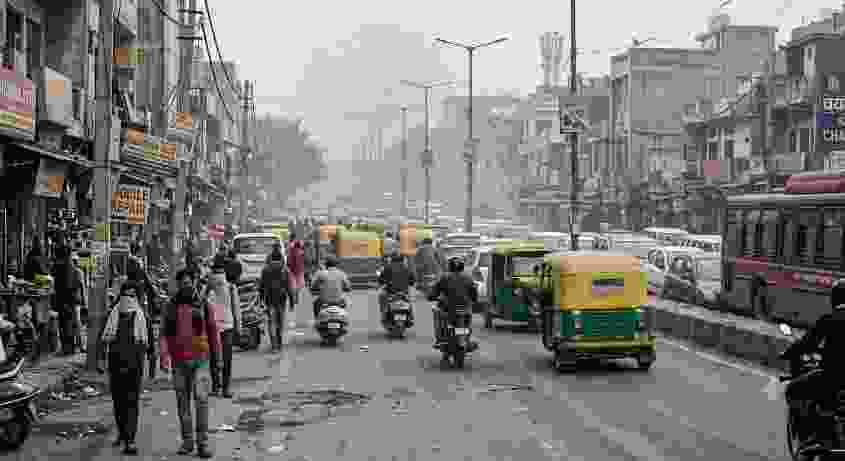
Why Indian Roads Turn Grey and Dusty: A Comprehensive Look at Urban Pollution
- Editor
- September 18, 2026
- Uncategorized
- 0 Comments
New Delhi, September 2026 — India’s ongoing struggle with severe dust pollution is not simply a matter of poor maintenance or bad weather, but a deeper structural flaw rooted in material choices and engineering blueprints, according to a recent detailed analysis of urban infrastructure.
From Pristine Black to Dull Grey in Weeks
When a new asphalt road is freshly laid in India, its dark, glossy finish immediately catches the eye. However, within a mere six weeks, that sleek black surface fades to a dull grey, accompanied by a heavy layer of white dust settling along the roadsides. While the public often blames local weather or contractor negligence, the reality of road degradation begins at a chemical level.
The dark color of a road comes from bitumen—a sticky petroleum byproduct that acts as a binder for stone aggregates. Over time, continuous exposure to oxygen and ultraviolet sun rays triggers oxidation. This process strips the bitumen of its essential flexibility, causing it to become brittle and crumble in a technical breakdown known as raveling. As the top binder wears away, it exposes the underlying grey stone aggregates, signaling the early stages of road deterioration.
The Cost-Cutting Compromise
Globally, countries combat rapid road wear by using Polymer-Modified Bitumen (PMB), which mixes polymers or rubber into standard bitumen to enhance flexibility and resistance to oxidation. Although PMB costs 15% to 25% more per ton, studies show it can extend a road’s service life by 50% to 100%, effectively cutting long-term maintenance costs in half.
While the National Highways Authority of India (NHAI) mandates modified binders for high-traffic national highways, local municipal bodies and public works departments frequently award contracts to the lowest bidders. Consequently, neighborhood streets are paved with inferior materials that break down rapidly under pressure.
The Blueprint Behind the Dust
Beyond the composition of the asphalt, urban roads are plagued by persistent dust generated directly by their blueprints. Civil engineering designs in India frequently feature unpaved strips along the road edges, technically termed “earthy shoulders” or verges. While these spaces are vital in rural areas for water drainage and utility placement, applying them to dense urban centers with high traffic volumes creates a major environmental hazard.
Vehicles frequently pull onto these unpaved edges, picking up loose soil and depositing it onto the paved road. Heavy traffic repeatedly crushes this dirt into a fine powder, which wind and traditional dry-sweeping methods continually re-suspend into the air. According to source apportionment studies by TERI and ARAI for Delhi-NCR, road dust accounts for a staggering 42% of PM 10 and 38% of PM 2.5 levels during summer months, outstripping industrial and vehicular exhaust as a primary air pollutant.
Rethinking Infrastructure for the Future
Experts emphasize that solving India’s road dust crisis requires a fundamental shift in both construction and maintenance practices. Municipalities must transition away from dry broom sweeping—which merely circulates dust—toward water-assisted mechanical sweeping. Furthermore, sealing road edges with proper curbs, paved shoulders, or vegetation like grass can effectively anchor loose soil and eliminate dust at its source.
Ultimately, urban roads remain chronically dirty not simply because they are poorly cleaned, but because they have historically been designed without long-term cleanliness in mind. Reform in municipal tender evaluations and engineering specifications will be essential if Indian cities are ever to clear the air.