India Business Wrap: Apple Pay Debuts, Hospital Stocks Tumble, and New October Rules
- Editor
- October 17, 2026
- Uncategorized
- 0 Comments
October 2026: A Month of Financial Rule Changes Several new financial rules have quietly taken effect this month, hitting everyday consumers’ wallets and routines:
- LPG Cylinder Restrictions: If you haven’t completed your biometric authentication, refilling your LPG cylinder just got complicated. Roughly 10% of users still haven’t complied and may face disruptions.
- SBI Salary Accounts: State Bank of India has tightened its belt, restricting salary account holders to just five free transactions at other banks.
- UPI Gets Pricier: The era of entirely free UPI might be shifting. A Merchant Discount Rate (MDR) charge of roughly 0.4% is being rolled out mid-month, which could trickle down to consumers and make digital payments slightly more expensive.
Apple Pay Finally Arrives—But Without UPI After years of speculation, Apple Pay is officially live in India, but it has arrived with a whimper rather than a bang.
Currently, the service only supports Axis Bank credit cards, completely ignoring the RuPay network and India’s digital backbone: UPI. To use it, you need an iPhone XR or newer. While major retailers like Zomato, Blinkit, Croma, and Tata 1mg are accepting it via “Tap and Pay,” the lack of UPI integration means Apple Pay is unlikely to be the game-changer it is in Western markets.
The 10x Markup: Supreme Court Slams Private Hospitals A massive regulatory loophole in the healthcare sector has been thrown wide open. The Supreme Court recently raised alarms over the exorbitant markups private hospital pharmacies are charging for life-saving cancer drugs.
The court highlighted instances where medications procured for just ₹2,700 were being sold to patients at a staggering Maximum Retail Price (MRP) of ₹27,000—a 10x markup. Because insurance claims often require patients to buy medications directly from the hospital’s in-house pharmacy, hospitals have been using this unregulated space to print money.
The threat of impending price caps sent healthcare stocks crashing. Following the news, Yatharth dropped 6.8%, Apollo Hospitals slipped 5.7%, and Max Healthcare fell 5.3%.
Big Moves: Subway’s IPO, ITC’s Takeover, and Simple Energy The corporate sector saw massive cash movements across food and EV industries:
- Subway India’s ₹600 Crore IPO: The operator behind Subway India is gearing up for a ₹600 crore IPO. The funds will be heavily directed toward paying off mounting debts and expanding their 678 company-owned stores.
- ITC Swallows Yoga Bar: FMCG giant ITC has fully acquired health-food brand Yoga Bar for ₹645 crore in an all-cash deal. Having initially bought a 39.4% stake for ₹175 crore in early 2023, ITC waited to integrate the brand before buying out the founders entirely at a lucrative 2.8x valuation.
- Simple Energy’s Massive Infusion: EV scooter manufacturer Simple Energy raised a massive ₹1,750 crore funding round, led almost entirely (80%) by the Thyrocare family office. The company is aggressively targeting an FY28 IPO and plans to boost monthly scooter production from 3,000 to 10,000 units.
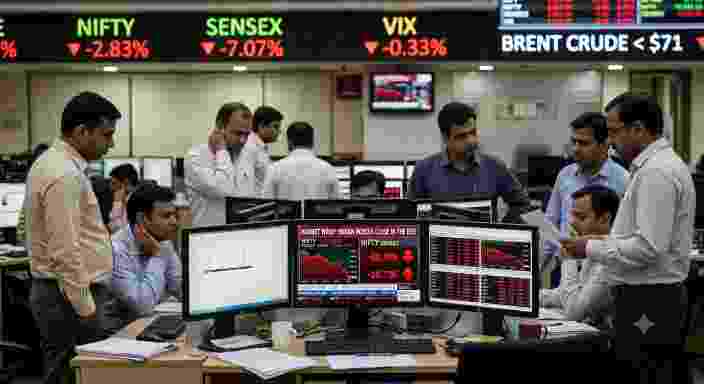
Market Blues: FIIs Pull Out ₹22,000 Crore The broader stock market painted a red picture heading into October. The Nifty index slumped nearly 6% in September, marking its lowest close since late March.
The culprit? Rising US 10-year treasury yields and climbing crude oil prices. As better, safer returns appear in the US, Foreign Institutional Investors (FIIs) pulled roughly ₹22,000 to ₹23,000 crore out of Indian equities last month, putting heavy pressure on the Rupee.
Bottom Line The Indian market is undergoing a reality check. Whether it’s Apple realizing that a digital wallet without UPI won’t dominate India, or the Supreme Court bursting the bubble on hospital pharmacy profits, regulatory oversight and localized consumer habits are proving to be the ultimate market dictators.