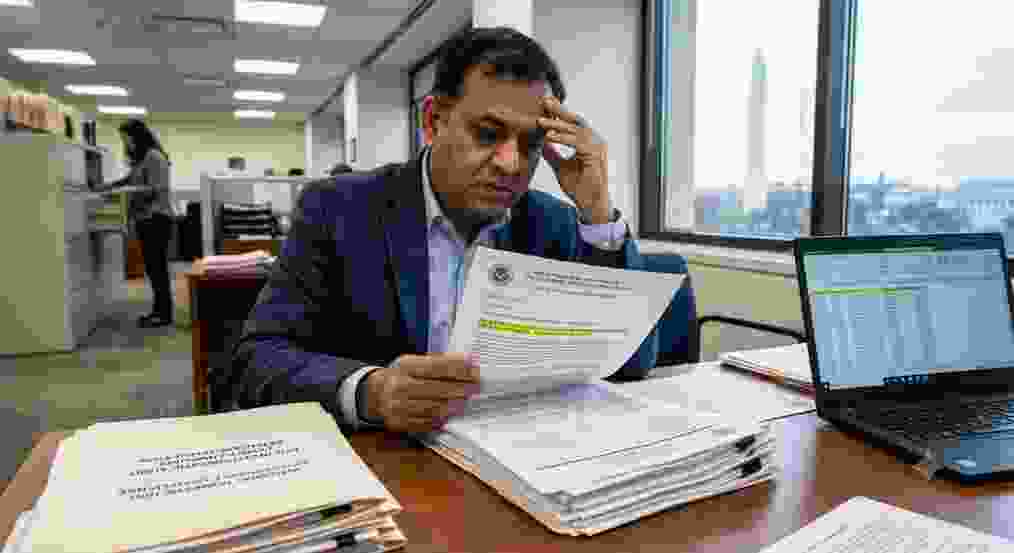
Washington’s Financial Wall: US Extends $100,000 H-1B Surcharge and Tightens Domestic Layoff Audits
- Editor
- September 21, 2026
- Uncategorized
- 0 Comments
New Delhi / Washington, September 2026 — The United States has officially extended its aggressive $100,000 H-1B visa application surcharge through September 21, 2027, sending shockwaves through cross-border talent acquisition.
What Washington markets as a protective barrier for domestic workers, India’s IT sector views as a high-stakes financial fortress designed to choke high-volume offshore staffing models.
Selling a Golden Ticket as a Paywall
For decades, the H-1B visa mechanism served as the primary bridge for Indian software engineers, data architects, and tech consultants to enter the American corporate ecosystem.
- The Reality of the Hike: Standard administrative visa filing fees, which historically hovered around a few thousand dollars, have been eclipsed by a prohibitive six-figure levy for fresh overseas applicants.
- The Illusion of Open Doors: While multinational firms continue to scout global talent, the sheer cost barrier means only elite, high-margin placements can justify the capital expenditure. The vast majority of mid-tier outsourcing pipelines are being priced out overnight.
Corporate Layoffs and Federal Inspections: The Compliance Trap
The financial surcharge is only half the battle. The updated federal framework introduces a stringent compliance layer: federal regulators are now mandated to audit companies for recent domestic layoffs before approving new foreign worker petitions.
Behind the scenes, the compliance trap operates on a simple check:
- If a US-based firm has laid off domestic employees while simultaneously filing for foreign talent, it faces intense regulatory cross-examination.
- Companies are forced to prove they exhausted domestic hiring pools first. Insiders admit this dual restriction—high fees paired with layoff audits—aims to legally trap companies that attempt to swap out higher-paid American workers for cost-effective offshore talent.
Outsourcing Giants and the Shrinking Volume
The numbers tell a stark story of retreat. Registration volumes from traditional IT outsourcing and staffing powerhouses have plummeted, reflecting a wholesale structural shift:
- Massive Volume Drop: High-volume, lower-cost foreign hiring models have seen applications drop sharply as corporate boards calculate that the ROI no longer pencils out.
- The Quality Pivot: Conversely, filings are increasingly skewed toward high-end, specialized technologists holding advanced degrees, proving that companies are reserving their scarce sponsorship budgets strictly for irreplaceable technical masterminds.
India’s Software Exports: Resilient, But Shifting Strategies
Despite the tightening US immigration landscape, India’s broader technology export machinery continues to march forward. Gross software exports expanded by 8.2% to reach $221.4 billion, with North American markets consuming over half of that total volume.
However, the nature of the engagement is evolving. Rather than flying engineers across the Atlantic on costly H-1B visas, global corporations are expanding their Capability Centers (GCCs) directly within hubs like Bengaluru, Hyderabad, and Pune—keeping the talent rooted in India and bypassing US visa friction entirely.
Bottom Line
The era of frictionless, high-volume H-1B migration is officially history. With the $100,000 fee extension and rigorous domestic layoff audits now locked in through late 2027, the US immigration playbook has made its intent clear: global tech talent is welcome, but only if corporations are willing to pay an unprecedented premium for it.