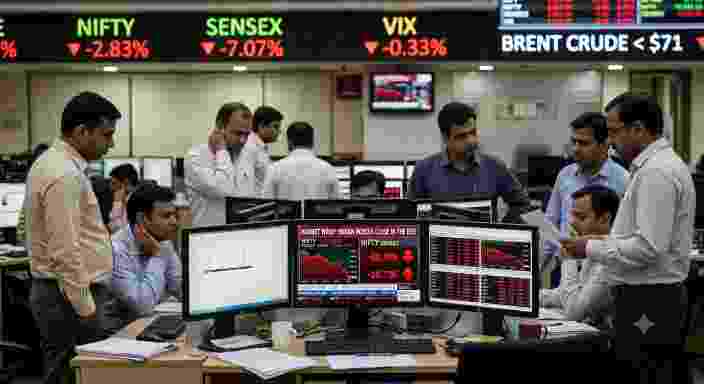
US-Iran Diplomatic Signals Lift GIFT Nifty: What Geopolitical De-escalation Means for Indian Equity Markets
- admin
- April 21, 2026
- Uncategorized
- 0 Comments
GIFT Nifty futures edged higher on Tuesday as markets priced in renewed optimism surrounding US-Iran diplomatic engagement, signalling a potentially calmer opening for Indian benchmark indices. Indian equities remain acutely sensitive to Middle Eastern geopolitical risk given the country’s dependence on crude imports, making any de-escalation signal materially relevant for inflation expectations and corporate margins.
New Delhi, April 2025 — GIFT Nifty, the Singapore-traded derivative contract tracking Indian benchmarks, opened in positive territory ahead of Tuesday’s session, reflecting global risk-on sentiment following reports of progress in US-Iran negotiations. Sensex and Nifty 50 were poised for a muted but steady start, with futures indicating gains of approximately 0.3% from the previous close.
What Is Driving the Market Optimism?
US-Iran relations have shown signs of thawing after weeks of backchannel diplomacy, raising hopes of sanctions relief and reduced tensions in the Strait of Hormuz. Crude oil prices softened by nearly 2% overnight as traders reduced the geopolitical risk premium embedded in Brent contracts. Indian markets, which import over 85% of their crude requirements, respond disproportionately to any signal that could stabilise energy costs. The last comparable rally on Iran-related diplomacy occurred in January 2024, when temporary de-escalation triggered a 1.8% single-day Nifty gain.
What Does This Mean for India?
India’s current account deficit remains structurally vulnerable to crude price volatility, with every $10 per barrel increase adding approximately $15 billion to the annual import bill. A sustained diplomatic resolution could ease pressure on the rupee, which has traded in a tight band of 83.2-83.8 against the dollar through April. The Reserve Bank of India has maintained an inflation-targeting stance, and softer crude would provide room for the Monetary Policy Committee to hold rates without sacrificing growth objectives. Sectors most exposed to input cost relief include aviation, paints, tyres, and oil marketing companies.
How Does This Compare Globally?
Asian markets broadly mirrored the optimism, with Japan’s Nikkei 225 gaining 0.4% and Hong Kong’s Hang Seng rising 0.6% in early trade. European futures also indicated a positive open, though gains were tempered by ongoing concerns over Eurozone manufacturing data. Indian equities have outperformed emerging market peers by approximately 8% year-to-date, partly due to resilient domestic consumption and robust foreign institutional inflows exceeding $4.2 billion since January.
- GIFT Nifty indicated a 0.3% gain at 22,480 levels in early trade on Tuesday
- Brent crude fell 1.9% to $86.40 per barrel on de-escalation hopes
- India imports over 85% of crude oil, making energy prices a key inflation driver
- Foreign institutional investors have injected $4.2 billion into Indian equities in 2025
- The rupee has held steady between 83.2-83.8 per dollar through April
What Should Investors Watch?
Traders should monitor official statements from the US State Department and Iranian Foreign Ministry over the next 48-72 hours for confirmation of diplomatic progress. Any reversal in rhetoric could quickly unwind the risk-on positioning seen in overnight futures markets. Domestic cues remain limited this week, with no major economic data releases scheduled until Friday’s flash PMI readings.
Analyst’s View
The market’s reaction to US-Iran signals underscores how deeply Indian equities remain tethered to global energy geopolitics despite domestic economic resilience. Investors should treat this rally as sentiment-driven rather than fundamentally anchored until concrete diplomatic outcomes materialise. The prudent approach involves maintaining exposure to sectors that benefit from crude softness while hedging against sudden reversal through options strategies. Watch Brent crude’s $85 support level and the rupee’s 83.5 threshold as key technical triggers for near-term direction.