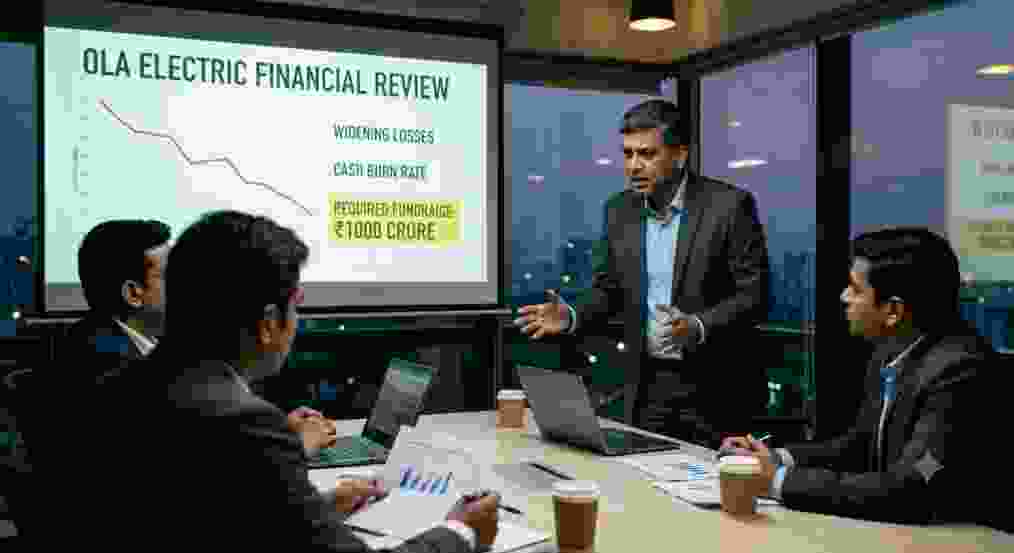
Ola Electric’s Capital Crunch: Widening Losses and Cash Burn Force New ₹1,000 Crore Fundraise
- Editor
- October 17, 2026
- Uncategorized
- 0 Comments
Bengaluru, September 2026 — Just months after making its debut on the public bourses, electric two-wheeler giant Ola Electric is returning to the market to shore up liquidity, planning an additional capital raise of ₹1,000 crore.
The move comes amid mounting concerns over the automaker’s financial trajectory, marked by persistent cash bleed, widening annual net losses, and sharp quarter-on-quarter operational strain.
From Public Debut to Immediate Refueling
The decision to tap capital markets again follows closely on the heels of a ₹780 crore Qualified Institutional Placement (QIP) completed in the first quarter. Despite these fresh inflows, the company’s capital-intensive model and aggressive expansion continue to test its balance sheet.
For the full year, Ola Electric posted a net loss after tax (PAT) of ₹1,800 crore. Compounding the issue, first-quarter operations alone saw a free cash burn of ₹351 crore alongside shrinking top-line revenues, eroding cash buffers faster than initially projected.
The Shrinking Runway
As of Q1, Ola Electric held approximately ₹1,771 crore in liquid cash reserves, supported by its audited March 31 base of ₹1,542 crore and the subsequent ₹780 crore institutional raise.
However, at the current cash burn rate, that reserve translates to a limited operational runway:
- Current Runway: Approximately 17 months of operating room without fresh capital infusion.
- Impact of ₹1,000 Crore Inflow: The proposed fundraise would extend the survival horizon to roughly 24 to 26 months, assuming cash-burn levels stabilize rather than widen further.
Dilution vs. Survival for Shareholders
The prospect of a listed entity operating with startup-style “runway” calculations has raised red flags among market observers and institutional stakeholders:
- Dilution Risk: Existing public and institutional shareholders face direct equity dilution unless they inject additional capital to defend their current ownership stakes.
- High Burn Rate in a Mature Arena: While heavy cash burn is standard in pre-IPO growth stages, public markets typically demand a credible timeline toward unit economics and profitability.
- Execution Challenges: With revenues declining and operational costs remaining elevated, the fundraise highlights the urgent need to stem losses before the extended cash cushion runs dry.
Bottom Line
Ola Electric’s aggressive push to secure another ₹1,000 crore underscores the harsh reality of India’s EV transition: manufacturing and scaling hardware remains capital-intensive and unforgiving. Unless the company drastically reins in its ₹1,800 crore burn and rightsizes unit-level profitability, recurring market calls risk turning high-growth promises into a prolonged cycle of dilution.