Navigating the Southward Shift in Global Geopolitics: Implications for India and Beyond
- admin
- August 5, 2026
- Uncategorized
- 0 Comments
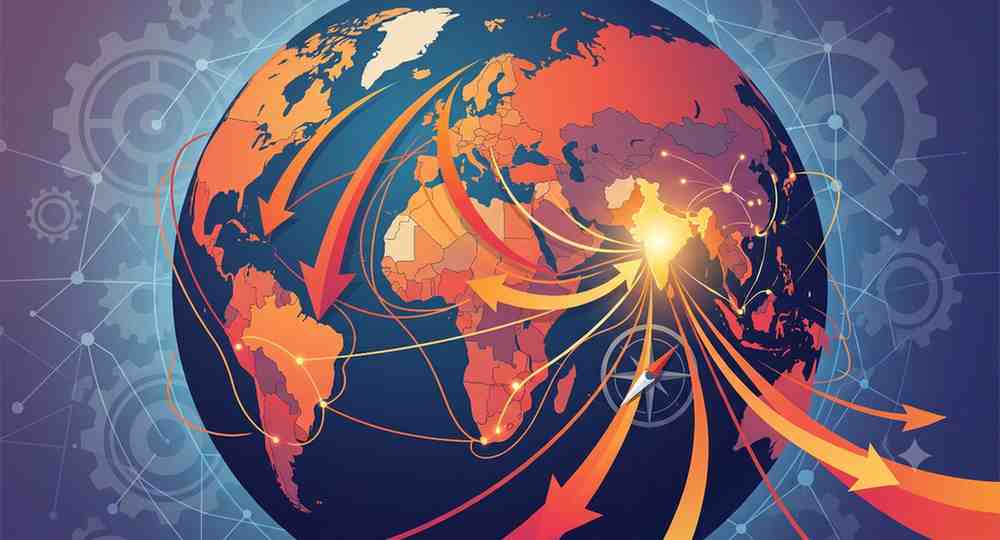
The recent geopolitical developments signal a marked shift towards southern alliances, particularly among emerging nations. This transition poses both opportunities and challenges for India, potentially reshaping its diplomatic and economic landscape.
New Delhi, August 2026 — Recent trends indicate a pronounced pivot towards southern geopolitical alignments, with countries in the Global South increasingly collaborating on shared interests. This strategic realignment not only underscores the evolving dynamics of global power but also highlights the need for India to recalibrate its foreign policy in response to this emerging landscape.
What Is Driving This?
Emerging economies are increasingly banding together to counterbalance Western dominance in global affairs. The rise of multipolarity, characterized by the increasing influence of countries such as Brazil, South Africa, and India, is fostering new partnerships aimed at economic development and political stability. Notably, regional trade agreements and cooperative frameworks are gaining traction, indicating a concerted effort to challenge traditional power structures dominated by Western nations.
What Does This Mean for India?
India stands at a crossroads in this shifting geopolitical environment, with both risks and opportunities. The growing coalition of southern economies could bolster India’s position in global trade and investment, allowing it to leverage its demographic and economic strengths. Conversely, India’s historical ties with Western nations may face strain as it navigates complex relationships in a more fragmented global order, necessitating a careful balancing act in its foreign policy.
How Does This Compare Globally?
Globally, the trend towards southern alignment contrasts sharply with the consolidation of power among Western nations. Data from the International Monetary Fund indicates that emerging economies are projected to account for over 50% of global GDP by 2030, underscoring their increasing significance. This shift is further reflected in the growing membership of BRICS+, a coalition that aims to enhance cooperation among emerging economies, highlighting the potential for a new economic bloc that could rival Western influence.
- Emerging economies are expected to represent 57% of global GDP by 2030.
- BRICS+ membership has expanded to include new entrants like Argentina and Iran.
- India’s trade with African nations has increased by 35% over the past five years.
- Investment inflows into the Global South reached $1 trillion in 2025.
- Western nations’ share of global GDP is projected to decline to 43% by 2030.
Analyst’s View
The trajectory towards southern alliances presents India with a crucial opportunity to assert itself as a leader among emerging economies. Policymakers must prioritize strategic partnerships and enhance regional cooperation to navigate this complex geopolitical landscape. For investors, the evolving dynamics indicate a potential shift in capital flows towards emerging markets, warranting close monitoring of investment opportunities as they arise in this new global paradigm.