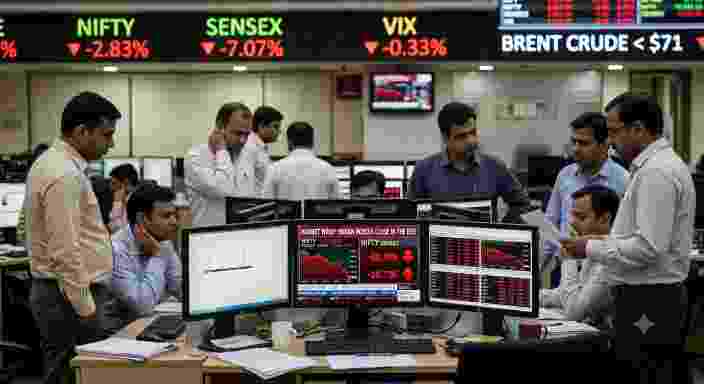
How Indian Retail Investors Are Reshaping Pre-Market Research Habits Amid Rising Participation
- admin
- April 24, 2026
- Uncategorized
- 0 Comments
Indian retail investors are increasingly adopting streamlined pre-market research tools and platforms to navigate complex market dynamics before trading hours begin. This behavioural shift reflects the maturation of India’s retail investor base, which has grown from 40 million demat accounts in 2020 to over 180 million in 2025.
New Delhi, April 2025 — The traditional morning ritual of Indian equity investors — scanning pink papers, monitoring business channels, and parsing overnight global cues — is undergoing fundamental transformation as technology platforms consolidate pre-market intelligence into digestible formats tailored for time-constrained retail participants.
What Is Driving This Shift in Pre-Market Behaviour?
India’s retail investor demographics have changed dramatically since the pandemic-era market boom. The average age of new demat account holders dropped from 38 years in 2019 to 29 years in 2024, bringing digitally native participants who expect curated, mobile-first research experiences. This cohort manages portfolios alongside full-time employment, creating demand for efficient pre-market briefings rather than exhaustive analysis. The proliferation of discount brokerages and fintech platforms has simultaneously democratised access to institutional-grade data previously available only to professional traders.
What Does This Mean for India’s Capital Markets?
The standardisation of pre-market research consumption carries implications for market microstructure and price discovery. Retail investors acting on similar curated information streams may amplify herding behaviour during opening sessions, potentially increasing intraday volatility. SEBI has noted this phenomenon in its 2024 annual report, flagging concerns about algorithmic content curation influencing trading patterns. However, better-informed retail participation also strengthens market depth and reduces information asymmetry that historically favoured institutional players.
How Does India Compare Globally in Retail Market Participation?
India’s retail direct equity participation rate now rivals developed markets, though research sophistication varies considerably. American retail investors benefit from decades of investor education infrastructure and SEC-mandated disclosure regimes. Indian platforms are compressing this learning curve by integrating fundamental data, technical indicators, and global market summaries into unified dashboards. The NSE reports that retail investors now account for approximately 35% of cash market turnover, up from 25% five years ago.
- India added over 140 million new demat accounts between 2020 and 2025
- Retail investors contribute 35% of NSE cash segment turnover as of March 2025
- Average new investor age declined from 38 years (2019) to 29 years (2024)
- Mobile trading applications process over 85% of retail order flow
- Pre-market sessions (9:00-9:15 AM) see concentrated retail activity spikes
What Should Investors Watch Going Forward?
Regulatory evolution will shape how pre-market research platforms operate and monetise user attention. SEBI’s proposed guidelines on investment influencers and research analysts, expected for finalisation in mid-2025, may impose disclosure requirements on platforms aggregating market intelligence. Investors should evaluate whether their information sources maintain editorial independence from brokerage revenue streams. The quality of pre-market research directly correlates with trading discipline, particularly for derivatives participants operating with leveraged positions.
Analyst’s View
The transformation of India’s pre-market research ecosystem represents a necessary evolution matching the scale and sophistication of retail participation. Platforms that successfully balance accessibility with analytical rigour will capture significant market share as financial literacy improves. The risk lies in oversimplification — condensing complex market dynamics into morning bullet points may encourage overconfidence among inexperienced participants. Observers should monitor SEBI’s regulatory response and whether retail trading patterns during opening sessions show increased correlation with curated content themes. The next phase of Indian capital market development depends substantially on whether this democratisation of research translates into sustainable wealth creation or amplified speculative behaviour.