Geopolitical Détente and Foreign Inflows Power Indian Equities: What April’s Rally Signals
- admin
- April 19, 2026
- Uncategorized
- 0 Comments
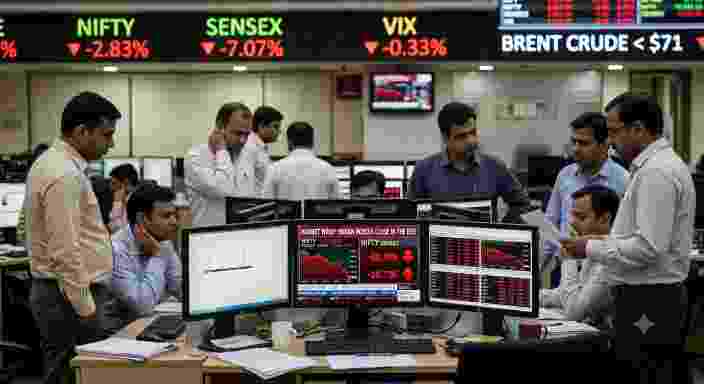
Indian benchmark indices Sensex and Nifty recorded gains in mid-April 2025 as markets priced in potential de-escalation between the United States and Iran alongside renewed foreign institutional investor buying. The dual tailwinds suggest a shift in risk appetite that could sustain equity momentum if geopolitical tensions continue easing and dollar outflows from emerging markets reverse.
New Delhi, April 2025 — Indian equity markets opened the weekend on a positive note, with both the BSE Sensex and NSE Nifty 50 registering gains driven by two converging factors: optimism surrounding a potential US-Iran diplomatic breakthrough and a notable return of foreign institutional investors (FIIs) to Indian shores. The rally marks a reversal from the cautious sentiment that dominated March, when Middle East tensions and sustained FII outflows weighed heavily on valuations.
What Is Driving the Current Rally?
Foreign institutional investors have emerged as the primary catalyst behind the market’s upward trajectory. FII flows turned positive after nearly six weeks of net selling, a pattern last observed during the February 2024 correction when global risk-off sentiment pushed $4.2 billion out of Indian equities. Hopes of a US-Iran truce have reduced the geopolitical risk premium that investors had priced into crude-sensitive markets like India. Brent crude prices softened below $82 per barrel on truce speculation, providing relief to India’s import bill and inflation outlook.
What Does This Mean for Indian Markets?
The combination of easing oil prices and returning foreign capital creates a favourable liquidity environment for Indian equities. Domestic institutional investors, who had been absorbing FII selling through March, now find themselves with additional firepower as outflow pressure subsides. The Nifty 50’s movement above key technical resistance levels suggests institutional accumulation rather than retail-driven speculation. Sectors with high foreign ownership—financials, IT services, and consumer discretionary—stand to benefit disproportionately from sustained FII inflows.
How Does This Compare to Previous Geopolitical Episodes?
Indian markets have historically demonstrated resilience during Middle East tensions, recovering within 15-30 trading sessions of initial shocks. The 2020 US-Iran standoff following the Soleimani strike saw Nifty correct 3.2% before recovering within three weeks. Unlike 2020, current market conditions feature stronger domestic macroeconomic fundamentals, including moderating inflation and robust GST collections exceeding ₹1.9 lakh crore monthly. The rupee’s relative stability near 83.5 against the dollar reflects confidence in India’s external position despite global uncertainty.
- FII net buying turned positive in mid-April after six consecutive weeks of outflows totalling approximately ₹28,000 crore
- Brent crude declined 4.7% week-on-week on US-Iran truce speculation, easing pressure on India’s current account
- Nifty 50 reclaimed the 22,500 level, a key psychological and technical resistance zone
- India’s foreign exchange reserves remain robust at $643 billion, providing adequate import cover
- Domestic mutual fund SIP inflows continued above ₹20,000 crore monthly, cushioning against FII volatility
What Should Investors Watch?
Sustainability of the rally hinges on two variables: concrete progress in US-Iran negotiations and the trajectory of US Federal Reserve policy signals. Any breakdown in diplomatic talks could trigger immediate crude price spikes, reversing the current risk-on sentiment. Investors should monitor weekly FII flow data and options market positioning, particularly the put-call ratio on Nifty, for early warning signs of sentiment shifts. Corporate earnings for Q4 FY25, with results from major banks and IT firms due in coming weeks, will determine whether valuations can sustain current levels.
Analyst’s View
The April rally represents tactical repositioning rather than a structural re-rating of Indian equities. Markets are responding rationally to reduced tail risks, but the underlying earnings growth trajectory—estimated at 12-14% for FY26—remains the fundamental anchor. Investors should treat geopolitical optimism as a near-term catalyst while maintaining focus on sector-specific earnings delivery. The coming fortnight’s diplomatic developments in the Gulf and Fed commentary will determine whether this rally extends into a sustained bull phase or fades into range-bound consolidation.