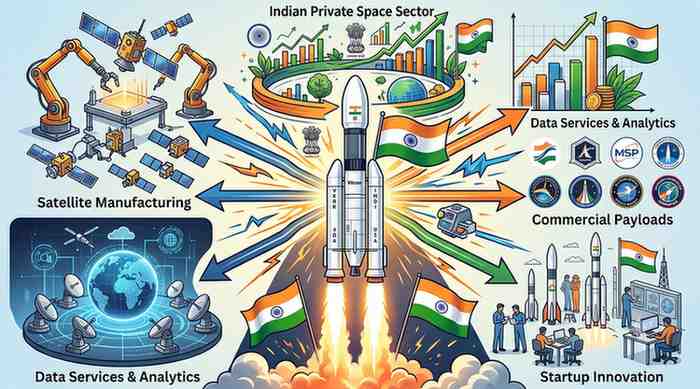
Vikram-1 Launch: Catalyst for India’s Emerging Private Space Economy
- admin
- July 30, 2026
- Technology
- 0 Comments
The successful launch of Vikram-1 marks a pivotal moment for India’s private space sector, signaling a potential shift in the nation’s economic landscape. As private companies gain momentum, India is poised to become a significant player in the global space economy.
New Delhi, July 2026 — The launch of Vikram-1, India’s first privately developed rocket, represents a watershed moment for the nation’s burgeoning private space industry. This event underscores a transformative shift in a sector traditionally dominated by government entities, particularly the Indian Space Research Organisation (ISRO). With this launch, private players are not only entering a market previously reserved for state actors but are also setting the stage for enhanced competition, innovation, and economic growth.
What Is Driving This?
The driving force behind the Vikram-1 launch is a confluence of government policy and private investment. The Indian government has actively promoted private sector participation through policy reforms, including the Space Activities Bill, which aims to streamline regulatory frameworks. Additionally, increased venture capital investment in space startups has catalyzed technological advancements, making it feasible for private companies to undertake ambitious projects.
What Does This Mean for India?
The implications of Vikram-1 are profound for India’s economic future. A thriving private space sector could enhance national capabilities in satellite deployment, research, and even interplanetary missions. This growth could create thousands of jobs, stimulate technological innovation, and position India as a global hub for space services, thereby attracting foreign investment and partnerships.
How Does This Compare Globally?
Globally, the trend towards privatization in space exploration is gaining momentum. Countries like the United States have seen companies like SpaceX and Blue Origin redefine the space economy. In contrast, India’s approach, characterized by collaboration between government and private entities, offers a unique model. With Vikram-1, India aims to catch up with global leaders while also tailoring its framework to its specific socio-economic context.
What Should Investors Watch?
Investors should closely monitor several key indicators following the Vikram-1 launch. The growth of private space companies in India could lead to increased stock valuations and investment opportunities. Additionally, developments in regulatory frameworks and partnerships with ISRO will be crucial for assessing potential returns. Tracking advancements in satellite technology and launches will also provide insights into market dynamics.
- Vikram-1 is the first rocket developed by an Indian private company.
- The Indian government has introduced reforms to encourage private sector participation in space.
- Global space economy is projected to reach $1 trillion by 2040.
- India aims to capture a significant share of this market through enhanced private capabilities.
- More than 100 startups are currently involved in the Indian space sector.
Analyst’s View
The launch of Vikram-1 is not merely a technical achievement; it represents a strategic pivot towards a more inclusive and competitive space industry in India. Stakeholders must remain vigilant to the evolving regulatory landscape and the actions of emerging private players. The success of this initiative could redefine India’s role in the global space economy, offering both challenges and opportunities for investors and policymakers alike.