RBI Forecasts 6.9% Growth in FY27 Amid West Asia Geopolitical Tensions
The Reserve Bank of India (RBI) projects a robust growth rate of 6.9% for India in FY27 despite escalating geopolitical tensions in West Asia. This resilience underscores the Indian economy’s capacity to navigate external shocks while maintaining domestic stability.
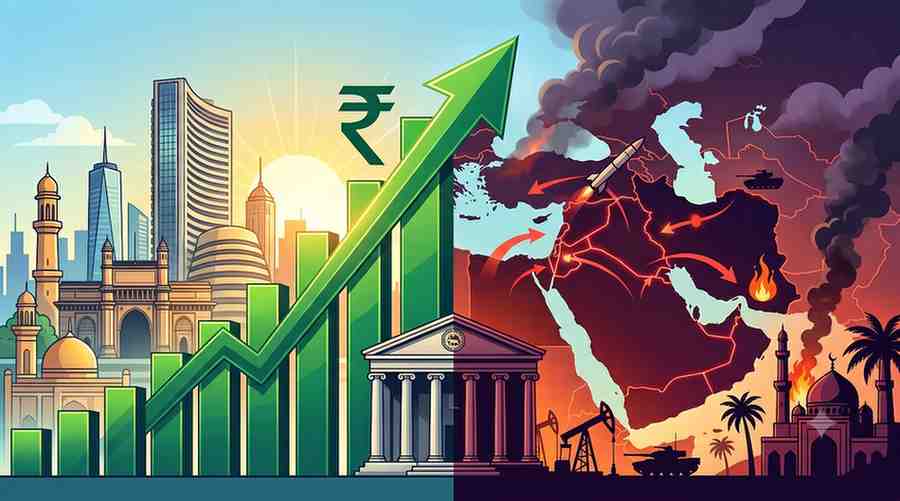
New Delhi, August 2026 — The RBI’s growth forecast for FY27 highlights a significant assertion of India’s economic resilience, projecting a steady growth rate of 6.9%. This figure comes against a backdrop of heightened geopolitical uncertainties stemming from conflicts in West Asia, which have historically impacted global oil prices and trade dynamics.
What Is Driving This?
The RBI attributes its optimistic growth outlook to several factors, including strong domestic consumption and a rebound in investments. The banking sector’s health, bolstered by improved asset quality and liquidity, enables increased lending to businesses. Additionally, the government’s push towards infrastructure development and digitalization is expected to sustain economic momentum despite international headwinds.
What Does This Mean for India?
India’s projected growth rate reflects a broader confidence in its economic fundamentals, which could bolster investor sentiment. Policymakers may leverage this stability to pursue structural reforms aimed at enhancing productivity and competitiveness. However, citizens might face challenges related to inflationary pressures, particularly if global oil prices surge due to West Asia conflicts.
How Does This Compare Globally?
Globally, the Indian economy’s growth rate stands out, especially when juxtaposed with forecasts from advanced economies, which are grappling with stagnation or minimal growth. For instance, the International Monetary Fund (IMF) projects advanced economies to grow at an average of 2% in FY27. This divergence positions India as a potential hub for foreign investment, attracting capital flows that are critical for sustaining its growth trajectory.
What Should Investors Watch?
Investors should closely monitor several key indicators as India approaches FY27. The RBI’s monetary policy stance will be pivotal, particularly in response to inflation and external shocks. Other indicators include the performance of the manufacturing and services sectors, the health of the banking sector, and government policy changes that may affect fiscal stability.
- RBI projects India’s growth at 6.9% in FY27.
- Historical context shows that West Asia conflicts typically affect oil prices.
- India’s growth significantly outpaces advanced economies, with the IMF estimating 2% for them.
- Key sectors to watch include manufacturing, services, and banking performance.
- Government infrastructure initiatives are expected to drive domestic consumption.
Analyst’s View
The RBI’s growth prediction reflects a cautious optimism amidst global uncertainties. Stakeholders should prepare for potential volatility stemming from external factors, particularly in the oil market. However, India’s robust domestic foundations provide a buffer against these shocks, positioning the economy favorably for sustained growth in the medium term.