UPI Transaction Charges Explained: New MDR Rules to Take Effect From October 15
- Editor
- September 16, 2026
- Uncategorized
- 0 Comments
New Delhi, September 2026 — The era of a completely free Unified Payments Interface (UPI) ecosystem is officially coming to a close. Starting October 15, the government and the National Payments Corporation of India (NPCI) will implement Merchant Discount Rate (MDR) charges, marking a massive structural shift in how India transacts.
The 0.4% Reality Check The days of zero-cost large merchant payments are over. Any Person-to-Merchant (P2M) transaction exceeding ₹2,000 will now attract a 0.4% MDR charge. While a ₹1,500 grocery run remains untouched, paying a shopkeeper ₹10,000 will incur a ₹40 fee. However, to prevent prohibitive costs on massive purchases, the government has instituted a strict maximum cap: the charge cannot exceed ₹300 per transaction, even if the payment is for ₹5 lakh.
Who Actually Pays the Bill? On paper, the merchant bears the burden. If a customer pays ₹10,000, the merchant’s account will be credited with ₹9,960. But the ground reality could quickly mirror the credit card ecosystem. Retailers may refuse to absorb the loss, potentially asking consumers to pay the surcharge at the billing counter or split the difference to use UPI for big-ticket items.
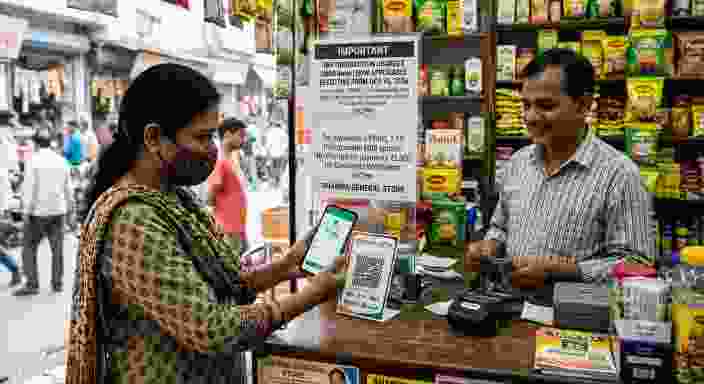
The Small Vendor Safety Net Everyday users face zero disruption for personal transfers. Person-to-Person (P2P) payments—whether sending ₹50 or ₹1 lakh to a friend or family member—remain absolutely free.
Furthermore, local kirana stores and tea stalls are shielded. Small merchants (classified as P2PM) with a total monthly UPI volume under ₹1 lakh are entirely exempt, ensuring grassroots businesses aren’t choked by digital transaction taxes.
Concessions for Special Sectors Not all high-value payments will bleed merchants. Payments above ₹2,000 for utility bills, telecom recharges, fuel, and railway tickets will attract a nominal flat fee of just ₹5. Similarly, capital market investments—like mutual funds and stockbroking deposits—receive an ultra-low rate of just 0.02% (also capped at ₹300), ensuring investors’ returns aren’t eaten up by transaction costs. Auto-pay subscriptions and EMIs remain untouched for now.
Why Fix What Isn’t Broken? With UPI processing tens of billions of transactions, the zero-cost model was heavily straining the backend infrastructure. Banks and the government could no longer subsidise the massive cybersecurity, servers, and operational costs alone. By targeting just the top 4-5% of high-ticket transactions—which surprisingly make up 67% of UPI’s total monetary value—the system aims to become financially self-sustaining without disrupting daily life.
Bottom Line The new MDR rules are a calculated, necessary reset for India’s digital payment infrastructure. While 95% of daily transactions will remain completely free, large-scale merchants and high-value payments will now fund the ecosystem’s survival. The true test, however, lies at the checkout counter: will merchants silently absorb the cost, or is the Indian public about to start paying a premium for the convenience of scanning a QR code?