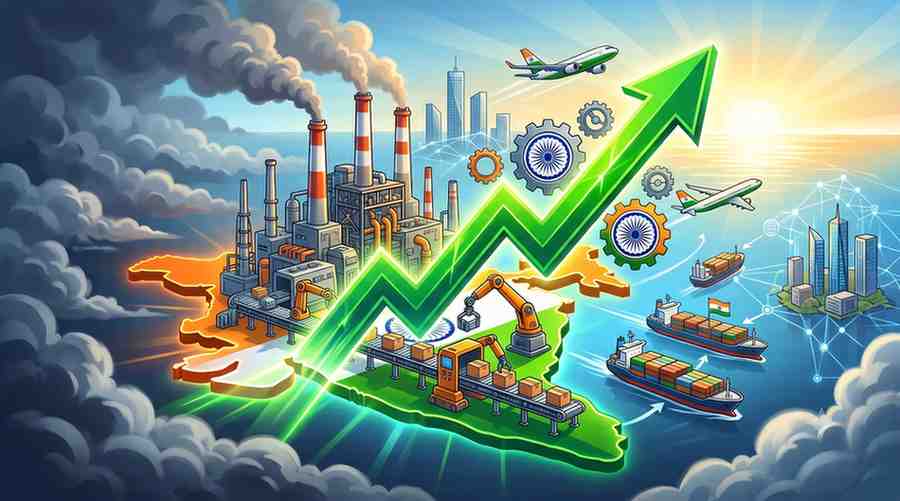
India’s Industrial Output Surge Signals Robust Economic Recovery and Strategic Opportunities
India’s industrial output reached a two-year high in June, reflecting a significant rebound in economic activity. This surge indicates a recovery trajectory driven by both domestic demand and strategic government initiatives.
New Delhi, July 2026 — India’s industrial output climbed to levels not seen since June 2024, with a reported growth of 8.5% year-on-year, primarily fueled by increases in manufacturing and mining sectors. This notable growth surpasses many forecasts and suggests that the Indian economy is on a robust recovery path, bolstered by strong consumer demand and effective policy interventions. The data illustrates a resilient economy navigating through the complexities posed by external factors, including global supply chain disruptions and fluctuating commodity prices.
What Is Driving This?
India’s industrial output is primarily driven by a resurgence in consumer spending and government investments in infrastructure. The manufacturing sector has benefited from the government’s Production-Linked Incentive (PLI) schemes, which incentivize local production and aim to boost exports. Additionally, the mining sector has seen increased activity, partly due to the rising demand for minerals and commodities in the global market.
What Does This Mean for India?
The surge in industrial output signifies potential for sustained economic growth, which could lead to increased employment opportunities and higher wages. Policymakers may view this data as a validation of their strategies, prompting further investment in infrastructure and technology. Enhanced industrial performance also supports India’s ambitions to position itself as a global manufacturing hub, potentially attracting foreign investment.
How Does This Compare Globally?
Globally, India’s industrial growth outpaces several other economies grappling with post-pandemic recovery challenges. For instance, while the EU and the US have reported modest growth rates, India’s 8.5% growth stands out as a testament to its economic resilience. However, caution is warranted, as global economic volatility, particularly in energy prices and geopolitical tensions, could impact future growth trajectories.
What Should Investors Watch?
- Key sectors for investment: manufacturing, renewable energy, and technology.
- Government policy shifts, particularly in tariffs and trade agreements.
- Global supply chain dynamics that may affect local production.
- Inflation trends that could influence consumer spending and interest rates.
- Consumer confidence metrics as indicators of future demand.
Analyst’s View
India’s industrial output growth presents both challenges and opportunities moving forward. Investors should remain vigilant regarding potential inflationary pressures and global economic conditions that could impact domestic growth. Policymakers must continue to foster an environment conducive to innovation and investment, ensuring that this growth momentum translates into long-term economic stability and prosperity.