Gold’s Resurgence Amidst Declining Oil Prices and a Weakening Dollar
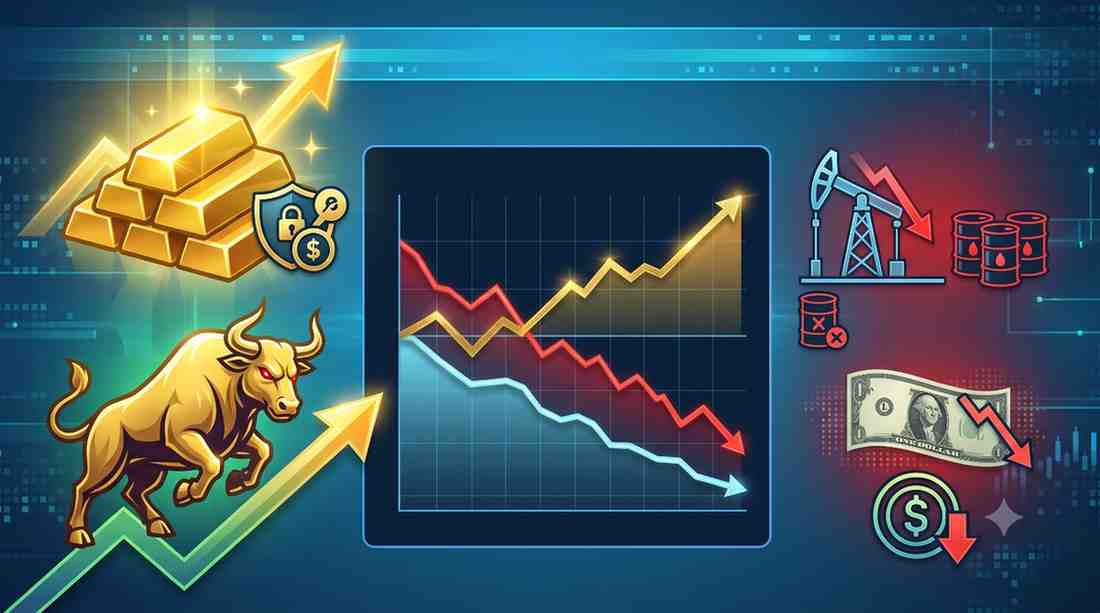
Gold prices have surged to a one-month high due to declining oil prices and a softer dollar, driven by changing global economic dynamics. This increase signals a renewed investor interest in safe-haven assets amid fluctuating market conditions.
New Delhi, August 2026 — Gold has reached its highest point in a month, reflecting a complex interplay of lower oil prices and a weaker dollar. The recent shift in commodity prices has sparked new interest in gold, particularly as investors seek stability amid global economic uncertainties.
What Is Driving This?
The current rise in gold prices can be attributed to two primary factors: a decline in oil prices and a weaker dollar. As oil prices fell by approximately 5% last week, the pressure on inflation eased, prompting investors to reconsider their asset allocations. Concurrently, the dollar index has weakened by nearly 1.5%, making gold cheaper for holders of other currencies, thereby increasing demand.
What Does This Mean for India?
In India, the price of gold is expected to remain influenced by global trends, given the country’s status as one of the largest consumers of gold. As the Indian rupee fluctuates against the dollar, local gold prices could experience volatility. Additionally, changes in global oil prices will impact inflation rates in India, potentially influencing the Reserve Bank of India’s monetary policy decisions.
How Does This Compare Globally?
Globally, gold has traditionally been viewed as a hedge against inflation and currency devaluation. Recent trends indicate that while gold prices are rising, other commodities are experiencing mixed outcomes. For example, while oil prices are declining, equity markets in various regions remain volatile, reflecting broader economic concerns, such as geopolitical tensions and supply chain disruptions.
What Should Investors Watch?
- Gold prices have increased by 3% over the past month, reaching $1,950 per ounce.
- The dollar index has decreased by 1.5%, enhancing gold’s appeal in international markets.
- Oil prices have fallen to approximately $80 per barrel, contributing to easing inflationary pressures.
- India’s gold imports rose by 25% in the last quarter, indicating increased demand.
- Global central banks have increased their gold reserves by over 300 tons in the first half of 2026, reflecting a strategic shift to gold as a safe haven.
Analyst’s View
Looking ahead, the trajectory of gold prices will likely continue to be influenced by macroeconomic indicators, including oil prices and currency strength. Investors should remain vigilant to geopolitical developments and central bank policies, which could introduce further volatility in the gold market. As inflationary pressures continue to fluctuate, gold’s role as a hedge will become increasingly critical for both individual and institutional investors globally.