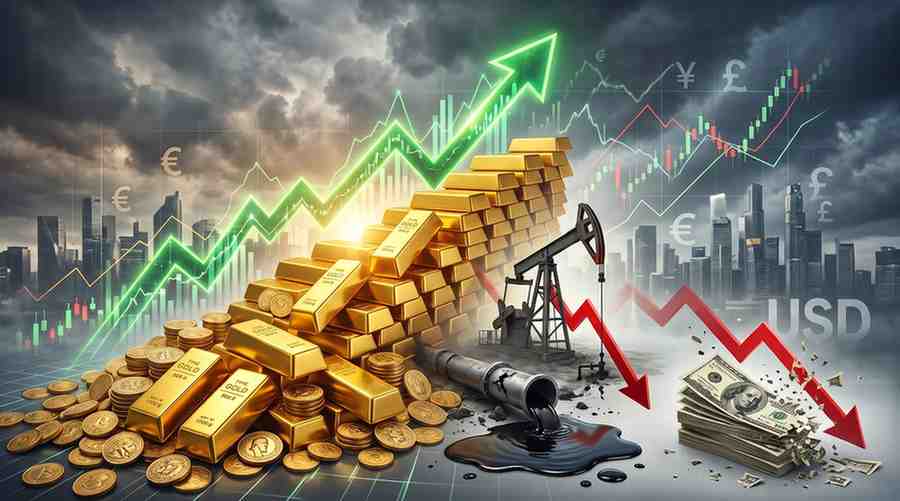
Gold’s Rally Amidst Dwindling Oil Prices and a Weak Dollar: Implications for Global Markets
Gold has recently gained traction due to declining oil prices and a weakening US dollar, creating a conducive environment for precious metal investments. Market participants are closely monitoring upcoming US jobs data, which could further influence gold’s trajectory.
New Delhi, August 2026 — Gold prices have surged as a result of lower oil prices, which have eased inflationary pressures, and a softer dollar that enhances gold’s appeal as an alternative asset. The dual factors of reduced energy costs and currency depreciation have rekindled interest in gold, with investors seeking safe-haven assets amid economic uncertainty.
What Is Driving This?
Gold’s recent uptick can be attributed to the interplay between energy costs and currency valuations. Lower oil prices have contributed to reduced inflation expectations, prompting investors to reassess their asset allocations. Additionally, the US dollar’s decline has rendered gold cheaper for international buyers, further boosting its demand.
What Does This Mean for India?
India, as one of the largest consumers of gold, stands to benefit from the current market dynamics. The weakening dollar may lead to reduced import costs, making gold more accessible for Indian consumers and jewelers. This could stimulate local demand, particularly during the festive season, which traditionally sees a spike in gold purchases.
How Does This Compare Globally?
Globally, gold is often seen as a hedge against inflation and currency risk. The current environment mirrors past scenarios where economic uncertainty led to gold rallies. Data from previous years shows that significant drops in oil prices have often correlated with spikes in gold prices, as seen during the 2014 oil price crash, when gold reached new highs due to similar market conditions.
- Gold prices have increased by approximately 12% over the past month.
- The US dollar index has fallen by 3% in the same period.
- Crude oil prices dropped to approximately $70 per barrel, a significant decrease from $85 in July.
- Analysts expect US jobs data to show a slowdown in hiring, potentially affecting Federal Reserve policy decisions.
- India’s gold imports surged by 25% year-on-year in the last quarter, reflecting heightened consumer activity.
Analyst’s View
Analysts predict that if the upcoming US jobs data aligns with current trends of economic cooling, gold could further ascend, particularly if inflation remains subdued. Investors should closely monitor central bank announcements, as shifts in monetary policy could significantly impact gold prices. The interplay between energy markets and currency fluctuations will continue to be critical in shaping the outlook for gold, making it essential for stakeholders to remain vigilant in their investment strategies.