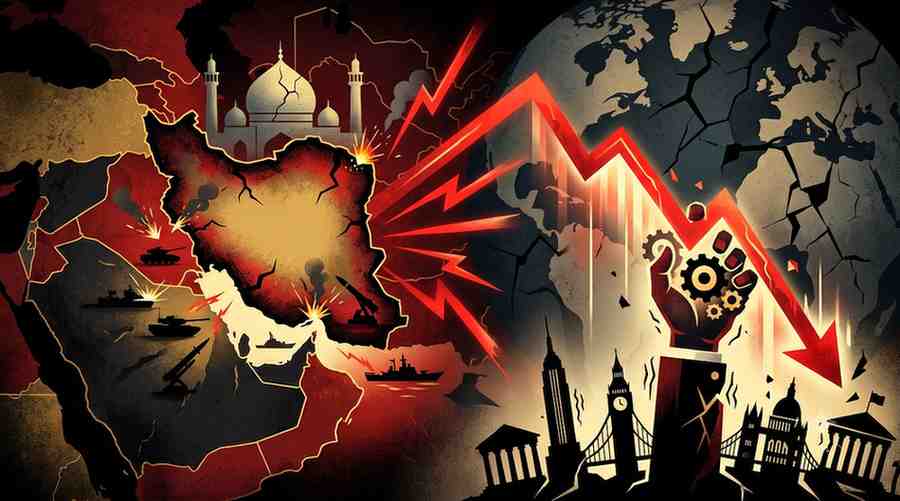
Geopolitical Tensions: Assessing the Fiscal Fallout of the Iran Conflict on Global Markets
The ongoing conflict in Iran is reshaping global markets, creating distinct categories of winners and losers. Energy prices are surging, while nations reliant on stable oil supplies face economic uncertainty.
New Delhi, August 2026 — The Iranian conflict has resulted in a pronounced bifurcation in global financial markets, with energy sectors experiencing significant gains while other sectors, particularly those dependent on stable crude prices, show vulnerability. Investors in energy stocks have benefitted from rising prices, while industries reliant on oil are bracing for inflationary pressures.
What Is Driving This?
The conflict has escalated geopolitical tensions, leading to fears of supply disruptions in the Middle East. Energy markets are particularly sensitive to these developments, as the region accounts for a substantial portion of global oil production. The immediate spike in crude oil prices reflects these concerns, impacting sectors ranging from transportation to manufacturing.
What Does This Mean for India?
India, as one of the largest importers of crude oil, faces dual challenges stemming from the conflict. Rising oil prices could exacerbate inflation, impacting consumer sentiment and spending. Consequently, policymakers may need to reconsider fiscal strategies to mitigate the impact on the economy, potentially leading to higher interest rates to combat inflation.
How Does This Compare Globally?
Globally, nations that are net exporters of oil are seeing economic benefits, as their revenues swell with rising prices. Conversely, countries heavily reliant on oil imports, such as Japan and many European nations, are witnessing increased economic strain. This divergence could lead to a realignment in international trade dynamics, as countries reassess their energy dependencies and supply chains.
- Crude oil prices surged by over 20% since the onset of the conflict.
- India’s crude oil imports account for approximately 80% of its total consumption.
- Countries like Saudi Arabia and Russia are projected to see GDP growth of 5% or more due to increased oil revenues.
- Inflation in India is projected to rise above 6% in the short term if oil prices remain elevated.
- Global energy stocks have outperformed the broader market by 15% since the conflict began.
Analyst’s View
The Iranian conflict underscores the intricate interdependencies within global markets, highlighting the need for strategic energy diversification for countries like India. Investors should remain vigilant, as volatility is likely to persist in both energy and inflation-sensitive sectors. Policymakers will need to balance immediate fiscal responses with long-term strategies aimed at enhancing energy security and economic resilience.