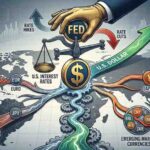
The Federal Reserve’s Rate Hold: Implications for the Dollar Amid Inflation and Geopolitical Uncertainty
The U.S. dollar experienced a decline following the Federal Reserve’s decision to maintain interest rates, signaling a cautious approach towards inflation and global geopolitical tensions. This shift could have profound implications for international trade dynamics and investment strategies.
New Delhi, July 2026 — The Federal Reserve’s recent announcement to keep interest rates unchanged has sent ripples through the global financial markets, leading to a noticeable dip in the dollar’s value. The central bank’s stance reflects a balancing act between fostering economic growth and addressing persistent inflationary pressures, alongside an environment fraught with geopolitical uncertainties that further complicate monetary policy considerations.
What Is Driving This?
The Federal Reserve’s decision is primarily influenced by ongoing inflation concerns, which, despite recent moderation, remain a key focus. The core inflation rate in the U.S. stands at approximately 4.2%, above the Fed’s target of 2%, prompting the central bank to exercise caution. Simultaneously, geopolitical tensions, particularly surrounding conflicts in Eastern Europe and the South China Sea, are contributing to market volatility, impacting investor confidence and currency valuations.
What Does This Mean for India?
India could face mixed repercussions from the dollar’s dip and the Fed’s rate hold. A weaker dollar may benefit Indian exports by making them more competitive internationally. Conversely, the potential for increased capital outflows from emerging markets, including India, poses risks as global investors seek safer assets amid geopolitical uncertainties. Additionally, the Reserve Bank of India (RBI) may have to recalibrate its monetary policy stance in response to these developments, particularly if inflationary pressures persist domestically.
How Does This Compare Globally?
Globally, the Fed’s decision contrasts with the actions of other central banks, particularly in Asia and Europe, where many are tightening monetary policies to combat inflation. The Bank of England recently raised its rates to 5.25%, while the European Central Bank continues to hike rates in response to elevated inflation rates. This divergence in central bank policies could lead to a stronger Euro and Pound relative to the dollar, further complicating international trade dynamics.
What Should Investors Watch?
- Monitor inflation trends in the U.S. and globally, as they will dictate future Fed policy.
- Watch for capital flow trends into emerging markets, especially India, as geopolitical tensions evolve.
- Keep an eye on currency fluctuations, particularly the Euro and Pound, in response to central bank policies.
- Assess the impact of a weaker dollar on commodity prices, particularly for oil and gold.
Analyst’s View
The Federal Reserve’s cautious approach underscores the delicate balance required in navigating inflation and geopolitical risks. Investors should prepare for a volatile environment, as shifts in central bank policies globally could lead to fluctuations in currency values and trade dynamics. The interplay between U.S. monetary policy, inflation, and international tensions will remain pivotal in shaping market sentiment and investment strategies going forward.