Potential Tariff Hikes Loom as US Senate Moves to Sanction Russia: Implications for India
- admin
- July 29, 2026
- Uncategorized
- 0 Comments
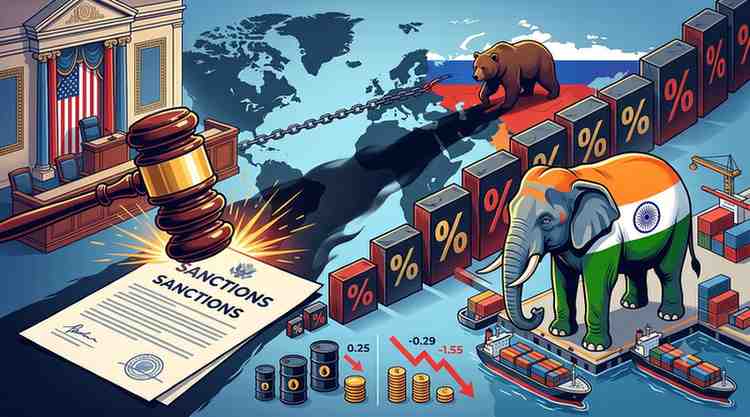
The US Senate’s advancement of a Russia sanctions bill could lead to a 100% tariff on Indian goods, significantly impacting trade relations. This potential action underscores the geopolitical complexities India faces in its economic partnerships.
New Delhi, July 2026 — The US Senate’s recent move to advance a sanctions bill targeting Russia raises the specter of heightened tariffs on Indian exports, potentially reaching 100%. This development not only complicates India’s trade landscape but also signals a broader geopolitical strategy from the US that could redefine international trade norms.
What Is Driving This?
The US government is intensifying its sanctions regime against Russia due to ongoing geopolitical tensions, particularly regarding military actions in Ukraine. The US seeks to leverage economic pressure as a tool of foreign policy, and by extending these sanctions to countries that maintain trade relationships with Russia, it aims to isolate Moscow further. India, which has continued to engage with Russia for defense and energy supplies, finds itself at a crossroads where its diplomatic ties could be tested against economic imperatives.
What Does This Mean for India?
The potential for a 100% tariff on Indian goods poses significant risks for Indian exporters, particularly in sectors like textiles, pharmaceuticals, and machinery, which are heavily reliant on the US market. India’s trade balance could face adverse effects, leading to inflationary pressures domestically as costs rise for consumers and businesses alike. Additionally, Indian policymakers will need to reassess their trade strategies in light of these developments, potentially accelerating diversification efforts towards other markets.
How Does This Compare Globally?
Globally, the US has been increasingly using tariffs as a tool to influence foreign policy outcomes, a trend that has seen countries like China and Turkey previously bear the brunt. However, India’s unique position as a major democracy and a strategic partner for the US complicates the scenario. Unlike the tariffs levied against China, which were part of a broader trade war, potential tariffs against India may signal a shift in the US approach to multilateral trade agreements, particularly as it navigates alliances in an increasingly multipolar world.
What Should Investors Watch?
Investors should closely monitor developments regarding US-India trade relations, as tariffs could lead to immediate market volatility. Key sectors such as IT services, agriculture, and manufacturing could be affected, leading to shifts in stock prices and investment flows. Additionally, any retaliatory measures from India could further escalate tensions, impacting foreign direct investment (FDI) projections for both countries.
- US Senate sanctions bill could impose a 100% tariff on Indian goods.
- India’s exports to the US were valued at approximately $74 billion in 2022.
- Textiles and pharmaceuticals are among the sectors likely to be most affected.
- Geopolitical tensions have led to a 20% decline in bilateral trade since early 2023.
- Investors should be cautious of volatility in Indian markets as trade policies evolve.
Analyst’s View
The potential for increased tariffs signals an urgent need for India to pivot its trade strategy and enhance its resilience against geopolitical upheavals. Policymakers must prioritize diversification of trade partners and bolster domestic industries to mitigate reliance on vulnerable sectors. The coming months will be critical in determining how effectively India can navigate these complex dynamics while safeguarding its economic interests.