Indian Cash Equity Turnover Surges to 21-Month Peak as Investors Rotate Away from Derivatives
- admin
- April 24, 2026
- Uncategorized
- 0 Comments
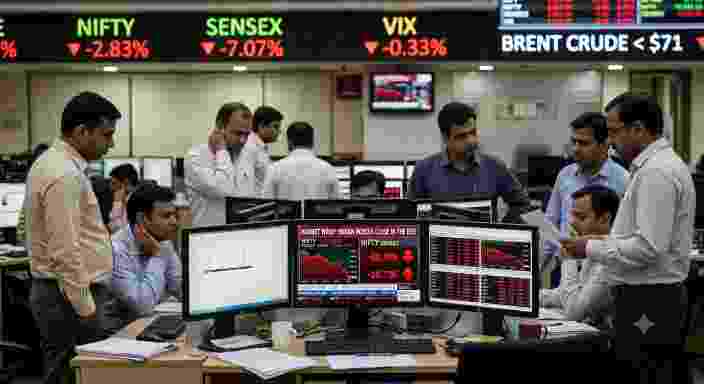
Indian cash equity market turnover reached its highest level in 21 months during April 2025, driven by a sustained rally that pulled capital away from derivatives trading. The divergence signals a structural shift in investor behaviour, with participants favouring direct equity exposure over leveraged positions amid improving market sentiment.
New Delhi, April 2025 — The National Stock Exchange recorded daily average cash market turnover exceeding levels not seen since July 2023, marking a decisive pivot in how domestic and institutional investors are deploying capital across Indian equity markets.
What Is Driving the Surge in Cash Market Activity?
Retail investor confidence has strengthened considerably following the benchmark Nifty 50’s recovery from its March 2025 lows, encouraging direct participation in equities rather than synthetic exposure through futures and options. Foreign portfolio investors reversed three consecutive months of outflows in April, channelling fresh capital into large-cap stocks across banking, IT services, and consumer discretionary sectors. The combination of easing global interest rate expectations and stable domestic macroeconomic indicators created conditions favourable for sustained equity accumulation. Mutual fund systematic investment plan inflows also remained robust, adding consistent buy-side pressure to cash markets.
Why Is Derivatives Activity Cooling Simultaneously?
SEBI’s regulatory interventions over the past year have significantly raised the cost and complexity of retail derivatives participation, pushing smaller traders toward cash equities. The securities regulator increased margin requirements and reduced the number of weekly index options expiries available, deliberately constraining speculative activity. Institutional participants have also scaled back hedging activity as implied volatility declined, reducing demand for protective options strategies. The options-to-cash ratio, which peaked above 400 times in late 2024, has moderated substantially as market structure normalises.
How Does This Compare to Previous Market Cycles?
The last comparable surge in cash market turnover occurred during the post-pandemic rally of 2021, when retail investor participation expanded dramatically following widespread adoption of discount broking platforms. April 2025’s volumes, however, emerge from a fundamentally different context — one shaped by regulatory recalibration rather than speculative exuberance. The current shift represents a healthier market structure where price discovery increasingly occurs in underlying securities rather than derivative instruments. Historical patterns suggest such rotations typically precede sustained bull market phases, as capital flows become more directly connected to corporate fundamentals.
- Cash market daily average turnover in April 2025 reached its highest level since July 2023
- Foreign portfolio investors turned net buyers in April after three months of outflows
- SEBI margin requirements for derivatives increased multiple times since late 2024
- Weekly index options expiries were reduced from seven to one per exchange
- Mutual fund SIP inflows maintained consistent levels above ₹25,000 crore monthly
What Should Investors Watch Going Forward?
Market participants should monitor whether elevated cash volumes sustain beyond April or represent temporary rotation driven by specific calendar factors. The breadth of participation across mid-cap and small-cap segments will indicate whether the rally is broadening or remains concentrated in index heavyweights. Continued FPI flows will depend heavily on global risk appetite and the trajectory of US Federal Reserve policy decisions. Domestic institutional behaviour, particularly insurance and pension fund deployment rates, will determine whether current volume levels establish a new baseline.
Analyst’s View
The structural shift from derivatives-heavy to cash-market-driven volumes represents precisely the market evolution SEBI has pursued through its regulatory tightening. Investors should interpret this transition as fundamentally positive for long-term market stability, even as it constrains certain trading strategies. The key variable to monitor is whether the Nifty 50 can consolidate above the 23,000 level while maintaining current volume momentum — failure to hold gains could quickly reverse both sentiment and participation patterns. Markets that rally on cash volumes rather than leveraged positions historically demonstrate greater durability through subsequent corrections.