India Enters a New Era: Country’s First Hydrogen-Powered Train Launched
- Editor
- July 18, 2026
- Uncategorized
- 0 Comments
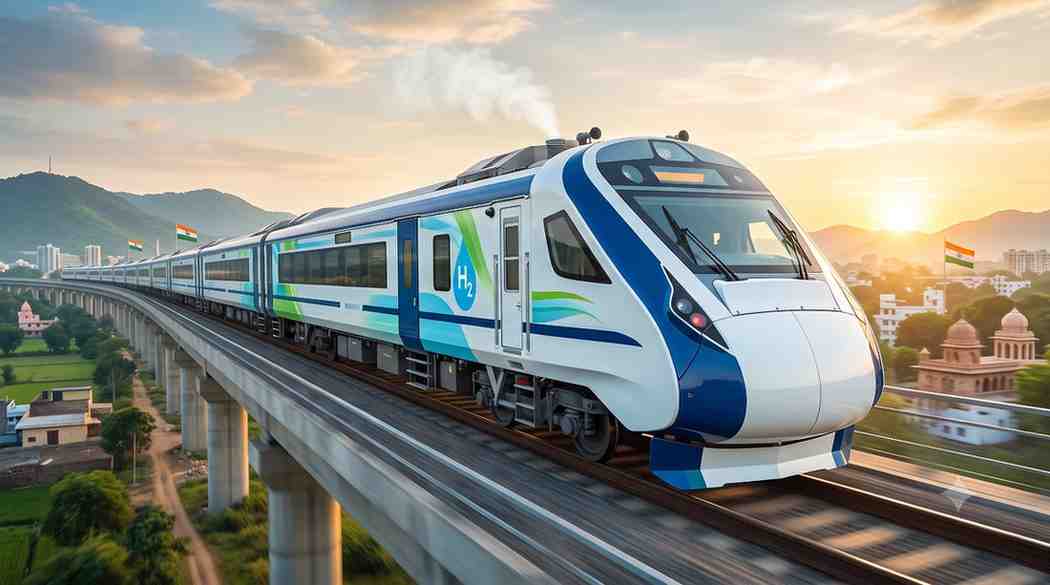
New Delhi, July 2026 — India has officially entered the next generation of rail travel, joining a select group of nations capable of operating hydrogen-powered trains. With the recent inauguration of the country’s first hydrogen train by Prime Minister Narendra Modi, the Indian Railways is setting a new course for sustainable, zero-emission transportation.
Moving Beyond the Combustion Era
For decades, Indian Railways has relied on steam, diesel, and electricity. The hydrogen train represents the fourth, and perhaps most significant, evolution in railway propulsion. Unlike diesel engines that burn fuel directly, hydrogen trains utilize a sophisticated fuel cell system.
By converting hydrogen into electricity through a chemical reaction—and storing excess energy in high-performance battery packs—the train powers electric motors to move its wheels. The only byproduct of this entire process is water, making it a critical step toward the government’s green energy goals.
Engineering a Clean Powerhouse
The technology inside these coaches is a marvel of modern engineering. Because hydrogen has low density, it is stored in high-pressure, carbon-fiber-reinforced tanks designed specifically to be leak-proof and fire-resistant.
The core of the system is the fuel cell stack, where hydrogen and atmospheric oxygen combine, facilitated by a platinum catalyst. This reaction produces the electricity required to power onboard systems, including air conditioning, lighting, and traction motors. Battery packs serve a dual purpose: they provide extra bursts of power during acceleration and help the train navigate steep, hilly terrain where high power demand is constant.
Deployment: The Jind-Sonipat Route
The new service will cover an 89-kilometer stretch between Jind and Sonipat in Haryana. The train set features 10 coaches: eight for passengers and two specialized hydrogen-powered driving power cars.
With a combined power output of 2,400 kW, the train is designed to carry a seated capacity of 682 passengers, with a total capacity of roughly 2,600. It is expected to maintain an operational speed of 75 km/h, performing two round trips daily. To support this, Indian Railways has commissioned the country’s largest hydrogen refueling facility at the Jind station, ensuring a seamless supply chain for this new fleet.
The Strategic Shift
While Indian Railways has already achieved 95% electrification across its network, hydrogen technology is intended to fill the gaps where traditional electrification is economically or geographically impractical. This includes heritage lines, remote sections, and low-density routes where installing overhead cables would be cost-prohibitive.
The government’s ultimate vision is to power these trains using “Green Hydrogen”—produced via renewable energy—aligning with the National Green Hydrogen Mission. While the initial costs of infrastructure and advanced materials like platinum catalysts remain high, this launch serves as a trial for a cleaner, quieter, and more sustainable future for the Indian rail network.
Bottom Line The era of the hydrogen train is no longer a futuristic concept but a present-day reality in India. By shifting focus from fossil fuels to hydrogen, the country is proving that it can balance the massive demands of its railway network with the urgent need for environmental stewardship.