The Canvas of Freedom: Painting India’s Democratic Landscape
-
admin
-
October 17, 2025
-
Politics
-
0 Comments
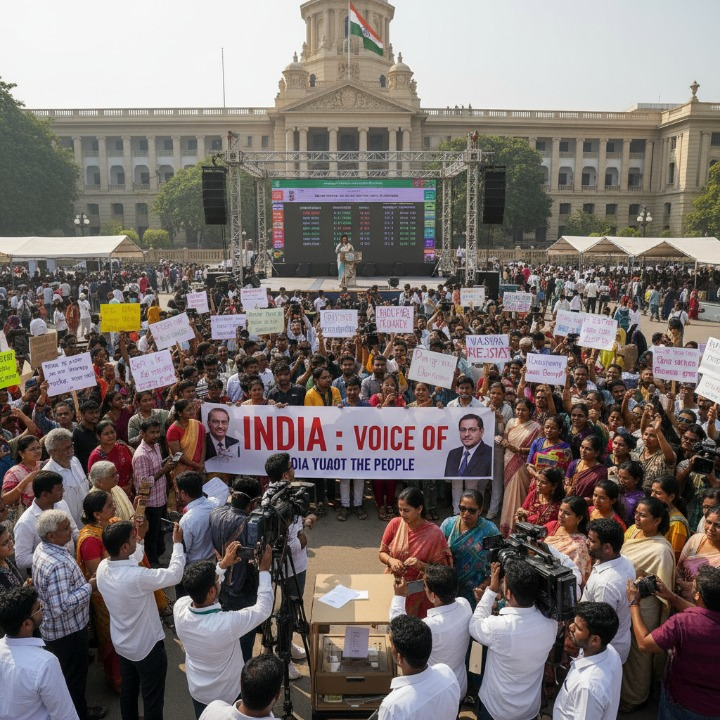
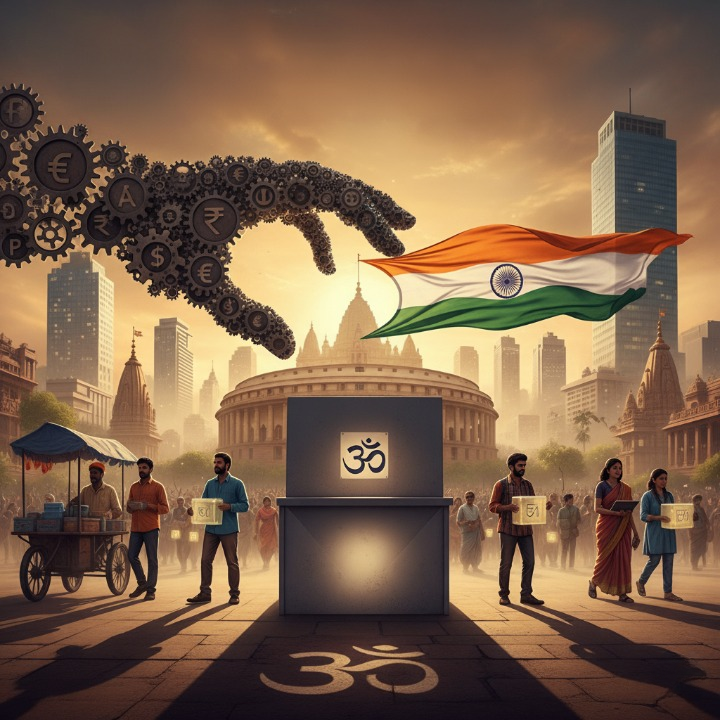
Exploring the Diversity, Challenges, and Aspirations of the World’s Largest Democracy Key Metrics: News Body India’s democracy is often likened to a vibrant canvas, where each stroke represents its diverse voices, regions, and aspirations. From the towering peaks of the Himalayas to the coastal expanses of Tamil Nadu, this democratic tapestry weaves together over a billion people, reflecting unity in …
Continue Reading
Uttar Pradesh: The State Where Political Futures Are Forged
Lucknow, 2025 — Uttar Pradesh (UP), with its pivotal role in Indian politics, acts as a crucible where political destinies are shaped and futures are decided. This sprawling state, with its complex socio-political landscape and strategic significance, not only influences national elections but also serves as a barometer for political trends and transformations across India. This article explores how UP has …
Continue Reading
The Consequences of Democratic Backsliding: A Global Perspective
-
admin
-
October 15, 2025
-
Politics, World View
-
0 Comments
How the Erosion of Democratic Norms Impacts Governance, Human Rights, and Global Stability Key Metrics: Introduction Democratic backsliding—the gradual erosion of democratic norms and institutions—has emerged as a growing concern worldwide. From restrictive legislation to weakened accountability mechanisms, this phenomenon threatens not only the integrity of governance but also global stability. This article explores the tangible consequences of democratic backsliding …
Continue Reading
Are We Seeing Real Change in UP’s Political Landscape?
-
admin
-
October 15, 2025
-
Development, Politics
-
0 Comments
Examining the Shifting Dynamics and Political Transformations in Uttar Pradesh KEY METRICS: NEWS BODY Uttar Pradesh (UP) has long been considered a state where political power is closely tied to caste, religion, and regional affiliations. However, recent developments in the state’s political landscape indicate that some significant changes are underway. From shifting voter behavior to the rise of new political …
Continue Reading
Can Democracy Survive Under the Weight of Economic Inequality in India?
-
admin
-
October 13, 2025
-
Opinion & Analysis, Politics
-
0 Comments
New Delhi, India, 2025 — Democracy thrives on the principle of equality—where every citizen has an equal voice and opportunity to influence governance. However, in India, the growing chasm between the rich and the poor raises critical concerns about the sustainability of this ideal. Economic inequality, starkly evident in both urban hubs and rural hinterlands, threatens to erode the very foundations …
Continue Reading
The Dichotomy of Rights: How Capitalism Shapes Democratic Freedoms in India
-
admin
-
October 12, 2025
-
India, Politics
-
0 Comments
New Delhi, India, 2025 — Democracy promises rights, freedoms, and equality, but when intertwined with capitalism, these ideals can take on a more exclusive character. In India, where rapid economic growth has positioned it as a global powerhouse, the influence of capitalism on democratic freedoms has become both a driver of progress and a cause for concern. The dichotomy lies in …
Continue Reading
Socialism’s Place in Democracy: Can They Coexist in India?
-
admin
-
October 10, 2025
-
culture, Politics
-
0 Comments
New Delhi, India, 2025 — As India navigates the 21st century, the delicate balance between socialism and democracycontinues to shape its governance. While democracy emphasizes individual freedoms and political representation, socialism calls for economic equity and collective welfare. India’s Constitution, with the inclusion of the word “socialist” through the 42nd Amendment (1976), aims to harmonize these ideals. Yet, as privatization accelerates and wealth inequality deepens, …
Continue Reading
The Myth of Democratic Choice: Are Citizens Truly Empowered in India?
-
admin
-
October 9, 2025
-
India, Politics
-
0 Comments
New Delhi, India, 2025 — Democracy is often celebrated as the ultimate form of governance, where citizens are empowered to shape their nation’s future through free and fair elections. However, in practice, the concept of democratic choice is increasingly scrutinized, as systemic issues such as economic disparities, corporate influence, and limited political diversity dilute the true power of the electorate. This …
Continue Reading
Non-Secular Democracies: How Religion Influences Political Structures in India
-
admin
-
October 8, 2025
-
Politics, Religion
-
0 Comments
New Delhi, India, 2025 — India, the world’s largest democracy, is constitutionally secular, ensuring that religion and governance remain separate. However, the practical influence of religion on political structures and policymaking often challenges this principle. From electoral strategies to legislative frameworks, religion continues to shape India’s political landscape in profound ways. This article critically examines how religion influences political structures in …
Continue Reading
How Do Non-Secular Democracies Justify Their Political Systems?
-
admin
-
October 6, 2025
-
Politics
-
0 Comments
Examining the Intersection of Religion, Politics, and Governance in Non-Secular States Key Metrics: Introduction While secularism is often viewed as a cornerstone of democracy, several nations operate as non-secular democracies, intertwining religious principles with political governance. These systems justify their approach by appealing to historical, cultural, and societal frameworks where religion is seen as an integral component of national identity. …
Continue Reading