India Targets First Made-in-India Civilian Aircraft by 2028, Leverages Mega Fleet Orders to Draw Global OEMs
- Editor
- November 25, 2026
- Uncategorized
- 0 Comments
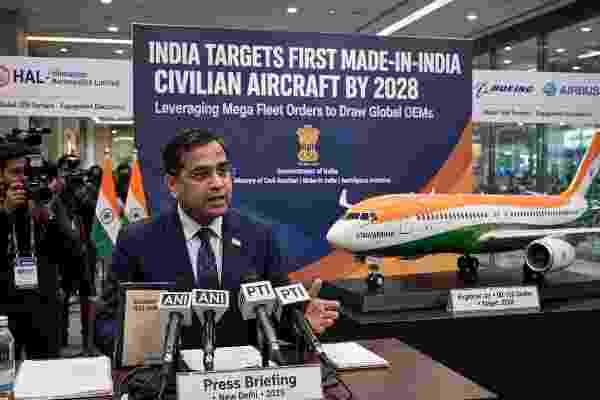
Visakhapatnam, November 2026 — India is preparing to cross one of the final frontiers in global manufacturing: building its own commercial passenger plane. Civil Aviation Minister K. Rammohan Naidu has announced that the country aims to roll out its first indigenous civilian aircraft within the next two years, setting a 2028 target for a milestone long dominated by Western aerospace giants.
Turning Massive Orders into Industrial Leverage
For decades, India has been one of the world’s fastest-growing aviation markets without manufacturing the airliners its carriers fly. Today, domestic airlines operate roughly 860 aircraft and hold orders for another 1,640 planes—almost entirely from Boeing and Airbus.
New Delhi is now using that massive orderbook as a bargaining chip. Rather than remaining just a lucrative customer for overseas assembly lines, the government is pushing global Original Equipment Manufacturers (OEMs) to deepen engineering, supplier development, and local manufacturing inside India.
A Supply Chain Already Taking Shape
The push for a Made-in-India aircraft is not starting from scratch. Beneath the headline ambition sits a rapidly maturing domestic aerospace ecosystem:
- Component Sourcing: More than 400 Indian MSMEs already supply roughly $4.2 billion worth of aerospace components to major global manufacturers like Boeing and Airbus.
- Scaling Toward $10 Billion: The Ministry of Civil Aviation is targeting a major expansion of domestic sourcing, aiming to grow India’s OEM supply base into a $10 billion industry.
- New Manufacturing Models: Policymakers are exploring joint ventures and Special Purpose Vehicles (SPVs) that pair domestic private aerospace players with global partners to design and assemble regional civilian aircraft.
Booming Skies Demand More Than Just Planes
The urgency behind domestic manufacturing is driven by explosive passenger growth at home. Fueled by the regional connectivity scheme UDAN, air traffic connecting Tier 1, Tier 2, and Tier 3 cities has grown roughly 2.3 times since 2014.
To keep pace, the government plans to build 100 additional airports across the country under an extended UDAN push. Alongside aircraft production, Naidu has urged domestic industry and startups to invest across the wider aviation value chain—including Maintenance, Repair and Overhaul (MRO) hubs, precision components, drones, and next-generation electric air taxis (eVTOLs).
From Buyer to Builder
Delivering a certified civilian aircraft within two years is an ambitious test of India’s engineering and industrial execution. Yet the broader strategy is unmistakable: with over 1,600 planes on order and hundreds of local suppliers already feeding global production lines, India is no longer content to simply buy the world’s aircraft—it intends to build them.