Powering the Cloud: Waaree Renewables Drives the Green Data Center Trend
- Editor
- September 17, 2026
- Uncategorized
- 0 Comments
MUMBAI — Waaree Renewable Technologies Ltd. (WRTL), a major player in India’s solar engineering and green energy sector, has rapidly accelerated its expansion into digital infrastructure. Through its wholly owned subsidiary, Waaree Green Data Centers Private Limited, the company announced the incorporation of two new data center subsidiaries—Sunstar Data Centers and Aurovault Data Centers—within a span of just a few days.
This aggressive move marks a significant pivot for the renewable energy firm and highlights a rapidly emerging macro-trend across the digital economy: the vertical integration of renewable power generation and data center infrastructure.
Here is an in-depth breakdown of Waaree’s strategy and what it signals for the future of digital infrastructure in India.
Segment 1: The Energy Intensity of the AI Boom
The motivation behind Waaree’s pivot into the data center space is clear: power demand. The global surge in Artificial Intelligence (AI) deployment, machine learning workloads, and accelerated digitalization has fundamentally altered the power requirements of the tech sector.
- The AI Power Drain: Modern AI-ready data centers require significantly more electricity for both computing and cooling than traditional web-hosting facilities. As India scales its digital economy, the demand for reliable, uninterrupted baseload power is skyrocketing.
- The Regulatory and ESG Push: Simultaneously, global tech giants and large enterprises are facing intense pressure to meet ambitious Environmental, Social, and Governance (ESG) targets. They can no longer afford to run their massive compute loads on carbon-heavy, coal-powered grids. They demand green energy.
Segment 2: Vertical Integration — The New Business Model
By establishing Sunstar and Aurovault, Waaree Renewables is positioning itself not just as a power provider, but as an infrastructure owner. This represents a classic vertical integration strategy, creating a powerful closed-loop business model:
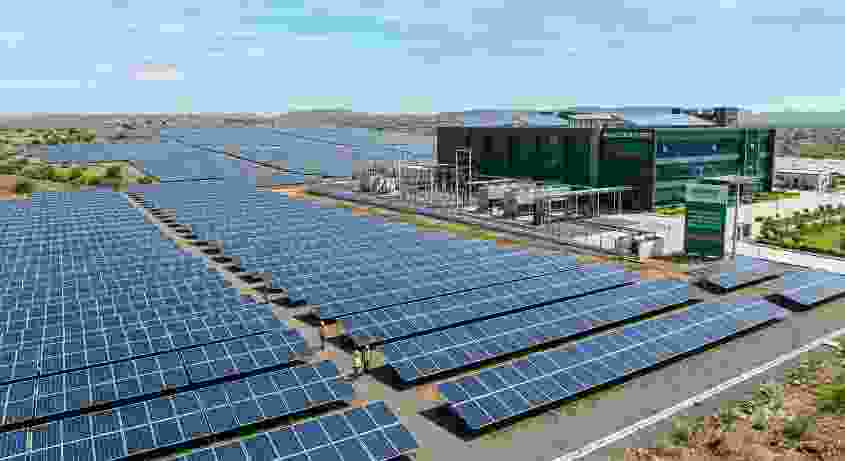
- Backward Integration (The Source): Waaree utilizes its core expertise as a Solar EPC (Engineering, Procurement, and Construction) company to generate utility-scale green electricity.
- Forward Integration (The Consumer): Instead of merely selling that electricity back to the grid or to third-party factories, Waaree builds its own data centers.
- The Synergistic Loop: The company uses its own renewable energy to power its own digital infrastructure, effectively capturing the profit margins at both ends of the value chain.
Segment 3: The Economic Advantage
This strategy offers several distinct economic advantages for a company like Waaree:
- Captive Demand: The data centers provide a guaranteed, high-volume consumer for the electricity Waaree generates, eliminating market volatility risk for its power sales.
- Premium Pricing: Tech companies are willing to pay a premium for “green cloud” hosting to meet their corporate sustainability mandates. Waaree can offer a highly attractive, fully green value proposition to these enterprise clients.
- Hedge Against Grid Instability: By integrating generation and consumption, Waaree can potentially bypass the complexities and transmission losses associated with the traditional, often overburdened, national power grid.
The Bottom Line
Waaree Renewables’ rapid establishment of Sunstar and Aurovault Data Centers is more than a simple corporate expansion; it is a blueprint for the future of infrastructure. As the AI revolution continues to demand unprecedented amounts of electricity, the line between an “energy company” and a “tech company” will increasingly blur. Waaree is betting that the most profitable data centers of tomorrow will be built by the companies that control the power today.