The Illusion of Cloud Permanence: AWS Bahrain Suffers Irreversible Data Loss Following Physical Strikes
- Editor
- September 17, 2026
- Uncategorized
- 0 Comments
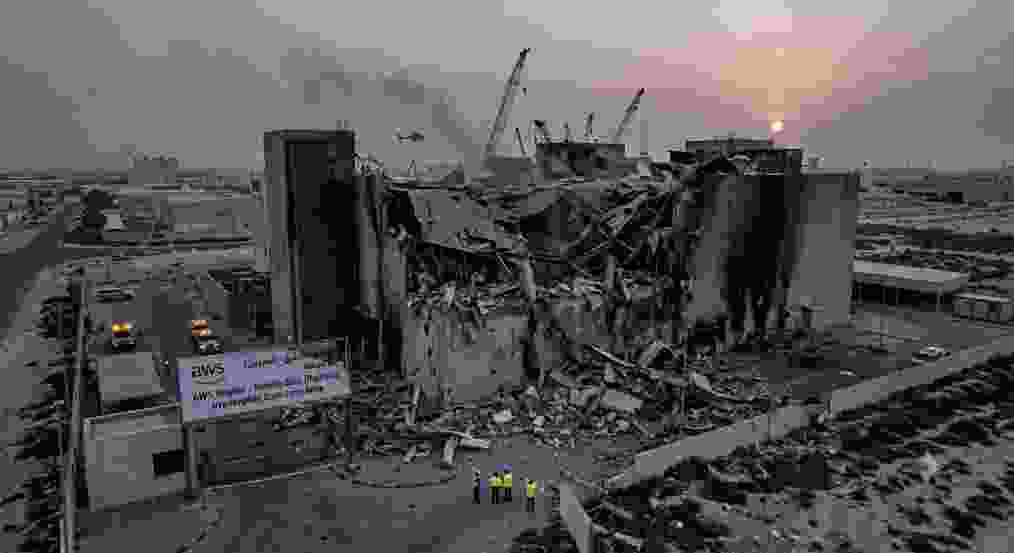
MANAMA / SEATTLE — In an unprecedented crisis that has shattered enterprise assumptions about the resilience of hyperscale infrastructure, Amazon Web Services (AWS) has confirmed that critical data hosted in its Bahrain region is permanently lost and cannot be recovered.
The catastrophic wipeout follows consecutive physical strikes against AWS infrastructure in the Middle East in March and April 2026, marking one of the rarest and most severe operational failures in the history of modern enterprise cloud computing.
While the tech industry has spent two decades migrating workloads off-premises under the presumption that the cloud is an indestructible, self-healing vault, the incident in Bahrain delivers a harsh reality check: the cloud is still composed of concrete, fiber, and hard drives anchored to physical ground.
Here is an in-depth breakdown of the breakdown, the architectural blind spots it exposed, and what this means for enterprise risk management.
Segment 1: The Kinetic Threat — When Geopolitics Hits Server Racks
For years, cloud service level agreements (SLAs) and disaster recovery protocols have been engineered to withstand localized disruptions—power grid failures, fiber cuts, cooling outages, and extreme weather events.
However, the sequential strikes against AWS data centers in Bahrain represent a different category of disaster altogether:
- Sequential Strikes: Following an initial strike in March 2026, a second facility was compromised in April, neutralizing the localized redundancy that AWS Availability Zones (AZs) are designed to provide.
- The Failover Failure: Analysts and affected engineers have raised sharp questions regarding AWS’s mitigation window between the two incidents. Cloud architecture theoretically allows rapid migration of snapshots and workloads across safer borders. The fact that data remained stranded in a targeted geopolitical zone until total physical annihilation reveals a critical breakdown in crisis-stage failover procedures.
Segment 2: The Database Abyss — Code Survives, State Dissolves
The real devastation for affected startups, financial platforms, and regional enterprises is not the infrastructure itself—it is the catastrophic loss of stateful data.
In software engineering, disaster recovery generally bifurcates into two layers:
- Stateless Logic: Source code, configuration scripts, and frontend assets are rarely lost. Most engineering teams maintain external repositories on platforms like GitHub, GitLab, or local developer workstations. Re-deploying an application to a fresh virtual machine takes hours, if not minutes.
- Stateful Data: Databases—containing user authentication tables, transactional ledgers, purchase histories, and compliance audit trails—cannot simply be recompiled from a git repository.
Organizations that relied exclusively on the Bahrain region for database hosting without configuring automated cross-region replication (CRR) have essentially experienced total corporate amnesia. Without surviving database backups, attempting to reconstruct transaction histories from secondary sources like third-party payment gateway receipts is an operational nightmare that could lead to outright business closure.
Segment 3: The Single-Region Trap and the Cost of Egress
Why were so many organizations vulnerable to a single-point-of-failure disaster on the world’s largest cloud provider? The answer lies in the subtle economic trade-offs of cloud architecture.
- The Latency vs. Cost Balance: Many engineering teams spin up infrastructure inside a single cloud region (such as
me-south-1in Bahrain) to minimize latency for local end-users and to avoid AWS’s hefty data egress fees. Transferring terabytes of live transactional data across international borders into European or Asian data centers incurs significant bandwidth charges. - The Myth of Default Redundancy: A common misconception among non-technical founders and executives is that “being in the cloud” automatically means your data is backed up globally. In reality, public cloud operates on a Shared Responsibility Model. AWS guarantees the uptime and physical security of the host hardware; the client is entirely responsible for architecting geographic redundancy, multi-region failovers, and cold-storage replication.
Segment 4: The Strategic Reckoning for Enterprise CTOs
The Bahrain disaster is set to trigger a sweeping re-evaluation of multi-region architecture across boardrooms globally:
| Architectural Strategy | Pre-Bahrain View | Post-Bahrain Reality |
| Single-Region Multi-AZ | Standard industry practice; considered safe for 99.9% of use cases. | Insufficient against geopolitical instability and physical infrastructure conflict. |
| Cross-Region Replication | Seen as a costly luxury reserved for Fortune 500 banks. | Non-negotiable baseline for critical databases, regardless of egress fees. |
| Multi-Cloud Strategy | Complex, operationally burdensome, and often avoided. | Urgent priority to eliminate vendor lock-in and localized sovereign risk. |
The Bottom Line
The collapse of the AWS Bahrain data center marks the end of the cloud’s age of innocence. Digital platforms can no longer treat cloud architecture as an abstract, borderless utility divorced from physical geography.
For enterprise leaders, the directive is unequivocal: if your database does not exist in at least two geographically separated, politically stable regions simultaneously, it does not exist at all.