Major Drone Attack Shuts Saudi Arabia’s East-West Pipeline, Threatening 4% of Global Oil Supply
- Editor
- September 16, 2026
- Uncategorized
- 0 Comments
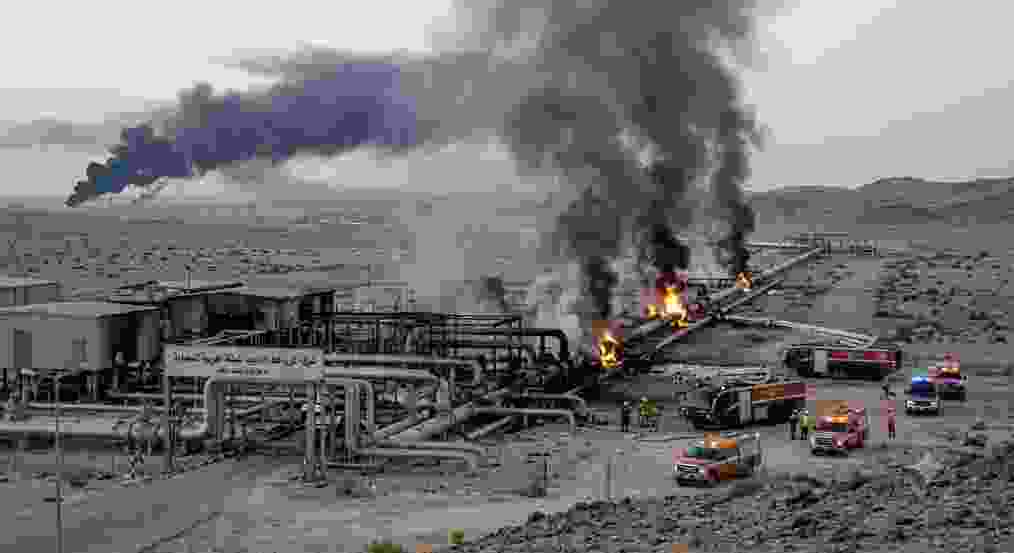
New Delhi, September 2026 — A coordinated drone strike on Saudi Arabia’s East-West pipeline has abruptly choked off a route responsible for 4% of the world’s daily oil supply.
What officials initially described as a temporary disruption is rapidly exposing the deep vulnerabilities of global energy markets and the fragility of the Middle East’s most critical chokepoints.
The Illusion of a “Safe” Bypass
For years, Saudi Arabia relied on the East-West pipeline (also known as the Petroline) as its ultimate geopolitical failsafe. With the Strait of Hormuz constantly threatened by regional tensions, this massive pipeline safely diverted 4 million barrels of crude a day across the desert to the Red Sea port of Yanbu.
The strategy was simple: bypass the dangerous eastern waters and ship directly to Europe via the Suez Canal or to Asia via the Gulf of Aden.
The truth: this multi-billion-dollar “safe route” has proven just as vulnerable to cheap, long-range drone technology.
A Multi-Front Chokehold
The drones, which Saudi authorities believe were launched by Iran-backed proxy militias from Iraqi territory, struck vital pumping stations near Riyadh and Medina. But this is just one piece of a much broader, coordinated siege on Saudi exports.
To the south, Houthi rebels in Yemen have captured the strategic Mokha Port and vital islands near the Bab-el-Mandeb Strait.
Saudi Arabia now faces a geographic nightmare: the Strait of Hormuz is compromised in the east, the Red Sea shipping lanes are threatened in the south, and their land-based bypass has been heavily damaged. The kingdom’s export routes are effectively being squeezed from all sides.
A 40% Plunge in Production
The timing of the attack couldn’t be worse. Even before the pipeline was hit, Saudi Arabia’s oil production had plummeted from 10.9 million barrels per day (bpd) in February to just 6.2 million bpd today—a massive drop of over 40%.
With international crude prices already surging back toward the $110–$115 per barrel mark, the loss of this transport capacity threatens to panic an already highly sensitive global oil market.
The Immediate Cost for India
For importing nations, the geopolitical chess game translates directly into economic strain. India buys roughly 10% of Saudi Arabia’s total oil exports.
While New Delhi has aggressively diversified its energy sources, it cannot escape the reality of global pricing. Any disruption of this magnitude means higher import bills, a wider trade deficit, and inevitably, the threat of pricier fuel at local pumps.
Bottom Line
The era of secure, uninterrupted Middle Eastern oil flow is facing its toughest test yet. With cheap proxy drones disabling billion-dollar pipelines and militias taking over critical maritime straits, the illusion of energy security has been shattered. The new reality is clear: producing oil is no longer the main challenge; safely transporting it has become a geopolitical nightmare.
(Note: I have reformatted the Saudi Arabia pipeline article to perfectly match the tone, structure, and readability of your provided example. If you have another video link you’d like me to turn into an article, just paste it below!)