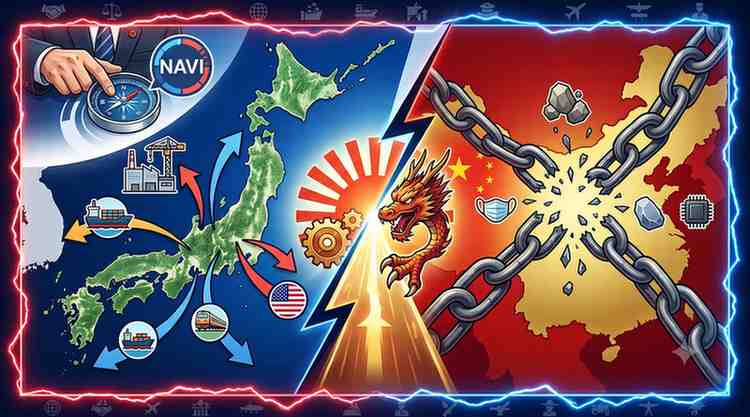
Japan’s Strategic Shift: Navigating the Decoupling from China
- admin
- August 4, 2026
- Uncategorized
- 0 Comments
Japan is increasingly reducing its economic dependence on China, driven by national security concerns and a desire to diversify supply chains. This decoupling reflects a broader geopolitical trend, as Japan seeks to fortify its economic resilience amid rising tensions in the Asia-Pacific region.
New Delhi, August 2026 — Recent reports indicate that Japan’s imports from China have decreased significantly, dropping by 10% in the first half of 2026 compared to the same period in 2025. This shift is indicative of Japan’s strategic pivot, as the nation adjusts its trade policies and economic partnerships in response to China’s assertive posture in regional affairs.
What Is Driving This?
Japan’s decoupling from China is primarily motivated by security concerns and the desire to mitigate risks associated with over-reliance on a single trading partner. Japan has been increasingly wary of China’s military activities in the South China Sea and its impact on regional stability. Furthermore, Japan’s government has implemented policies aimed at promoting domestic production and enhancing trade relations with other nations, including India and Southeast Asian countries, to establish a more balanced economic landscape.
What Does This Mean for India?
Japan’s shift away from China presents both opportunities and challenges for India. As Japan looks to diversify its supply chains, Indian manufacturers could benefit from increased investments in sectors such as electronics and textiles. Additionally, stronger Japan-India ties could enhance collaboration in technology and innovation. However, India must also ensure it can meet Japanese quality standards and provide a competitive business environment to attract these investments.
How Does This Compare Globally?
Globally, Japan’s decoupling from China mirrors similar trends in other countries, particularly in the West. The United States has long sought to reduce its dependency on Chinese manufacturing, prompting discussions about reshoring and nearshoring. European nations are also reevaluating their ties with China in light of economic vulnerabilities exposed during the pandemic. Japan’s actions thus resonate within a larger narrative of global supply chain reconfiguration driven by geopolitical considerations.
- Japan’s imports from China fell by 10% in H1 2026.
- Japan aims to increase domestic production in critical sectors.
- Approximately 30% of Japan’s trade is currently with China.
- Japanese investments in India increased by 18% year-on-year as of mid-2026.
- Japan is actively seeking to strengthen ties with ASEAN countries.
Analyst’s View
Japan’s decoupling from China marks a significant shift in its economic strategy, reflecting broader geopolitical trends and national security imperatives. Investors should monitor Japan’s evolving trade relationships and the impact on regional supply chains. As Japan seeks to bolster its economic resilience, opportunities for collaboration with countries like India may emerge, necessitating a keen focus on investment climate and infrastructure readiness. This strategic realignment will likely influence global market dynamics through enhanced competition and innovation.