Federal Reserve’s Upcoming Decision: Implications for Global Currency Stability
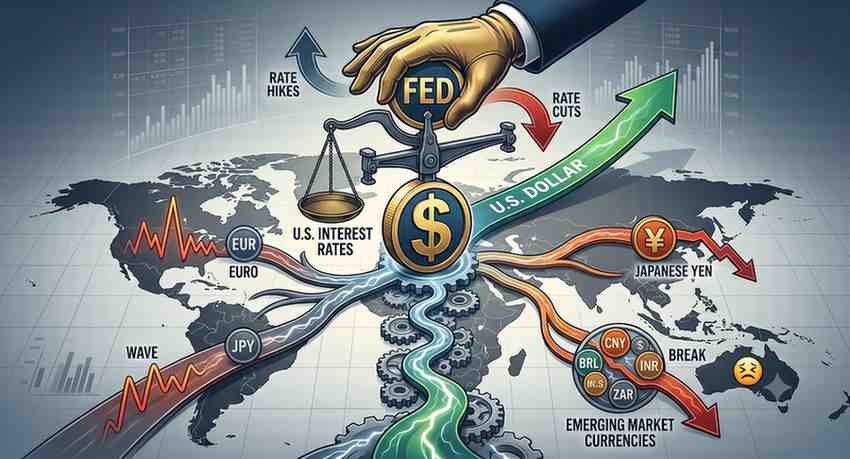
The U.S. dollar remains stable as markets brace for a crucial Federal Reserve interest rate decision, reflecting investor caution amid mixed economic signals. This decision could have significant ramifications for global currency dynamics and economic policies worldwide.
New Delhi, July 2026 — As markets await the Federal Reserve’s forthcoming interest rate announcement, the U.S. dollar holds steady, trading within a narrow band. Analysts note that the current stability of the dollar comes against a backdrop of fluctuating economic indicators, with inflation pressures still a pivotal concern for policymakers. This wait-and-see approach among investors underscores the importance of monetary policy as a determinant of currency strength and global financial stability.
What Is Driving This?
Investor sentiment is being shaped by recent inflation data and employment figures in the United States. The Federal Reserve is weighing whether to maintain the current interest rates or opt for an increase to combat persistent inflation, which has remained above the targeted 2% threshold. Additionally, geopolitical uncertainties and the ongoing impacts of the global supply chain disruptions are contributing to market hesitancy.
What Does This Mean for India?
India’s economy, being one of the largest emerging markets, is particularly sensitive to fluctuations in the dollar’s value. A stable dollar may provide a respite for Indian exporters, as it can help maintain competitiveness in international markets. Conversely, if the Fed raises interest rates, capital outflows could intensify, putting pressure on the Indian rupee and prompting the Reserve Bank of India to reconsider its monetary policy stance.
How Does This Compare Globally?
Global currencies are also on edge as they react to the dollar’s stability. The Euro and Japanese Yen have shown volatility in response to U.S. economic indicators, and emerging market currencies may face depreciation pressures if U.S. rates rise. The interconnectedness of global finance means that changes in U.S. monetary policy resonate far beyond its borders, influencing capital flows to developing economies.
What Should Investors Watch?
- Federal Reserve’s interest rate decision date: July 31, 2026.
- Current U.S. inflation rate: 4.5% as of June 2026.
- Historical interest rates: Fed’s rate at 5.25% since March 2026.
- Capital flows: Recent data shows a $20 billion outflow from emerging markets in Q2 2026.
- Rupee to dollar exchange rate: Currently at ₹83.50, with volatility expected post-Fed announcement.
Analyst’s View
The upcoming Federal Reserve interest rate decision is crucial for maintaining currency stability and managing inflation expectations. Investors should closely monitor not only the Fed’s policy direction but also the implications for emerging markets like India, where economic resilience is increasingly tested by global monetary trends. The balance between growth and inflation will dictate future market movements, making this a pivotal moment for stakeholders across the financial spectrum.