India’s Strategic Response to Regional Debt Crises: A Policy Shift in Focus
- admin
- July 30, 2026
- Uncategorized
- 0 Comments
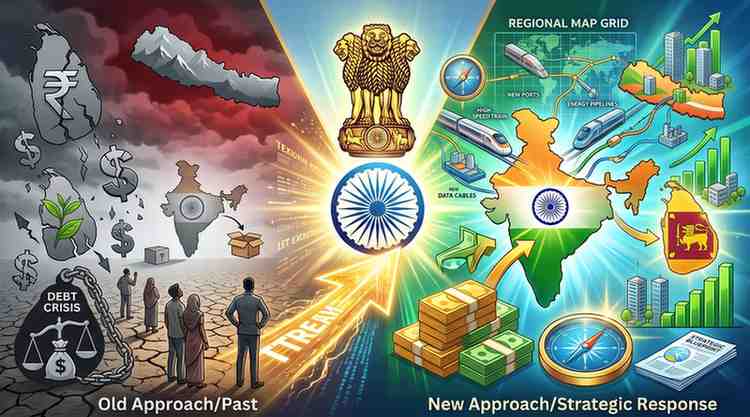
India’s foreign policy is increasingly shaped by the debt crises of its neighboring countries, compelling New Delhi to balance economic assistance with strategic interests. As regional dynamics evolve, India seeks to position itself as a stabilizing force while safeguarding its geopolitical and economic objectives.
New Delhi, July 2026 — The financial distress afflicting several neighboring countries, particularly Sri Lanka and Pakistan, has prompted India to recalibrate its foreign policy approach. The need for a proactive stance has become urgent as these nations face soaring debt levels, exacerbated by a combination of mismanagement and external shocks. India’s response will not only influence its bilateral relations but also redefine its role in regional geopolitics.
What Is Driving This?
The debt crises in Sri Lanka and Pakistan are driven by a complex interplay of factors, including external borrowing, currency depreciation, and inflation. Sri Lanka’s recent economic turmoil, characterized by a default on its sovereign debt, sent shockwaves across the region, prompting India to extend a $4 billion aid package to stabilize its neighbor. Pakistan, grappling with its own fiscal challenges and a looming IMF bailout, has seen India stepping in to offer both humanitarian aid and diplomatic support.
What Does This Mean for India?
India’s engagement in the region reflects its aspiration to emerge as a regional leader, balancing economic assistance with strategic influence. By providing support to distressed economies, India aims to counter China’s growing influence through the Belt and Road Initiative. The long-term implications for India include enhanced diplomatic ties, increased trade opportunities, and the potential to establish itself as a key player in regional stability.
How Does This Compare Globally?
Globally, many nations are grappling with similar debt crises, with the World Bank estimating that over 60% of low-income countries are either in debt distress or at high risk. Comparatively, India’s proactive stance contrasts with the more cautious approaches of Western nations, which have been hesitant to engage directly in regional debt relief efforts. The increasing frequency of such crises presents both challenges and opportunities for India, positioning it as a critical player in the global discourse on debt sustainability.
What Should Investors Watch?
- Monitor changes in bilateral trade agreements between India and its neighbors as a result of economic assistance.
- Observe shifts in geopolitical alliances, particularly India’s positioning against China in South Asia.
- Evaluate the impact of regional stability on foreign investments in India and neighboring economies.
- Track developments in domestic policy aimed at managing economic fallout from regional crises.
- Assess the potential for increased economic engagements, including infrastructure projects in financially distressed countries.
Analyst’s View
The evolving debt crises in South Asia present India with a dual challenge: maintaining regional stability while ensuring its economic interests are protected. As India navigates these complex waters, the focus should remain on strategic investments that foster sustainable development in neighboring countries. Investors should be prepared for a dynamically shifting landscape that could redefine regional alliances and economic prospects in the coming years.