Pakistan’s Iran-US Mediation Role Challenges India’s Regional Diplomatic Standing
- admin
- April 17, 2026
- Uncategorized
- 0 Comments
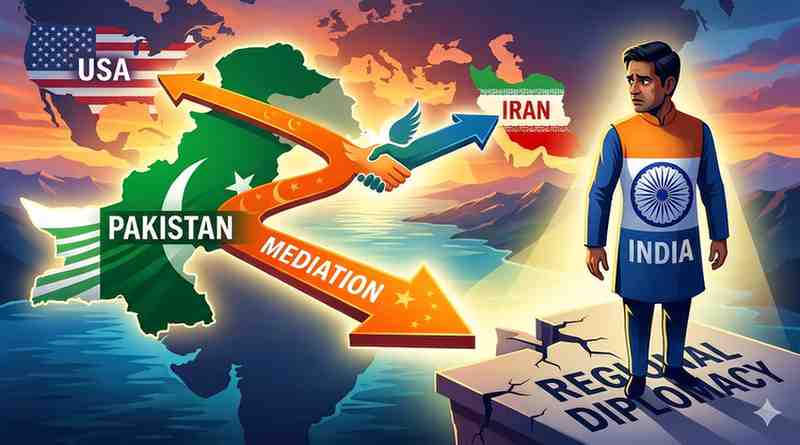
Pakistan’s emergence as a diplomatic intermediary between the United States and Iran represents a significant shift in South Asian geopolitical alignments that directly undermines India’s carefully cultivated position as a regional power broker. New Delhi views Islamabad’s newfound relevance in West Asian diplomacy as a strategic threat that could reshape traditional alliance structures and diminish India’s influence in the Gulf region.
New Delhi, April 2025 — Pakistan’s diplomatic facilitation between Washington and Tehran marks the most consequential realignment of regional power dynamics since the Abraham Accords reshaped Middle Eastern diplomacy in 2020. Indian foreign policy establishments have responded with measured concern, recognising that Islamabad’s mediation credentials grant it strategic leverage that New Delhi has spent decades cultivating through economic ties and diaspora diplomacy in the Gulf.
Why Does Pakistan’s Mediator Role Concern India?
India has historically positioned itself as a neutral interlocutor capable of maintaining productive relationships with both Iran and the United States simultaneously. Pakistan’s successful insertion into this diplomatic space threatens to marginalise India’s role in West Asian geopolitics at a critical juncture. New Delhi’s $75 billion annual trade relationship with Gulf Cooperation Council nations and its eight-million-strong diaspora in the region represent strategic assets that could be devalued if Pakistan establishes itself as the preferred regional intermediary.
What Strategic Calculations Drive Islamabad’s Move?
Pakistan’s military establishment has leveraged its geographic proximity to Iran and historical ties with both Tehran and Washington to position itself as an indispensable diplomatic channel. Islamabad’s calculus involves rehabilitating its international standing after years of isolation stemming from its support for the Taliban regime in Afghanistan. The Pakistani foreign ministry has seized upon US-Iran tensions as an opportunity to demonstrate relevance beyond the traditional India-Pakistan bilateral framework that has defined its foreign policy orientation.
How Does This Reshape Regional Alliance Structures?
The traditional alignment where India maintained warm ties with Iran while Pakistan cultivated Saudi Arabia is undergoing fundamental restructuring. India’s relationship with Iran has deteriorated since New Delhi reduced oil imports following US sanctions pressure in 2019. The Chabahar port project, once heralded as India’s strategic countermove to Pakistan’s Gwadar, has progressed slowly, diminishing New Delhi’s leverage in Tehran.
- India reduced Iranian oil imports from 500,000 barrels per day in 2018 to near-zero by 2020 under US sanctions pressure
- Pakistan shares a 959-kilometre border with Iran, providing geographic advantages India cannot replicate
- Indian diaspora remittances from Gulf nations exceed $35 billion annually, representing critical foreign exchange inflows
- The Chabahar port has handled only 40 percent of its projected cargo volume since operationalisation
- Pakistan’s recent currency stabilisation and IMF programme compliance have improved its international diplomatic credibility
What Are the Implications for Indian Foreign Policy?
India’s Ministry of External Affairs faces pressure to recalibrate its West Asian strategy without alienating either Washington or Tehran. New Delhi’s traditional multi-alignment approach appears increasingly constrained as regional powers demand clearer positioning. Indian policymakers must weigh the costs of deeper Iran engagement against the benefits of continued US strategic partnership, particularly regarding defence technology transfers and intelligence sharing.
Analyst’s View
Pakistan’s diplomatic rehabilitation through Iran-US mediation represents a structural challenge to India’s regional influence rather than a temporary setback. New Delhi should monitor three indicators: the durability of any US-Iran understanding brokered through Islamabad, Pakistan’s subsequent diplomatic engagement with Gulf monarchies, and any shift in American strategic calculus regarding South Asian partnerships. Indian foreign policy must evolve beyond reactive posturing toward proactive diplomatic initiatives that leverage its economic weight and democratic credentials in West Asian capitals.