Dollar Weakness on US-Iran Diplomacy Signals Shift in Global Risk Appetite and Emerging Market Flows
- admin
- April 17, 2026
- Uncategorized
- 0 Comments
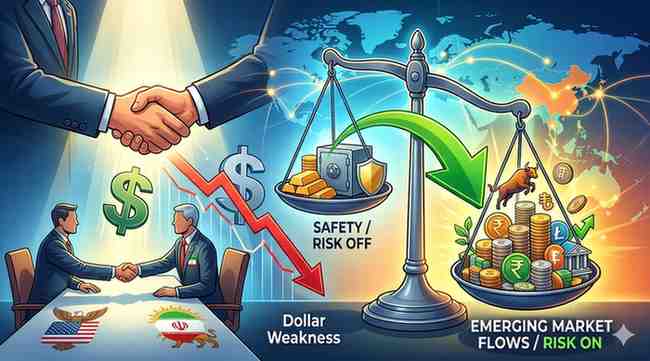
The US dollar retreated against major currencies as prospects of US-Iran peace talks reduced geopolitical risk premiums, triggering a recalibration of safe-haven positioning globally. This diplomatic thaw carries significant implications for crude oil prices, emerging market currencies, and India’s current account dynamics in the coming quarters.
New Delhi, April 2026 — The dollar index fell 0.6 percent in early Asian trading following reports that Washington and Tehran have agreed to preliminary diplomatic engagement, marking the most substantive de-escalation signal since the 2015 nuclear accord framework. Currency markets responded immediately, with risk-sensitive assets rallying as traders unwound defensive dollar positions accumulated during months of heightened Gulf tensions.
What Is Driving the Dollar Retreat?
The greenback’s pullback reflects a broader repricing of geopolitical risk rather than any fundamental shift in US monetary policy. Safe-haven flows that had supported dollar strength since late 2025 are now reversing as investors reassess the probability of military confrontation in the Strait of Hormuz. The euro gained 0.5 percent while the Japanese yen strengthened marginally, indicating a rotation out of dollar hedges. Currency strategists note that speculative long-dollar positioning had reached multi-year highs, making the market vulnerable to any positive diplomatic catalyst.
What Does This Mean for India?
India stands among the primary beneficiaries of reduced Gulf tensions, given its substantial energy import dependence and diaspora exposure in the region. The Indian rupee appreciated 0.3 percent against the dollar in early trade, providing the Reserve Bank of India additional flexibility in managing imported inflation. A sustained diplomatic détente could reduce India’s crude oil import bill by an estimated $8-12 billion annually if Brent prices stabilise below $75 per barrel. Foreign portfolio investors, who had turned cautious on Indian equities amid regional instability, may accelerate inflows into rate-sensitive sectors.
How Does This Compare to Previous Diplomatic Episodes?
The market reaction echoes patterns observed during the 2015 Iran nuclear deal negotiations, when Brent crude fell 18 percent over six months and emerging market currencies rallied broadly. The dollar index declined 4.2 percent in the three months following the Joint Comprehensive Plan of Action announcement. However, the current diplomatic framework remains nascent, with no confirmed timeline for formal negotiations or sanctions relief discussions.
- Dollar index (DXY) fell to 103.8, its lowest level since early February 2026
- Brent crude futures dropped 2.1 percent to $74.30 per barrel on supply normalisation expectations
- Indian rupee strengthened to 83.42 per dollar, its best level in six weeks
- Gold prices eased 1.4 percent as safe-haven demand moderated
- MSCI Emerging Markets Currency Index rose 0.7 percent in Asian trading
What Should Investors Watch?
The sustainability of dollar weakness depends entirely on diplomatic follow-through from both Washington and Tehran. Previous US-Iran engagement attempts have collapsed amid domestic political pressures in both capitals, most recently in 2022. Investors should monitor Iranian oil export volumes, US Treasury sanctions guidance, and any statements from Gulf Cooperation Council members regarding regional security arrangements. The Federal Reserve’s reaction function also matters—sustained dollar weakness could complicate the central bank’s inflation management if it translates into higher import prices.
Analyst’s View
The current dollar retreat represents tactical repositioning rather than structural trend reversal. Markets are pricing optimism that may prove premature given the deep institutional distrust between Washington and Tehran. Indian policymakers should use this window to rebuild foreign exchange reserves and lock in favourable crude import contracts. The RBI’s intervention strategy over the next fortnight will signal whether Mumbai views this as a durable shift or temporary volatility. Investors positioned for prolonged Gulf instability face near-term mark-to-market pressure, but maintaining partial hedges remains prudent until formal negotiation frameworks emerge.