European Investment Bank’s Latvia Partnership Offers Blueprint for India’s Own Innovation Financing Gap
-
admin
-
April 9, 2026
-
Uncategorized
-
0 Comments
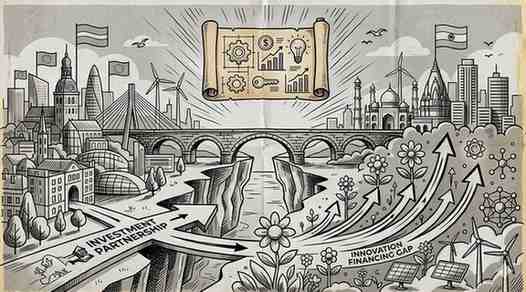
The European Investment Bank has committed to a strategic partnership with Latvia targeting high-growth sectors and innovation economy scale-ups, deploying development finance mechanisms that India’s own startup ecosystem increasingly demands. This EU-Baltic collaboration model presents a relevant case study as India seeks to bridge its Series B funding gap and strengthen institutional support for deep-tech ventures. New Delhi, April 2025 …
Continue Reading
How Policy and Tax Reforms Are Reshaping India’s Defence Manufacturing Ecosystem
-
admin
-
April 9, 2026
-
Uncategorized
-
0 Comments
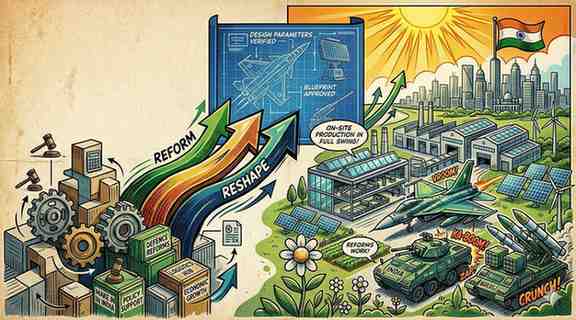
India’s defence supply chain is undergoing structural transformation through coordinated policy interventions, tax rationalization, and targeted investment incentives aimed at reducing import dependence. The KPMG analysis highlights that sustainable indigenization requires addressing fragmented vendor ecosystems, working capital constraints, and technology transfer bottlenecks that continue to limit domestic manufacturing scale. New Delhi, April 2025 — India’s defence procurement budget crossed ₹1.72 …
Continue Reading
How Geopolitical Uncertainty Is Reshaping Global Capital Flows and Risk Pricing in 2025
-
admin
-
April 9, 2026
-
Uncategorized
-
0 Comments
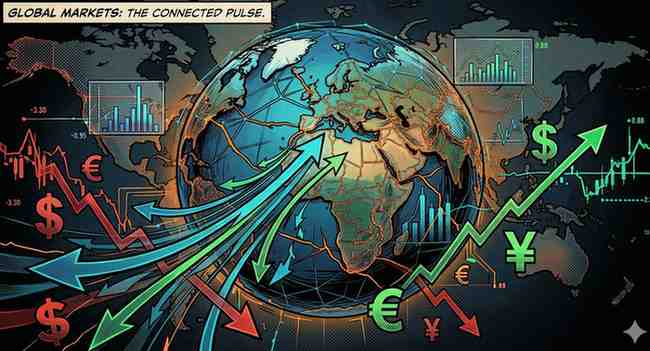
Escalating geopolitical tensions across multiple theatres are fundamentally altering how global investors price risk, triggering capital reallocation away from exposed markets toward perceived safe havens. The compounding uncertainty—what strategists increasingly term “fog of war” conditions—is forcing central banks and institutional investors to recalibrate portfolio strategies amid diminished visibility on economic trajectories. New Delhi, April 2025 — Global financial markets are …
Continue Reading
Why Gold and Silver Are Positioned for Moderate Gains in FY27 Despite Rate Uncertainty
-
admin
-
April 9, 2026
-
Uncategorized
-
0 Comments
Gold and silver are expected to maintain a moderately bullish trajectory through FY27 as persistent geopolitical tensions, central bank accumulation, and global economic uncertainty sustain safe-haven demand. Indian investors face a nuanced outlook where dollar strength and potential Fed policy shifts could temper gains, but structural demand drivers remain intact. New Delhi, April 2025 — Precious metals enter the new …
Continue Reading
Distributed Sovereignty and Multi-Polar Power Blocs: What the Shift Away from Centralised Global Governance Means for Nation-States
-
admin
-
April 9, 2026
-
Uncategorized
-
0 Comments
The traditional Westphalian model of centralised state sovereignty is fragmenting into networked “sovereign ecosystems” where authority distributes across regional blocs, corporate actors, and digital governance frameworks. This structural rewiring of global order challenges India’s strategic positioning as it navigates between maintaining autonomous decision-making and participating in emerging multi-stakeholder power arrangements. New Delhi, April 2026 — The concept of distributed authority …
Continue Reading
Latin America’s Strategic Pivot: How U.S.-China Competition Is Reshaping Hemispheric Alliances
-
admin
-
April 9, 2026
-
Uncategorized
-
0 Comments
The intensifying U.S.-China rivalry is fundamentally restructuring Latin America’s economic and strategic alignments, forcing regional governments to navigate between Washington’s security imperatives and Beijing’s infrastructure investments. This triangular geopolitical dynamic presents both opportunities and risks for emerging economies, including India, seeking to diversify trade partnerships and supply chain networks in the Western Hemisphere. New Delhi, April 2026 — China’s trade …
Continue Reading
Why Oil Price Surge Triggered an 800-Point Sensex Crash and What It Signals for Indian Equities
-
admin
-
April 9, 2026
-
Uncategorized
-
0 Comments
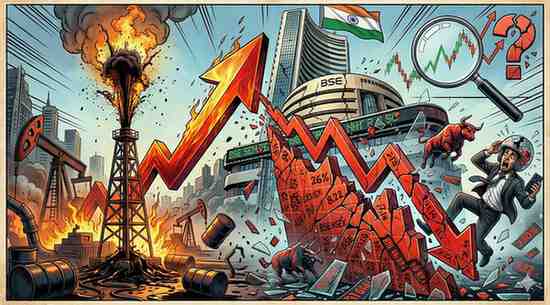
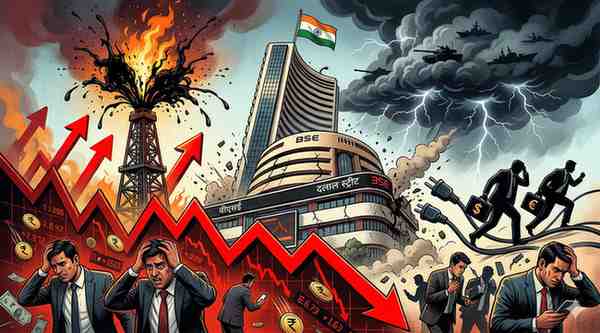
Indian benchmark indices suffered their steepest single-day decline in three months as Brent crude surged past $90 per barrel, reigniting inflation fears and triggering broad-based selling across rate-sensitive sectors. The Sensex plunged over 800 points while the Nifty 50 breached the critical 22,750 support level, signalling renewed vulnerability in an equity market that had appeared resilient through Q1 2025. New …
Continue Reading
Triple Shock Hits Dalal Street: Oil Surge, FII Exit and Geopolitical Risk Converge to Drag Indian Equities
-
admin
-
April 9, 2026
-
Uncategorized
-
0 Comments
Indian benchmark indices Sensex and Nifty fell sharply as a confluence of rising crude oil prices, heightened geopolitical tensions, and sustained foreign institutional investor (FII) outflows created a triple headwind for domestic equities. The sell-off reflects structural vulnerabilities in India’s market positioning rather than isolated profit-booking, warranting close monitoring of global risk factors in the sessions ahead. New Delhi, April …
Continue Reading
Why RBI Held Rates Steady Despite Inflation Pressures: Navigating Middle East Uncertainty
-
admin
-
April 9, 2026
-
Uncategorized
-
0 Comments
The Reserve Bank of India maintained its benchmark repo rate unchanged as escalating Middle East tensions create simultaneous risks to economic growth and price stability. RBI’s decision reflects a calculated pause to assess how geopolitical volatility might transmit through oil prices, trade disruptions, and capital flows before committing to any directional policy shift. New Delhi, April 2025 — The Reserve …
Continue Reading
Why RBI’s Decision to Hold Rates at 6.5% Reflects Confidence in India’s 6.9% Growth Trajectory
-
admin
-
April 9, 2026
-
Uncategorized
-
0 Comments
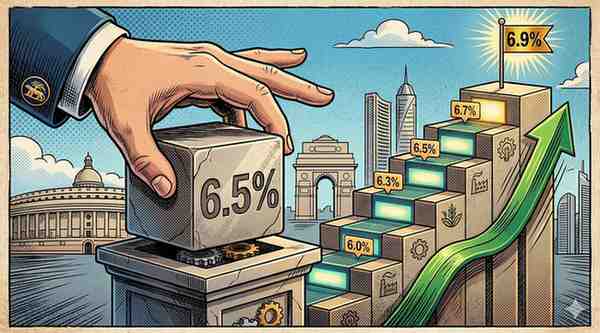
The Reserve Bank of India has maintained the repo rate at 6.5% while projecting real GDP growth at 6.9% for the current fiscal year, signalling comfort with the current inflation-growth balance. RBI’s rate pause suggests the central bank sees no immediate need for monetary stimulus despite global economic headwinds, prioritising price stability while India remains the fastest-growing major economy. New …
Continue Reading