Hormuz Strait Crisis Threatens India’s Two-Corridor Strategy: IMEC and INSTC Face Simultaneous Disruption
- admin
- April 20, 2026
- Uncategorized
- 0 Comments
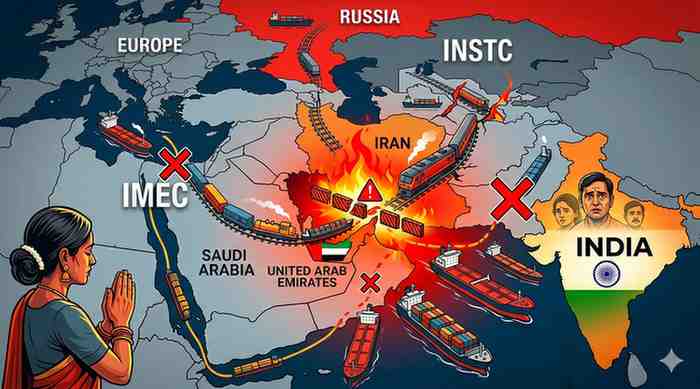
A potential closure of the Strait of Hormuz amid escalating Iran tensions would simultaneously cripple India’s two flagship connectivity projects—the India-Middle East-Europe Economic Corridor (IMEC) and the International North-South Transport Corridor (INSTC)—exposing a critical vulnerability in New Delhi’s trade diversification strategy. India’s dependence on the Persian Gulf chokepoint for both energy imports and alternative trade routes now presents a concentrated geopolitical risk that years of corridor diplomacy failed to hedge against.
New Delhi, April 2025 — India’s ambitious multi-billion-dollar connectivity infrastructure, designed to reduce dependence on Chinese-dominated routes and the congested Suez Canal, faces an existential stress test as military escalation around Iran threatens the Strait of Hormuz. The 21-mile-wide passage handles approximately 85% of India’s crude oil imports and serves as the geographic linchpin for both IMEC’s Gulf leg and INSTC’s Iranian transit section.
Why Are Both Corridors Vulnerable Simultaneously?
The IMEC project, announced with much fanfare at the 2023 G20 Delhi Summit, routes through the UAE and Saudi Arabia before connecting to Europe via Israel and the Mediterranean. INSTC, India’s longer-standing corridor through Iran to Russia and Central Asia, relies on Iranian ports including Chabahar and Bandar Abbas. Both corridors converge on the Persian Gulf geography that any Hormuz closure would render inoperable. India’s corridor strategy assumed regional stability that current events have decisively undermined.
What Does This Mean for India’s Trade Architecture?
India’s merchandise trade with Europe exceeded $120 billion in FY2024, with significant volumes projected to shift onto IMEC once operational. The INSTC was expected to reduce shipping times to Russia by 40% compared to the Suez route. A prolonged Hormuz disruption would force Indian exporters back onto the congested and expensive Cape of Good Hope route, adding 15-20 days to Europe-bound shipments. The strategic rationale for both corridors—speed, cost efficiency, and China-bypass capability—evaporates under wartime conditions.
How Does This Compare to Previous Disruptions?
The last significant Hormuz threat materialised during the 2019 Iran-US tensions when tanker attacks briefly spiked shipping insurance premiums by 10%. The current scenario presents far greater escalation risk, with reports suggesting potential full closure rather than harassment operations. India’s oil import bill could surge by $25-30 billion annually if forced into spot-market purchases from non-Gulf sources. The 1990 Gulf War precedent, which triggered a balance of payments crisis in India, looms as a historical parallel policymakers are acutely aware of.
- Strait of Hormuz handles 20.5 million barrels of oil daily, approximately 21% of global petroleum consumption
- India’s Chabahar port investment stands at $1.5 billion, with Phase 2 expansion now suspended
- IMEC’s projected completion timeline of 2030 assumes uninterrupted Gulf access throughout construction
- Indian refiners hold 12-15 days of strategic crude reserves, compared to 90 days in IEA member nations
- Russia’s INSTC cargo volumes reached 17 million tonnes in 2024, with India targeting 30 million tonnes by 2027
What Should Policymakers and Investors Watch?
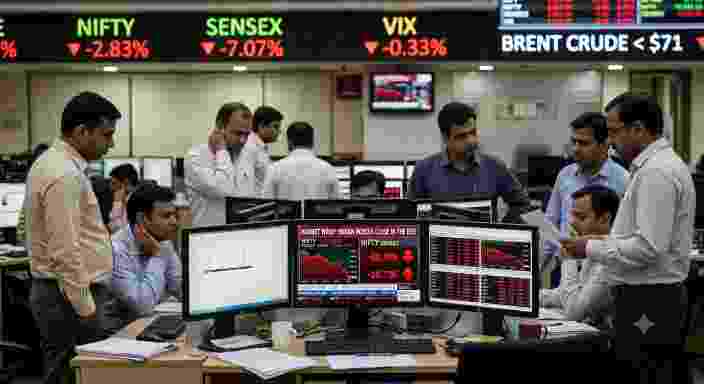
Insurance markets provide the clearest early warning indicator—war risk premiums for Gulf-bound vessels have already tripled since January 2025. Indian refinery stocks, particularly those lacking diversified crude sourcing, face immediate earnings pressure. Infrastructure investors in port and logistics plays tied to corridor projects should reassess timeline assumptions. The rupee’s vulnerability to oil shock transmission remains the macroeconomic variable with broadest market impact.
Analyst’s View
India’s connectivity strategy suffered from a fundamental design flaw: geographic concentration risk. Both flagship corridors assumed Persian Gulf stability as a baseline condition rather than a variable requiring contingency planning. The coming months will test whether New Delhi possesses diplomatic leverage to insulate its infrastructure from regional conflict—or whether the corridors remain expensive hostages to Middle Eastern volatility. Monitoring points include Chabahar exemption negotiations, alternative routing through Oman’s Duqm port, and any acceleration of the Bangladesh-Myanmar-China corridor as a backup eastern option.