Fuel Price Distortion: Bulk Diesel Buyers Swarm Retail Pumps as Prices Hit ₹140/Litre
- Editor
- May 1, 2026
- Uncategorized
- 0 Comments
NEW DELHI — India’s energy sector is facing a severe structural crisis as a massive price gap between retail and bulk diesel has upended the nation’s fuel distribution logic. What was designed as a “dual pricing” system to manage inflation has instead triggered a chaotic rush to retail petrol pumps, leaving Oil Marketing Companies (OMCs) staring at mounting financial losses.
The ₹50 Inversion: From Discount to Penalty
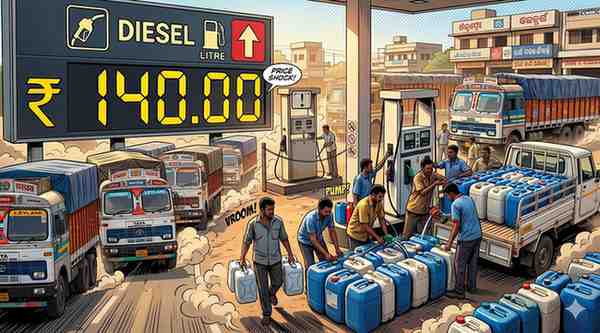
In a standard market, bulk buyers—such as transport fleets, railways, and industries—receive discounts for large-volume purchases. However, current market conditions have inverted this completely. While retail diesel prices are being held steady at approximately ₹90 per litre to protect individual consumers, bulk diesel prices have surged to nearly ₹140 per litre.
This unprecedented ₹50-per-litre disparity has turned bulk purchasing into a financial liability. Consequently, large-scale transporters are abandoning their dedicated supply points and sending entire fleets of trucks and buses to refuel at local petrol pumps to save millions in operational costs.
Geopolitical Stress vs. Domestic Price Freezes
The root of the crisis lies in the volatile global oil market. With the conflict in West Asia escalating, global crude oil prices have touched $125 per barrel. While Indian OMCs technically operate under a “de-regulated” regime, the government frequently freezes retail prices during politically sensitive periods or elections to curb inflation.
To bridge the gap between high import costs and frozen retail rates, the government allowed bulk prices to rise while keeping retail prices stagnant—a strategy of cross-subsidization. However, the sheer scale of the current gap has rendered the strategy counterproductive, as buyers simply “game the system” by shifting to the cheaper retail channel.
A Ripple Effect of Economic Consequences
The shift in consumer behavior is creating a “system failure” with three major consequences:
- OMC Revenue Collapse: Public sector giants like IOC, BPCL, and HPCL are losing their high-margin bulk business while being forced to sell more diesel at the loss-making retail rate.
- Supply Chain Strain: Retail outlets, designed for cars and small vehicles, are now facing massive demand spikes from heavy transport fleets, leading to logistics bottlenecks and potential local shortages.
- Taxpayer Burden: As OMCs accumulate losses, the government may eventually have to step in with subsidies, effectively using taxpayer money to fix a price distortion created by its own policy.
The Commercial LPG Blow
The fuel crisis is not limited to diesel. The government has also implemented a massive hike in 19kg commercial LPG cylinders, raising the price by ₹993 in a single move. With a single cylinder now costing over ₹3,000, the cost of dining out and industrial food production is expected to rise sharply as businesses pass these costs on to customers.
Bottom Line
The current fuel crisis highlights a structural flaw in India’s energy policy: when the gap between subsidized and market rates becomes too wide, the market breaks. For now, the “dual pricing” system is failing, and the financial health of India’s oil giants remains at the mercy of global conflicts and domestic price controls.