Dollar Index Rally Reshapes Global Currency Calculus as Fed Rate Expectations Shift Upward
- admin
- April 26, 2026
- Uncategorized
- 0 Comments
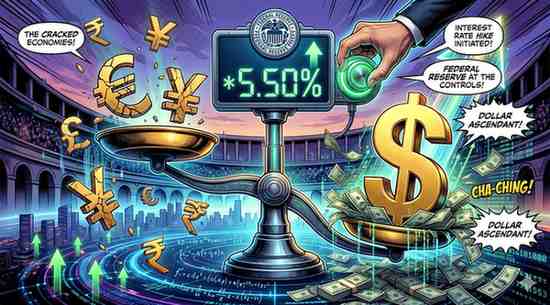
The US Dollar Index (DXY) has surged following a significant repricing of Federal Reserve rate expectations, with Deutsche Bank analysis indicating sustained support for the greenback. This dollar strength carries substantial implications for emerging market currencies, including the Indian rupee, and recalibrates risk calculations for global investors and central banks.
New Delhi, April 2025 — The DXY, which measures the dollar against a basket of six major currencies, has registered its strongest momentum in months as markets recalibrate expectations for Federal Reserve monetary policy. Deutsche Bank’s analysis points to a fundamental shift in rate trajectory assumptions, with traders now pricing in fewer cuts than previously anticipated for 2025.
What Is Driving the Dollar’s Surge?
Federal Reserve officials have maintained a hawkish stance amid persistent inflation readings in the United States economy. Core PCE inflation remains above the Fed’s 2% target, compelling policymakers to delay the rate-cutting cycle that markets had aggressively priced in during late 2024. Deutsche Bank strategists note that the repricing has been “powerful” because it reflects not merely a delay but a structural reassessment of the neutral rate.
Treasury yields have climbed in tandem, with the 10-year benchmark hovering near 4.5%, reinforcing dollar attractiveness. The last comparable repricing episode occurred in late 2022, when aggressive Fed tightening pushed the DXY above 114.
What Does This Mean for India?
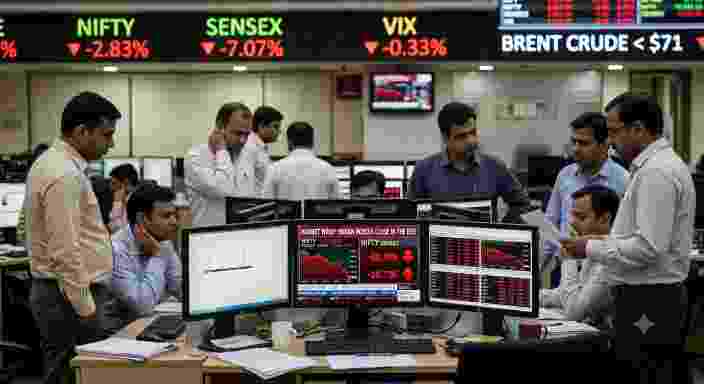
The Reserve Bank of India faces renewed pressure on rupee stability as dollar strength persists. A stronger dollar typically triggers foreign portfolio outflows from emerging markets, and India has already witnessed approximately $8 billion in equity outflows during the current calendar year. The RBI’s foreign exchange reserves, currently around $620 billion, provide adequate buffer but intervention costs accumulate.
Indian importers, particularly in crude oil and electronics, face elevated input costs as the rupee depreciates. Corporate treasury teams are accelerating hedging programmes, with forward premiums widening across tenors.
How Does This Compare Globally?
Emerging market currencies have uniformly weakened against the dollar, but differentiation is emerging based on current account positions and monetary policy credibility. The Indian rupee has outperformed the Brazilian real and South African rand, reflecting India’s relatively stable macroeconomic fundamentals. Asian currencies, including the Korean won and Thai baht, have experienced sharper corrections due to higher export exposure to slowing Chinese demand.
- DXY has appreciated over 4% since the start of 2025, currently trading near 106
- Fed funds futures now price only 25-50 basis points of cuts for full-year 2025
- Indian rupee has depreciated approximately 2.8% against the dollar year-to-date
- RBI has intervened intermittently, selling an estimated $12 billion in spot markets since January
- US 10-year real yields have turned decisively positive at 1.9%, supporting dollar demand
What Should Investors Watch?
Currency markets will remain highly sensitive to incoming US inflation data and Fed commentary. The May FOMC meeting and subsequent dot plot projections will provide the next major directional signal. Indian investors should monitor RBI’s liquidity operations and any shift toward more aggressive intervention or policy communication.
Corporate earnings guidance, particularly from IT services companies with dollar-denominated revenues, will reveal hedging effectiveness and margin impacts. Mutual fund flows into international funds may accelerate as investors seek dollar-asset exposure.
Analyst’s View
The dollar’s rally appears structurally supported rather than speculative, given the fundamental shift in Fed rate expectations and persistent US economic outperformance. Indian policymakers and investors should prepare for an extended period of rupee pressure rather than anticipating a swift reversal. The RBI’s calibrated intervention strategy will be tested if DXY approaches the 108-110 range. Portfolio allocations warrant a defensive tilt toward export-oriented sectors and companies with natural dollar hedges, while rate-sensitive domestic plays face headwinds from imported inflation pass-through.