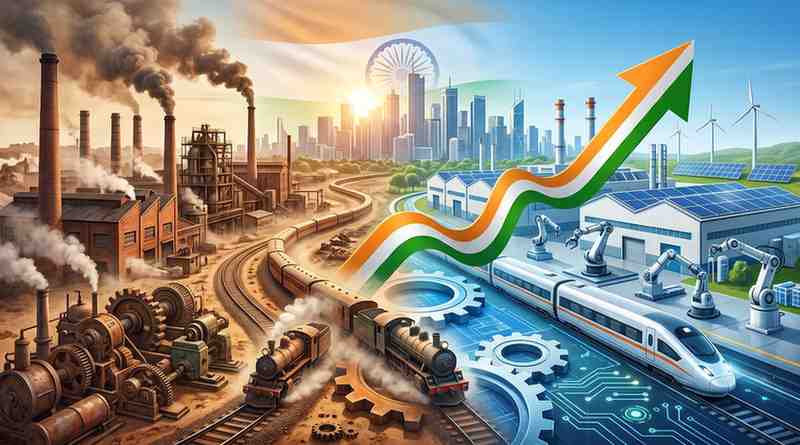
India’s Industrial Policy: A Historical Overview and Future Trajectories in Reform
India’s industrial policy has undergone significant transformations since independence, moving from a protectionist framework to a more liberalized approach aimed at fostering competitiveness. Recent reforms are expected to enhance productivity, attract foreign investment, and improve India’s global industrial standing.
New Delhi, August 2026 — India’s industrial policy, initiated in the early 1950s, was characterized by a strong emphasis on import substitution and state control. The shift towards liberalization began in the 1990s, driven by economic crises and the need for structural reforms. Recent developments indicate a renewed focus on enhancing the manufacturing sector as part of the “Make in India” initiative.
What Is Driving This?
India’s industrial policy evolution is largely driven by the need to adapt to global economic changes and internal demands for job creation. Policymakers are responding to pressures from both domestic stakeholders, who seek enhanced economic opportunities, and external factors, such as global supply chain reconfigurations post-pandemic. The recent reforms aim to streamline regulations, boost investment, and support innovation.
What Does This Mean for India?
India’s approach to industrial policy signifies a broader strategic vision that prioritizes sustainable growth and self-reliance. The anticipated outcomes include increased foreign direct investment (FDI), improved infrastructure, and the establishment of a robust manufacturing ecosystem. As a result, India is positioning itself as a potential alternative to China in the global manufacturing landscape.
How Does This Compare Globally?
India’s industrial policy reform trajectory mirrors that of several emerging economies that have successfully transitioned to market-oriented frameworks. Countries like Vietnam and Bangladesh have capitalized on their labor cost advantages and favorable business environments, further intensifying competition for India. However, India’s vast market size and demographic dividend offer unique opportunities that could differentiate its approach.
What Should Investors Watch?
- Investment in infrastructure projects, particularly in logistics and manufacturing hubs.
- Policy shifts aimed at enhancing ease of doing business and reducing bureaucratic hurdles.
- Sector-specific incentives targeting green technology and digital industries.
- The impact of geopolitical tensions on supply chains and trade agreements.
- Trends in FDI flows and their correlation with domestic economic performance.
Analyst’s View
The evolution of India’s industrial policy presents a dual opportunity and challenge for stakeholders. Investors should remain vigilant about regulatory changes and sectoral shifts that could influence market dynamics. Policymakers must balance the need for rapid industrial growth with sustainable practices that ensure long-term economic stability. As India embarks on this transformative journey, its ability to leverage its demographic and market advantages will be crucial in defining its industrial future.