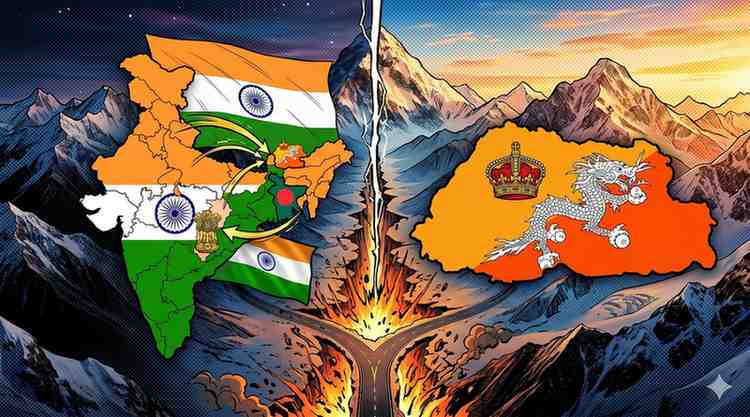
The Great Himalayan Divergence: Why Sikkim Joined India While Bhutan Remained Sovereign
- Editor
- May 1, 2026
- Uncategorized
- 0 Comments
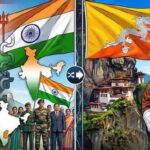
NEW DELHI, May 2026 — In the complex geopolitical puzzle of the Himalayas, the stories of Sikkim and Bhutan offer a striking contrast. Once both “protectorates” under the British Raj and later independent India, their paths diverged sharply in 1975. While Sikkim became India’s 22nd state, Bhutan transformed into a fully sovereign UN member. The reason lies in a mix of internal revolutions, monarchical survival, and strategic “Special Relationships.”
The Common Thread: The British Legacy
Under the British, both Sikkim and Bhutan were treated as “Princely States” with a twist. They enjoyed suzerainty, meaning they managed their internal affairs while the British controlled their defense and foreign policy. When India gained independence in 1947, these old treaties were initially continued. Prime Minister Jawaharlal Nehru initially granted both “Protectorate” status, with India stepping into the shoes of the British to manage their external security.
Sikkim’s Internal Explosion
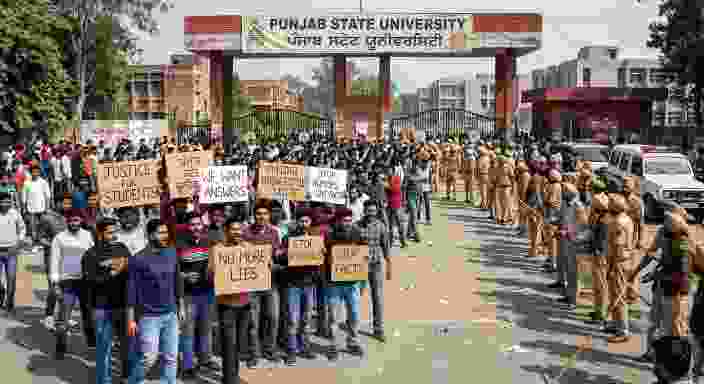
Sikkim’s journey to becoming an Indian state was fueled by a domestic demand for democracy. By the early 1970s, the Sikkimese people grew tired of the Namgyal dynasty’s feudal rule. Mass anti-monarchy protests in 1973 saw citizens surround the Royal Palace, demanding a voice in government.
When the King (Chogyal) asked Delhi for help, India brokered a tripartite agreement to introduce democratic elections. The newly elected leaders, seeking stability and growth, pushed for closer ties:
- The 35th Amendment: Created the unique status of an “Associate State.”
- The 1975 Referendum: In a landmark vote, 97.5% of the public chose to abolish the monarchy and join India as a full state.
Bhutan: The Art of the Strategic Buffer
Unlike Sikkim, Bhutan’s Wangchuck dynasty was remarkably successful at consolidating national identity and avoiding internal collapse. Bhutan’s leaders were firm: they were not a state of India, but a neighbor with shared interests.
India respected Bhutan’s sovereign aspirations because a stable, friendly monarchy served as a perfect buffer against China. Key milestones included:
- 1949 Treaty: India managed Bhutan’s defense but promised not to interfere internally.
- 1971 UN Entry: Bhutan joined the United Nations, cementing its status as a sovereign nation.
- 2007 Update: The treaty was liberalized, giving Bhutan full control over its foreign policy and arms imports.
The “Five Fingers” and the China Factor
The underlying fear for both nations was Mao Zedong’s “Palm and Five Fingers” theory, which claimed Tibet was the “palm” and regions like Sikkim and Bhutan were “fingers” that belonged to China. Sikkim’s integration secured one “finger” permanently for India. For Bhutan, the protection remains external; Indian troops are stationed there to train their forces and defend critical points like the Siliguri Corridor (the “Chicken’s Neck”).
Bottom Line
The difference was simple: Sikkim integrated to save its people from a failing monarchy, while Bhutan stayed independent because its monarchy successfully adapted to the modern world. Today, Sikkim is a domestic success story of integration, while Bhutan remains India’s most trusted strategic ally on the global stage.