Why Indian Equities Fell Sharply: Decoding the Multi-Factor Selloff in Sensex and Nifty
- admin
- April 26, 2026
- Uncategorized
- 0 Comments
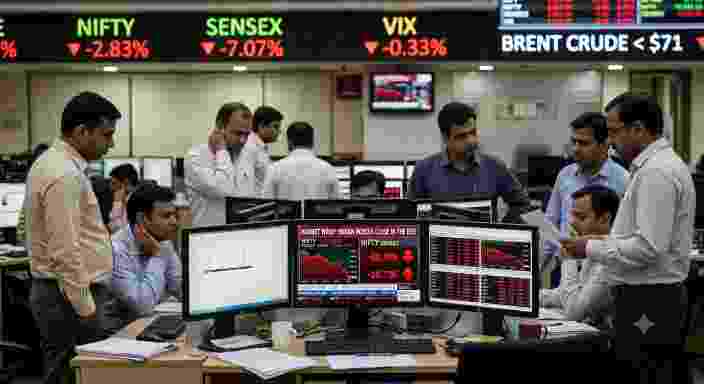
Indian benchmark indices Sensex and Nifty witnessed a sharp decline driven by a confluence of global risk-off sentiment, foreign institutional outflows, and domestic earnings disappointments. The selloff reflects mounting concerns over stretched valuations and geopolitical uncertainties that have prompted investors to reassess their India allocation.
New Delhi, April 2026 — Indian equity markets extended their losing streak as the BSE Sensex and NSE Nifty 50 registered significant declines, erasing gains accumulated over the previous fortnight and triggering widespread concern among retail and institutional participants alike.
What Is Driving the Market Decline?
Foreign Institutional Investors have accelerated their selling activity, pulling out substantial capital from Indian equities amid a strengthening dollar and elevated US Treasury yields. Disappointing quarterly earnings from heavyweight sectors including banking, IT services, and consumer discretionary have compounded the negative sentiment. Global crude oil price volatility has reignited inflation concerns, raising fears that the Reserve Bank of India may delay any accommodative monetary pivot. Technical factors also contributed, with the Nifty breaching key support levels that triggered algorithmic selling and stop-loss cascades.
What Does This Mean for India?
The market correction poses immediate challenges for India’s retail investor base, which has grown substantially since 2020 and now holds significant exposure through systematic investment plans. Portfolio wealth erosion could dampen urban consumption sentiment, particularly in discretionary categories reliant on the wealth effect. For corporate India, elevated equity risk premiums may increase the cost of capital, potentially delaying planned IPOs and follow-on offerings. The government’s disinvestment programme faces headwinds as depressed valuations make stake sales less attractive fiscally.
How Does This Compare Globally?
Indian markets have underperformed regional peers including Japan’s Nikkei and Taiwan’s TAIEX during this correction phase. The last comparable multi-session decline of this magnitude occurred during the global banking stress episode in March 2023, when contagion fears briefly gripped emerging markets. India’s premium valuation relative to the MSCI Emerging Markets Index—trading at approximately 22x forward earnings versus the index average of 12x—makes it particularly vulnerable during risk-off episodes. However, India’s macroeconomic fundamentals remain comparatively resilient, with GDP growth projections holding above 6.5 percent for the fiscal year.
- Foreign Institutional Investors have been net sellers for twelve consecutive sessions, withdrawing over ₹28,000 crore from Indian equities
- The Nifty 50 has corrected approximately 4.2 percent from its recent peak, entering technical correction territory
- India VIX, the market’s fear gauge, has spiked 23 percent, signalling elevated volatility expectations
- Banking sector stocks have contributed disproportionately to index losses, with the Bank Nifty declining over 5 percent
- Domestic mutual funds have deployed approximately ₹12,000 crore in the same period, partially cushioning the FII outflow impact
What Should Investors Watch?
Market participants should monitor the upcoming RBI monetary policy committee meeting for signals on the interest rate trajectory and liquidity stance. Corporate earnings releases over the next fortnight will provide critical data on demand conditions and margin sustainability across sectors. The rupee’s performance against the dollar remains a key variable, as currency weakness amplifies FII exit pressures. Global developments, particularly US Federal Reserve commentary and any escalation in geopolitical tensions, will influence risk appetite across emerging markets including India.
Analyst’s View
The current correction, while painful for short-term portfolios, represents a healthy recalibration of expectations rather than a structural breakdown in India’s equity story. Valuations had stretched beyond fundamentals in several mid-cap and small-cap segments, and this pullback restores some margin of safety for long-term allocators. The key variable to monitor is whether FII outflows stabilise once US rate expectations settle—historically, India has recovered swiftly once dollar strength peaks. Patient investors with 18-24 month horizons may find selective accumulation opportunities emerging in quality names trading below their five-year average multiples.