Europe’s Strategic Autonomy Gap: Why Brussels Struggles to Convert Economic Power into Geopolitical Influence
- admin
- April 20, 2026
- Uncategorized
- 0 Comments
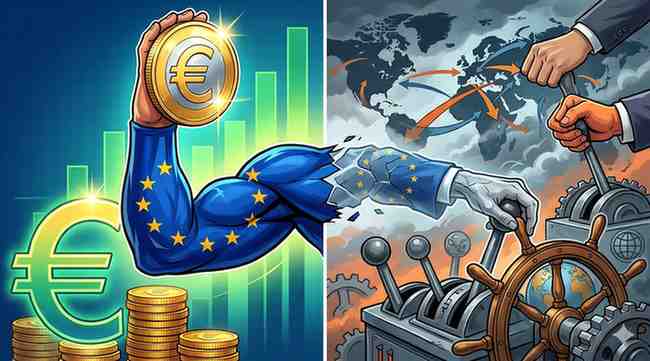
Europe remains structurally unable to translate its considerable economic weight into decisive geopolitical action, according to Belgian security scholar Sven Biscop, who argues that rhetorical commitments to strategic autonomy have not been matched by institutional capacity or political will. This gap between aspiration and capability carries significant implications for global power balancing, particularly as India and other rising powers recalibrate relationships in an increasingly multipolar order.
New Delhi, April 2025 — Sven Biscop, professor at Ghent University and a leading voice on European defence policy, has delivered a pointed critique of the European Union’s geopolitical posture, asserting that self-proclamation as a strategic actor does not substitute for actual power projection capabilities. Biscop’s assessment arrives as European leaders grapple with sustained pressure from the Russia-Ukraine conflict, transatlantic tensions over burden-sharing, and growing uncertainty about American security guarantees under shifting domestic political currents in Washington.
What Is Preventing Europe from Becoming a True Geopolitical Actor?
The European Union’s decision-making architecture remains fundamentally unsuited for rapid geopolitical response. Unanimous voting requirements on foreign policy matters allow individual member states to block collective action, as witnessed during debates over sanctions implementation and military assistance. Defence spending across EU members, while rising post-2022, still averages below NATO’s two percent GDP target for most countries. Biscop’s central argument holds that capability without coordination produces strategic incoherence rather than influence.
What Does This Mean for India’s Strategic Calculations?
India’s emerging multi-alignment strategy requires reliable partners capable of independent action outside American or Chinese frameworks. A strategically fragmented Europe offers limited utility as a counterweight in Indo-Pacific security arrangements, despite shared concerns about Chinese assertiveness. New Delhi’s ongoing negotiations on the India-EU Free Trade Agreement may yield economic benefits, but expectations of coordinated European positions on contested issues—from technology standards to maritime security—should remain modest. Indian policymakers must account for this capability-credibility gap when diversifying strategic partnerships.
How Does Europe’s Position Compare with Other Power Centres?
China has demonstrated willingness to deploy economic coercion, military modernisation, and diplomatic pressure simultaneously across multiple theatres. The United States maintains integrated command structures enabling rapid force projection despite domestic political volatility. Europe, by contrast, possesses the world’s third-largest combined defence budget yet lacks unified command, interoperable systems, or shared threat assessment. This structural deficit explains why European responses to crises from Libya to the South China Sea have remained reactive and fragmented.
- EU member states collectively spent approximately €240 billion on defence in 2024, yet maintain 27 separate national procurement systems
- Only four EU countries currently meet NATO’s two percent GDP defence spending target
- The EU’s Permanent Structured Cooperation (PESCO) has launched over 60 projects since 2017, but none has achieved full operational capability
- European strategic airlift capacity remains dependent on American C-17 aircraft for major deployments
- Franco-German defence cooperation, theoretically Europe’s strategic core, has stalled over tank development and fighter jet programmes
What Should Policymakers and Investors Watch?
Three indicators will signal whether Europe’s strategic autonomy rhetoric begins matching reality. First, progress on the European Defence Industrial Strategy announced in 2024 will reveal whether joint procurement overcomes national industrial protectionism. Second, the EU’s response to potential American disengagement from NATO commitments will test political cohesion under pressure. Third, European positioning on Taiwan contingencies will demonstrate whether Brussels can formulate independent Indo-Pacific policy or remains tethered to Washington’s lead.
Analyst’s View
Biscop’s critique reflects a growing consensus among European strategists that the post-2022 “Zeitenwende” moment has produced increased defence budgets without corresponding strategic clarity. For India, this analysis suggests continued utility in bilateral relationships with individual European powers—particularly France—rather than over-reliance on EU-level engagement. The structural obstacles to European strategic coherence are institutional, not merely political, meaning fundamental change requires treaty revision that no member state currently champions. Markets should price European geopolitical risk accordingly: capable of economic measures, unreliable for sustained strategic commitment.