Sensex Rallies 500 Points: What Triggered the April 17 Market Surge and Will It Sustain?
- admin
- April 20, 2026
- Uncategorized
- 0 Comments
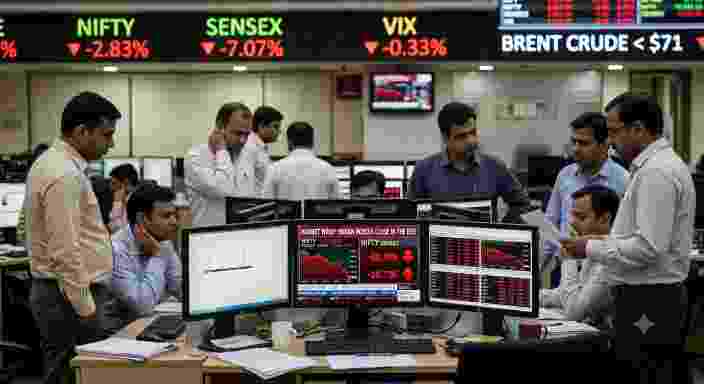
Indian equity benchmarks posted their strongest single-day gains in three weeks on April 17, 2025, with the Sensex climbing 500 points and Nifty closing above the 24,350 mark. The rally was driven by a confluence of easing global trade tensions, strong foreign institutional inflows, and sector-specific momentum in banking and IT stocks.
New Delhi, April 2025 — The Bombay Stock Exchange’s Sensex surged 500 points to close at approximately 80,400 levels, while the National Stock Exchange’s Nifty50 settled above 24,350, marking a decisive break from the consolidation phase that had gripped markets since late March. The breadth of the rally was notable, with advancing stocks outnumbering decliners by a ratio of nearly 3:1 across both exchanges.
What Is Driving This Market Rally?
Foreign Institutional Investors (FIIs) reversed their recent selling streak, turning net buyers with inflows estimated at over ₹2,500 crore during the session. Global risk appetite improved following signals from Washington suggesting a potential de-escalation in trade tariff disputes with key Asian economies. The banking sector, which constitutes roughly 35% of Nifty’s weightage, led the charge with HDFC Bank and ICICI Bank contributing over 150 points to the Sensex gains. IT heavyweights Infosys and TCS also supported the uptrend amid stabilising US dollar movements and renewed optimism around Q1 earnings guidance.
What Does This Mean for Indian Investors?
Retail and institutional investors witnessed a collective wealth creation exceeding ₹4 lakh crore in market capitalisation during this single session. The Nifty’s move above 24,350 is technically significant, as this level had served as resistance during the previous two weeks of range-bound trading. Investors holding diversified portfolios with overweight positions in financials and technology stocks benefited disproportionately from the day’s momentum. The volatility index India VIX declined by approximately 6%, suggesting reduced near-term hedging activity and improved market confidence.
How Does This Compare to Recent Market History?
The last time Sensex registered a 500-point single-day gain was in mid-March 2025, following the RBI’s surprise repo rate cut. April has historically been a volatile month for Indian equities due to earnings season uncertainty and financial year-end rebalancing by mutual funds. The current rally brings Nifty within 3% of its all-time high of 25,078 recorded in September 2024. Market breadth indicators suggest this rally has broader participation compared to the narrowly-led advances seen during Q4 2024.
- Sensex gained approximately 500 points, closing near 80,400 levels
- Nifty50 settled above 24,350, breaking key technical resistance
- FII net inflows estimated at ₹2,500 crore for the session
- Banking stocks contributed over 60% of benchmark gains
- India VIX fell approximately 6%, signalling reduced fear sentiment
What Should Investors Watch Next?
Earnings announcements from Reliance Industries and HDFC Bank over the coming fortnight will test whether this rally has fundamental legs or remains sentiment-driven. Global crude oil prices, currently hovering near $82 per barrel, could influence market direction given India’s import dependency. The rupee’s stability against the dollar will determine whether FII inflows sustain or reverse, as currency hedging costs directly impact foreign investor returns.
Analyst’s View
The April 17 surge reflects positioning ahead of earnings season rather than a structural re-rating of Indian equities. Investors should monitor whether FII buying sustains beyond the current week, as the ₹45,000 crore outflow during March requires significant reversal for sustained upward momentum. The technical breakout above 24,350 on Nifty is constructive, but confirmation requires a weekly close above this level. Prudent investors would use rallies to rebalance rather than chase momentum, particularly with valuations still trading at 19x forward earnings—above the five-year average of 17.5x.