RBI Holds Repo Rate at 5.25%: Central Bank Prioritises Stability Amid Global Uncertainty
- admin
- April 18, 2026
- Uncategorized
- 0 Comments
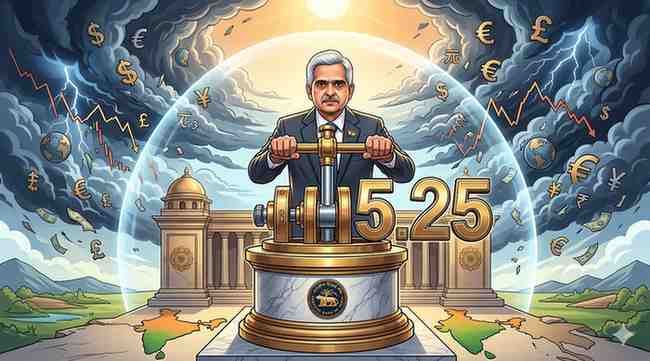
The Reserve Bank of India’s Monetary Policy Committee has unanimously decided to keep the repo rate unchanged at 5.25%, maintaining its neutral stance as it balances persistent inflation risks against moderating growth momentum. This decision signals the central bank’s cautious approach amid volatile global financial conditions and domestic consumption pressures.
New Delhi, April 2026 — The RBI’s decision to hold rates steady marks the third consecutive policy meeting without adjustment, reflecting a central bank navigating between competing macroeconomic pressures while preserving flexibility for future action in either direction.
What Is Driving the RBI’s Decision?
The Monetary Policy Committee’s neutral stance indicates neither hawkish nor dovish bias, allowing the RBI to respond dynamically to incoming economic data. Inflation, while moderating from earlier peaks, remains within the upper band of the RBI’s 2-6% tolerance range, constraining immediate rate cut possibilities. Global monetary policy divergence, particularly the Federal Reserve’s prolonged higher-for-longer positioning, has created rupee depreciation pressures that the RBI must factor into its calculus. Governor Shaktikanta Das has consistently emphasised that durable disinflation, rather than temporary relief, remains the precondition for any accommodative pivot.
What Does This Mean for India’s Economy?
Borrowers will see no immediate relief in lending rates, with home loan and corporate credit costs remaining elevated in the near term. The banking sector’s net interest margins will remain protected, supporting profitability but potentially constraining credit growth in rate-sensitive sectors like real estate and automobiles. Small and medium enterprises, already grappling with input cost pressures, will continue facing elevated working capital costs. The neutral stance, however, keeps the door open for rate cuts in subsequent quarters should inflation sustainably breach below 4%.
How Does This Compare Globally?
India’s rate pause contrasts with recent easing cycles initiated by the European Central Bank and several emerging market central banks in Latin America and Southeast Asia. The RBI’s current repo rate of 5.25% positions India with a real interest rate of approximately 1-1.5%, offering adequate buffer against capital flight risks. The last time the RBI maintained rates at this level for an extended period was during the 2019-2020 pre-pandemic phase, when similar growth-inflation trade-offs dominated policy deliberations. India’s approach mirrors the Bank of England’s cautious stance, prioritising credibility over short-term stimulus.
- Repo rate unchanged at 5.25% for third consecutive MPC meeting
- Monetary stance remains neutral, unchanged from previous policy
- CPI inflation projected to moderate but remains above 4% target
- GDP growth forecast maintained amid consumption softness
- Rupee stability and imported inflation remain key monitoring variables
What Should Investors Watch?
Bond markets have largely priced in the status quo, with 10-year government securities yields holding steady around current levels. Equity markets, particularly rate-sensitive banking and infrastructure stocks, may see muted reactions given the decision aligns with consensus expectations. Foreign portfolio investors will closely monitor the RBI’s forward guidance language for any hints of policy pivot timing. The August policy meeting becomes critical, as monsoon performance and Q1 GDP data will provide clearer visibility on the growth-inflation trajectory.
Analyst’s View
The RBI’s extended pause reflects prudent risk management rather than policy paralysis, preserving optionality amid an unusually uncertain global environment. Markets should anticipate that the central bank will require at least two consecutive inflation prints below 4.5% before seriously considering rate cuts, likely pushing any easing action to Q4 2026 at earliest. The key variable to monitor remains crude oil prices and their pass-through effects on headline inflation, alongside any unexpected rupee volatility triggered by US monetary policy shifts. For now, the RBI has chosen patience over action—a stance that prioritises institutional credibility over short-term market appeasement.