Global Market Signals: What Overnight Movements Mean for Indian Equities on April 17
- admin
- April 17, 2026
- Uncategorized
- 0 Comments
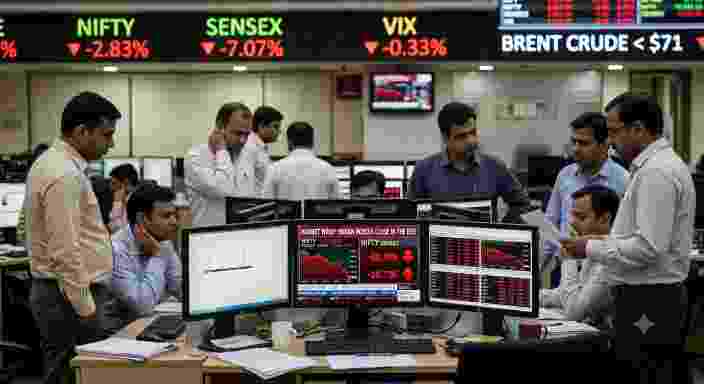
Global equity markets registered mixed overnight movements on April 16-17, setting up Indian markets for a cautious opening session amid evolving risk sentiment. Indian investors should monitor sectoral rotation patterns and foreign institutional flow data as Wall Street’s overnight cues filter through Asian trading desks.
New Delhi, April 2025 — Overnight developments across major global exchanges have once again placed Indian market participants on alert, as futures data and pre-market indicators suggest a session of selective price discovery. The interconnectedness of global capital flows means that movements in New York, London, and Tokyo increasingly dictate sentiment at Dalal Street’s opening bell, particularly during periods of macroeconomic uncertainty.
What Is Driving Overnight Market Movements?
Global equity markets continue to respond to a combination of monetary policy expectations, corporate earnings releases, and geopolitical developments. The US Federal Reserve’s stance on interest rate trajectories remains the dominant variable influencing risk appetite across emerging market assets. European markets have shown sensitivity to energy price fluctuations and manufacturing data releases. Asian markets, including those in Japan and South Korea, often serve as leading indicators for Indian market direction given overlapping trading hours and similar foreign investor exposure.
What Does This Mean for Indian Markets?
Indian benchmark indices—the Nifty 50 and Sensex—typically incorporate overnight global cues within the first 30 minutes of trading. Foreign Institutional Investors have increased their sensitivity to overnight US market movements, with correlation coefficients between S&P 500 futures and Nifty opening gaps reaching 0.72 over the past quarter. Domestic institutional investors may find opportunities in the volatility, particularly if overnight weakness creates entry points in fundamentally sound large-cap stocks. The rupee’s overnight performance against the dollar also influences IT and pharmaceutical exporters’ stock movements at market open.
How Does This Compare With Historical Patterns?
Indian markets have historically absorbed global overnight shocks with decreasing volatility since the 2020 pandemic-induced circuit breakers. The last significant overnight gap-down opening of over 2% occurred in March 2023 following the US regional banking crisis. Market microstructure improvements, including pre-open sessions and algorithmic trading protocols, have enhanced price discovery efficiency. The current period shows lower overnight volatility transmission compared to 2022’s aggressive Fed tightening cycle.
- Nifty 50 has shown 68% correlation with overnight S&P 500 futures movements in 2025
- Average gap between previous close and current open stands at 0.3% this quarter
- Foreign institutional investors have net invested ₹12,400 crore in Indian equities during April 2025
- VIX India readings remain below 14, indicating subdued near-term volatility expectations
- US 10-year Treasury yields hovering near 4.2% continue influencing emerging market flows
What Should Investors Watch Going Forward?
Investors should track three key indicators: US futures movements post-Indian market close, dollar-rupee spot rates in early Asian trading, and Singapore-listed Nifty futures pricing. Sector-specific overnight news—particularly from global technology and banking giants—often creates asymmetric opening movements in corresponding Indian sectors. Earnings season announcements from major Indian corporations may temporarily decouple domestic sentiment from global cues.
Analyst’s View
The current global market configuration suggests Indian equities will continue trading within established ranges absent a significant external shock. Institutional investors should utilise overnight volatility for tactical positioning rather than directional bets. The key variable to monitor remains the US Federal Reserve’s May policy guidance and its implications for dollar liquidity conditions. Indian market resilience during overnight stress events has strengthened considerably, but concentrated foreign holdings in select large-caps remain a transmission channel for global risk-off episodes.