Why RBI’s Rate Hold Amid Geopolitical Tensions Reveals a Defensive Pivot in Monetary Strategy
- admin
- April 15, 2026
- Uncategorized
- 0 Comments
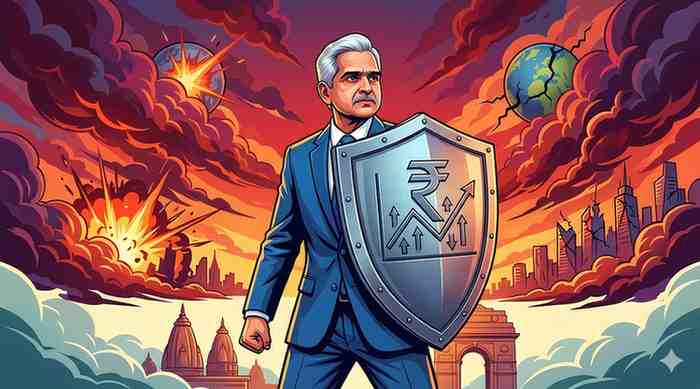
The Reserve Bank of India has maintained its benchmark interest rate while explicitly warning that ongoing global conflicts pose material risks to India’s growth trajectory and inflation outlook. This defensive stance signals the central bank’s shift from growth-supportive easing to a wait-and-watch posture as external shocks threaten to derail domestic economic momentum.
New Delhi, April 2025 — The RBI’s Monetary Policy Committee chose to hold the repo rate steady at 6%, marking a deliberate pause after delivering 50 basis points of cuts earlier this fiscal year. Governor Shaktikanta Das emphasised that war-driven disruptions to global supply chains, energy markets, and trade flows now constitute the primary threat to India’s macroeconomic stability.
What Is Driving the RBI’s Caution?
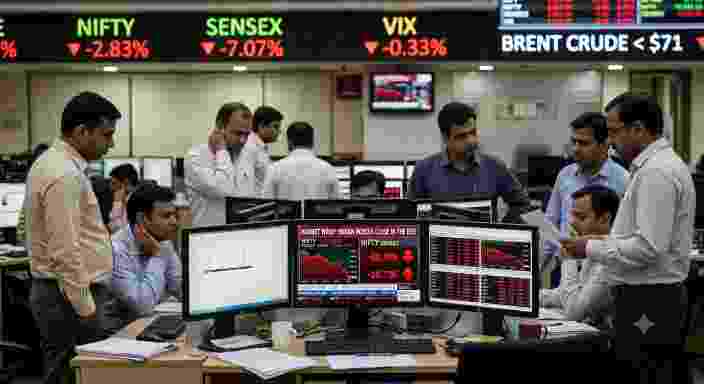
Escalating conflicts across multiple theatres — from Eastern Europe to the Middle East — have created persistent volatility in crude oil prices, India’s most critical import vulnerability. The RBI’s inflation projections assume Brent crude averaging $85 per barrel, but geopolitical flare-ups have repeatedly pushed prices toward $95 in recent months. Supply chain fragmentation, particularly in semiconductors and fertilisers, continues to inflate input costs for Indian manufacturers. The central bank’s decision reflects hard-won lessons from 2022, when premature optimism about transitory inflation proved costly.
What Does This Mean for India’s Growth Outlook?
The RBI has retained its GDP growth forecast at 6.5% for FY26, but the language accompanying the projection carries notable hedges. Private consumption remains robust, yet export momentum has weakened as global demand softens under the weight of synchronised monetary tightening abroad. Capital expenditure by the government continues to anchor growth, though fiscal space is narrowing as defence and subsidy outlays climb. The central bank’s forward guidance suggests rate cuts remain on the table, but only if external conditions stabilise materially.
How Does India’s Position Compare Globally?
India’s monetary stance sits in the middle ground between aggressive easing in China and prolonged restrictiveness in the United States. The Federal Reserve has signalled rates will remain elevated through 2025, keeping pressure on emerging market currencies including the rupee. Unlike Brazil and Indonesia, which have resumed cutting cycles, India’s pause reflects relatively stickier core inflation hovering near 4.5%. The RBI’s measured approach aims to preserve interest rate differentials that support capital flows while avoiding imported inflation from rupee depreciation.
- Repo rate held at 6%, unchanged after 50 bps of cuts in FY25
- CPI inflation projected at 4.2% for FY26, within the 2-6% tolerance band
- Crude oil assumption at $85/barrel, with upside risks from Middle East tensions
- Rupee has depreciated 3.2% against the dollar year-to-date
- Foreign portfolio outflows totalled ₹48,000 crore in Q1 FY26
What Should Investors and Businesses Watch?
Bond markets have already priced in a prolonged pause, with the 10-year government security yield stabilising near 7.1%. Corporate borrowers should not expect significant rate relief before the October policy review at the earliest. Export-oriented sectors — textiles, gems, and IT services — face margin compression if demand in the US and Europe weakens further. Banks may see net interest margins plateau after two years of expansion, prompting a shift toward fee-based income strategies.
Analyst’s View
The RBI’s defensive pivot marks a recognition that India cannot insulate itself from global turbulence through domestic policy alone. The next six months will test whether the central bank’s inflation credibility can withstand potential oil shocks without forcing reactive rate hikes. Investors should monitor three triggers: Brent crude breaching $100, rupee weakening beyond 86 to the dollar, and any sustained acceleration in food inflation from monsoon disruptions. The policy space for easing exists, but the RBI has made clear it will preserve that ammunition rather than deploy it prematurely.