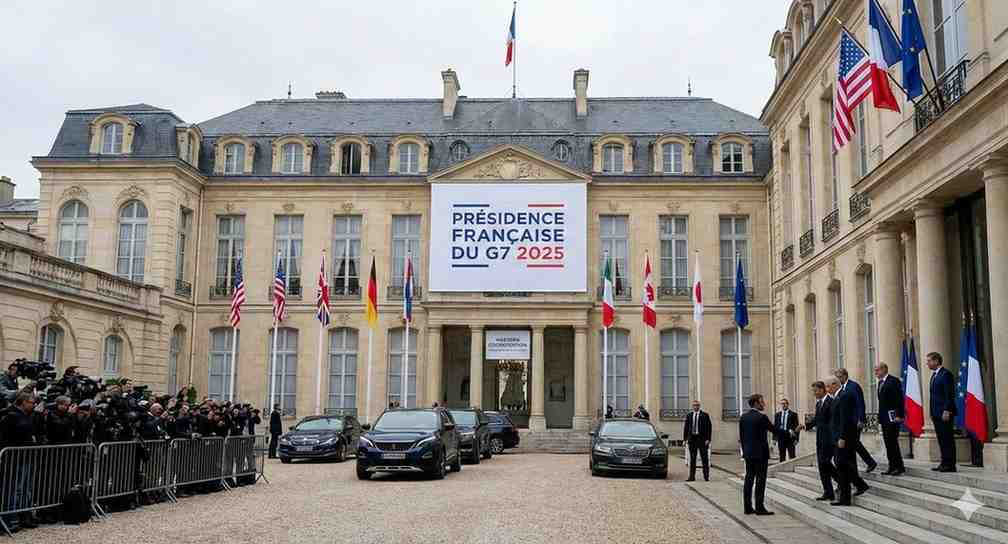
France Begins the G7 Presidency — A Year of Western Coordination, and Western Contradictions
Key highlights
- France holds the G7 presidency in 2026, shaping priorities and outreach partners. SDG Knowledge Hub+1
- The G7 is influence-heavy but enforcement-light: it signals alignment more than it delivers binding outcomes. France Diplomacy
- The presidency year often sets the narrative on sanctions, energy security, tech governance, and global economic messaging. France Diplomacy
From 1 January 2026, France is in charge of the G7’s agenda-setting machinery—ministerial tracks, diplomatic choreography, and the themes that will dominate summit season. The G7 remains a compact club with outsized narrative power: when it moves in sync, markets notice and global policy language shifts; when it fractures, the world sees the limits of “the West” as a unified actor. France Diplomacy+1
France has chaired before, and the playbook is clear: the presidency decides what is framed as urgent, and who gets invited for outreach. France Diplomacy In a year where security and the global economy will keep wrestling, France’s task is to produce coherence without pretending consensus is automatic.
How things could turn out
- Best case: France uses the presidency to keep G7 coordination disciplined—less symbolic moralising, more practical alignment on energy, supply chains, and economic resilience. France Diplomacy
- Middle case: strong statements, mixed follow-through; unity on some files, fractures on others.
- Risk case: domestic politics across member states crowd out international ambition, leaving G7 outcomes thin and reactive.
Official source: France’s official G7 documentation and presidency explanation.