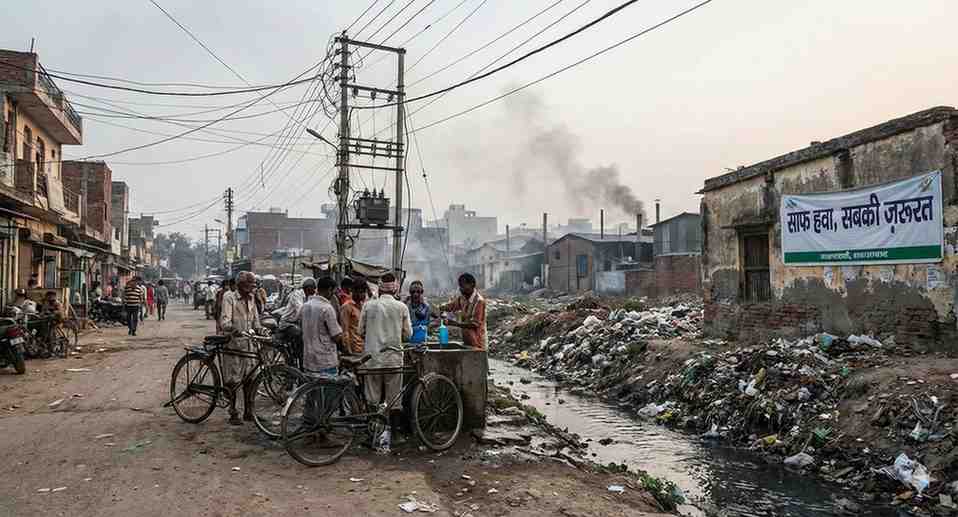
Ghaziabad’s Social Issues: Are We Ignoring the Underlying Problems?
- admin
- December 30, 2025
- People, Uttar Pradesh
- 0 Comments
A Rapidly Growing City Struggles with Socioeconomic Disparities Amid Urbanization
Key Metrics:
- Population Growth: Ghaziabad’s population grew by 36% from 2011 to 2021, reaching 2.9 million (Census of India).
- Poverty Levels: 22% of the population lives below the poverty line (NITI Aayog’s Multidimensional Poverty Index).
- Literacy Rate: 78%, below the national urban average of 85% (Uttar Pradesh Education Department).
- Crime Rate: Ghaziabad reported a 12% increase in crime in 2024, with 60% of cases involving theft and domestic violence (National Crime Records Bureau).
- Employment: 65% of Ghaziabad’s workforce is engaged in informal sectors, with limited access to job security and benefits (Labour Ministry Report, 2024).
Ghaziabad, 2025 – Known for its proximity to Delhi and its rapid urbanization, Ghaziabad has emerged as a key economic and residential hub in the National Capital Region (NCR). However, behind its growing skyline lies a web of social issues that remain unaddressed. Rising poverty, inadequate public services, and increasing crime highlight the city’s struggle to balance development with social equity. Are these problems being overlooked as Ghaziabad races toward modernization?
Rising Socioeconomic Disparities
Despite its economic growth, Ghaziabad’s population faces stark inequalities. According to NITI Aayog’s Multidimensional Poverty Index, 22% of the city’s residents live below the poverty line, concentrated in areas like Vijay Nagar and Loni. Many of these families lack access to basic amenities such as clean water, healthcare, and quality education.
Employment opportunities are skewed toward informal sectors, with 65% of the workforce engaged in daily-wage jobs or unregulated work, as per the Labour Ministry’s 2024 Report. This leaves a significant portion of the population without job security or benefits, perpetuating cycles of poverty.
Education and Healthcare Challenges
Ghaziabad’s literacy rate stands at 78%, below the national urban average of 85%, according to the Uttar Pradesh Education Department. Government schools in the city often face shortages of teachers and infrastructure, particularly in low-income neighborhoods.
Healthcare access also remains inadequate. A report by the National Health Mission reveals that Ghaziabad has only 1 government hospital per 300,000 residents, forcing many to rely on costly private clinics. Public health initiatives, such as vaccination drives, often face logistical challenges in reaching marginalized communities.
Crime and Safety Concerns
The National Crime Records Bureau (NCRB) recorded a 12% rise in crime rates in Ghaziabad in 2024, with theft and domestic violence accounting for 60% of cases. Rapid urbanization and inadequate policing in high-density areas have contributed to this uptick.
Women’s safety is a particular concern. A 2024 survey by the Uttar Pradesh State Commission for Women found that 40% of women in Ghaziabad feel unsafe traveling alone after dark, citing poor street lighting and inadequate police presence.
Voices from the Ground
Residents express frustration over the city’s social issues. “We see new malls and highways, but our slums still lack clean water and sanitation,” says Ram Singh, a resident of Vijay Nagar.
Meanwhile, middle-class citizens point to rising crime. “Thefts have become common in our neighborhood. We need better policing and community safety measures,” says Priya Sharma, a homemaker in Indirapuram.
Local activists also emphasize the need for inclusive development. “Ghaziabad’s growth is benefiting only a few. The city needs to focus on healthcare, education, and job creation for all,” says Rajesh Gupta, a social worker.
Government Initiatives and Gaps
Several programs aim to address Ghaziabad’s social challenges, including:
- Affordable Housing: Under the Pradhan Mantri Awas Yojana (PMAY), over 10,000 affordable housing units have been sanctioned, though only 60% have been completed as of 2024.
- Skill Development: The Skill India Mission has enrolled 15,000 youth in Ghaziabad for vocational training programs to improve employability.
- Health Infrastructure: The National Health Mission allocated ₹200 crore in 2024 for hospital upgrades and the construction of primary health centers.
- Community Policing: The Ghaziabad Police has introduced neighborhood watch programs and women’s safety helplines to curb rising crime.
Despite these efforts, implementation gaps and resource constraints hinder their impact. For instance, affordable housing projects often face delays due to land acquisition issues, and skill development programs have limited reach in low-income areas.
Recommendations for Inclusive Growth
To address Ghaziabad’s underlying social issues, experts suggest the following measures:
- Strengthen Public Services: Invest in government schools, healthcare facilities, and sanitation to improve living standards in marginalized areas.
- Expand Employment Opportunities: Promote small and medium enterprises (SMEs) and offer incentives for formal job creation in manufacturing and services.
- Enhance Safety Measures: Increase police presence, improve street lighting, and launch community awareness programs on crime prevention.
- Monitor Implementation: Establish independent monitoring bodies to track the progress of social welfare schemes and address bottlenecks.
- Promote Community Participation: Engage residents in urban planning and decision-making processes to ensure inclusive development.
Balancing Growth and Equity
Ghaziabad’s rapid transformation offers immense potential for economic and social progress. However, without addressing the city’s underlying social challenges, its growth risks becoming uneven and unsustainable. The question remains: Can Ghaziabad bridge the gap between development and equity, or will its social issues continue to fester beneath the surface?