WTO Issues Stark Warning: Middle East Conflict Threatens to Derail Global Trade Growth
- Editor
- March 20, 2026
- Uncategorized
- 0 Comments
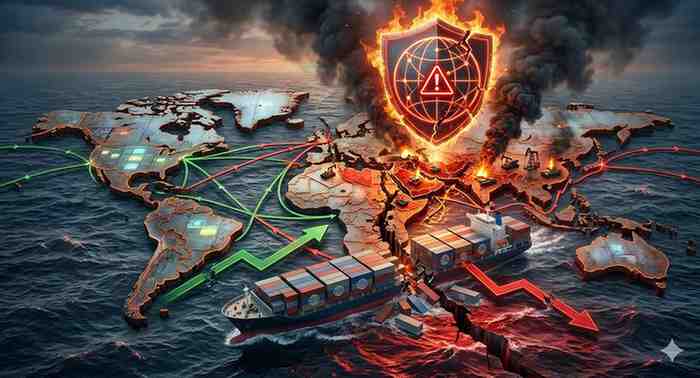
Geneva, March 20, 2026 — The World Trade Organization (WTO) has issued a sobering update on the state of the global economy, warning that the escalating conflict in the Middle East is the “big unknown” that could significantly drag down world trade and GDP growth through 2026. While 2025 saw a surprisingly resilient 4.6% growth in merchandise trade, the WTO projects a sharp deceleration ahead.
Baseline Projections vs. The Conflict Scenario
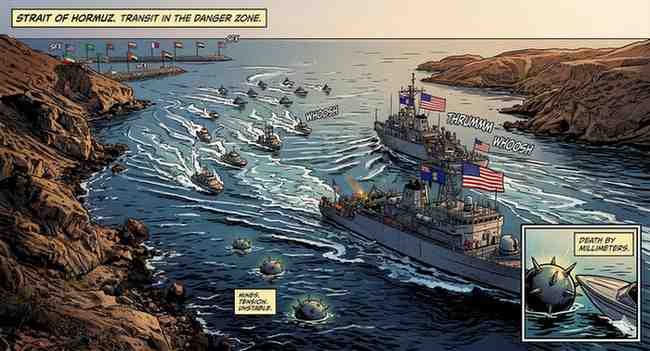
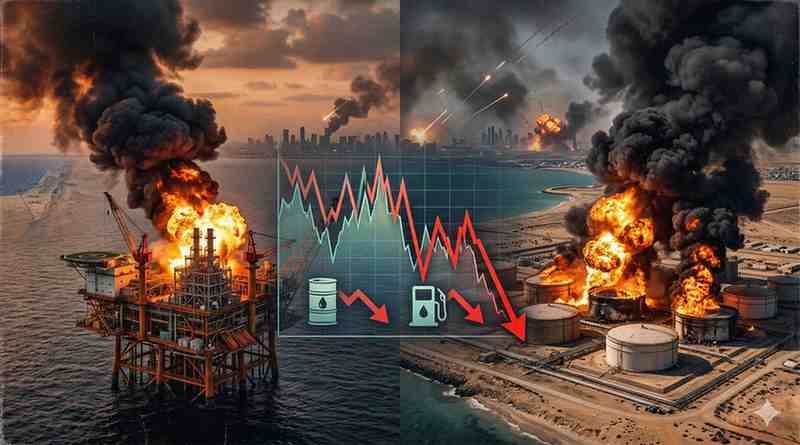
In its latest baseline forecast, the WTO expects growth in world merchandise trade to fall to 1.9% in 2026. However, if elevated energy prices and shipping disruptions persist due to the regional war, that figure could plummet further to just 1.4%.
The ripple effects extend beyond goods:
- Global GDP: World GDP growth is predicted to drop from a baseline of 2.8% to 2.5% if energy costs remain high for the remainder of the year.
- Services Trade: Commercial services, which grew at 5.3% in 2025, are now forecasted to slow to 4.8% in the baseline scenario, potentially sinking to 4.1% under the weight of the conflict.
Threats to Global Food Security
One of the most critical warnings in the report concerns the “invisible” links between energy and food. The WTO highlighted that shipping disruptions and higher energy costs are reducing the supply and raising the price of fertilizers.
A prolonged interruption could force farmers worldwide to reduce fertilizer use or switch to less “input-intensive” crops. This chain reaction threatens global food security, prompting the WTO to call for keeping food trade channels open and predictable to prevent shortages in the most vulnerable regions.
The “Battered but Not Broken” Rules-Based System
Despite the severe disruptions, WTO Director-General Ngozi Okonjo-Iweala noted a remarkable resilience in global trade. Nearly three-quarters of goods trade still crosses borders under “Most Favoured Nation” (MFN) tariff terms, suggesting that while the rules-based system is “battered,” it remains far from broken.
The report underscores that while a rebound to 2.8% trade growth is possible by 2027—assuming oil prices recede—the immediate future depends entirely on the duration and intensity of the West Asia crisis.
Bottom Line The era of unusually strong trade growth seen in 2025 is unlikely to persist. As the WTO prepares for its next round of reforms, the global economy faces a period of high volatility where energy prices act as the primary lever for both trade volume and food stability.