Why US Tariff Fears Erased Rs 8 Lakh Crore from Indian Markets in a Single Session
- admin
- April 2, 2026
- Uncategorized
- 0 Comments
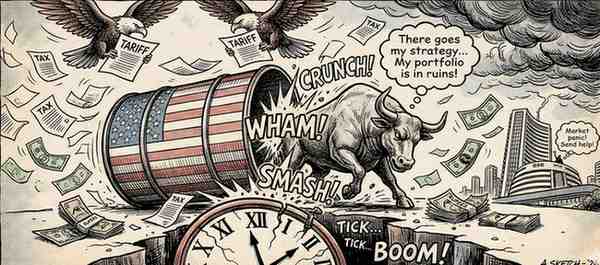
Indian equity markets suffered their steepest single-day erosion in recent months, with Rs 8 lakh crore in market capitalisation wiped out as the Sensex and Nifty both closed approximately 1% lower amid escalating concerns over potential US tariff actions. The selloff reflects growing investor anxiety about India’s export-dependent sectors facing fresh headwinds from protectionist trade policies emanating from Washington.
New Delhi, January 2025 — The Bombay Stock Exchange’s total market capitalisation fell by Rs 8 lakh crore in a single trading session, marking one of the sharpest wealth erosions since the global banking stress episode of early 2023. Both benchmark indices—the Sensex and Nifty 50—declined by roughly 1%, with broad-based selling across IT services, pharmaceuticals, and auto ancillaries, sectors with significant US revenue exposure.
What Is Driving This Market Selloff?
The primary catalyst stems from renewed fears that the United States may impose additional tariffs on imports from key trading partners, including India. Market participants are pricing in the risk that sectors such as information technology services, generic pharmaceuticals, and textiles—which collectively derive 25-40% of revenues from American clients—could face margin compression. Foreign portfolio investors turned net sellers, accelerating the downward pressure on large-cap stocks that dominate index weights. The timing coincides with broader emerging market weakness as the dollar index strengthened on safe-haven flows.
What Does This Mean for Indian Exporters and GDP?
India’s merchandise exports to the United States totalled approximately $77 billion in FY24, making America the country’s largest export destination. Any tariff escalation would disproportionately impact labour-intensive sectors like gems and jewellery, apparel, and auto components, potentially affecting millions of jobs in export-oriented manufacturing clusters. The Commerce Ministry has previously indicated that even a 10% tariff increase on select categories could shave 15-20 basis points off GDP growth over a fiscal year. Corporate earnings guidance for Q4 FY25 may need downward revision if tariff threats materialise into policy.
How Does This Compare to Previous Market Shocks?
The Rs 8 lakh crore single-session loss ranks among the top five daily erosions in BSE history, though it remains smaller than the Rs 12 lakh crore wipeout during the COVID-19 crash of March 2020. The 2018-2019 US-China trade war similarly triggered 8-10% corrections in Indian indices over compressed timeframes. Unlike those episodes, the current selloff occurred without a corresponding spike in the India VIX beyond 16, suggesting institutional hedging remains orderly rather than panic-driven.
- BSE market capitalisation fell from Rs 442 lakh crore to Rs 434 lakh crore in one session
- Nifty IT index declined 1.8%, underperforming the broader market
- Foreign portfolio investors recorded net outflows exceeding Rs 3,000 crore on the day
- India’s exports to the US represent approximately 18% of total merchandise exports
- The rupee weakened past 83.50 per dollar, adding import cost pressures
What Should Investors Watch Next?
Market participants should monitor official US Trade Representative communications and any executive orders targeting Section 301 tariff reviews. The Union Budget presentation in February will reveal whether the Finance Ministry builds fiscal buffers for potential export support schemes. Quarterly earnings calls from major IT services firms—TCS, Infosys, and Wipro—will provide forward guidance on client spending sentiment in North America. Currency hedging costs for exporters warrant close attention as rupee volatility may compress margins independently of tariff outcomes.
Analyst’s View
This selloff represents rational repricing of geopolitical risk rather than fundamental deterioration in corporate India’s earnings power. The market’s reaction, while sharp, has not yet breached technical support levels that would signal a structural downtrend. Investors with 12-month horizons should view the correction as a valuation reset opportunity in quality export-oriented names, provided tariff threats remain rhetorical rather than legislated. The key variable to monitor is whether bilateral trade negotiations gain traction before punitive measures take effect—history suggests India has successfully negotiated carve-outs in previous tariff disputes.