The Enigma of Harvinder Singh ‘Rinda’: From Local Gangster to Global Terrorist
- Editor
- April 8, 2026
- Uncategorized
- 0 Comments
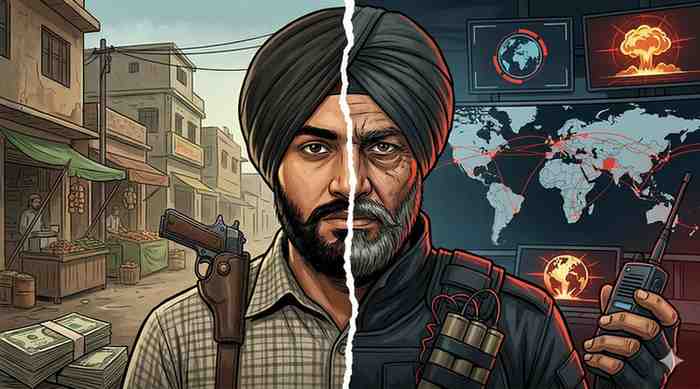
NEW DELHI, April 2026 — Harvinder Singh Sandhu, notoriously known as “Rinda,” remains one of the most polarizing figures in India’s fight against cross-border terrorism. Once a hardcore criminal in the streets of Punjab and Maharashtra, Rinda eventually transitioned into a UAPA-designated terrorist, leaving behind a trail of violence, extortion, and strategic strikes.
The Early Years: From Punjab to Maharashtra
Born in 1987 in the Sarhali village of Punjab’s Tarn Taran district, Rinda’s life took a sharp turn when his family moved to Nanded, Maharashtra, in the late 1980s. His entry into the world of crime began with a family land dispute in 2008, which led to the murder of a relative—his first registered case under IPC Section 302.
A Violent Path Through the Prison System
Rinda’s time in jail only solidified his reputation for extreme aggression. He was transferred through three different high-security prisons in Punjab after repeatedly attacking law enforcement:
- Sangrur Jail (2013): He assaulted the jail superintendent, prompting his first transfer.
- Patiala Central Jail (2014): Within two months, he attacked the assistant jail superintendent during a routine check.
- Nabha Jail (2014): Despite his violent record, he was released on bail in October 2014, after which he fled back to Nanded to run an extensive extortion racket.
Strategic Success and the Escape to Pakistan
By 2016, Rinda had become a significant figure in campus politics in Chandigarh, providing muscle for student unions. Following an indiscriminate firing incident at Punjab University where he fired eight rounds, he was declared a “Most Wanted Fugitive”. In 2017, Narrowly escaping a police raid in Karnataka, Rinda fled India via Nepal, eventually surfacing in Lahore, Pakistan, under the protection of the ISI.
The Terror Network and “Death” Rumors
From Pakistan, Rinda allegedly orchestrated a massive network for smuggling drugs, AK-47s, and explosives into Punjab using drones. He is linked to high-profile attacks, including the Mohali RPG attack on the Punjab Police Intelligence Headquarters in May 2022.
In November 2022, reports surfaced that Rinda had died in a Lahore hospital, with causes cited as kidney failure or a drug overdose. However, the mystery deepened when the Ministry of Home Affairs officially designated him a terrorist under the UAPA in February 2023. This late designation suggests that Indian intelligence possesses evidence that Rinda may still be alive and active.
Bottom Line
Harvinder Singh Rinda’s trajectory highlights the dangerous evolution of local gangsters into instruments of proxy warfare. Whether he is truly deceased or remains a protected asset in Pakistan, the “Rinda” network continues to be a primary focus for Indian security agencies.