J.P. Morgan’s 2026 Outlook Signals Fragmented Global Markets as Regional Divergences Deepen
- admin
- April 2, 2026
- Uncategorized
- 0 Comments
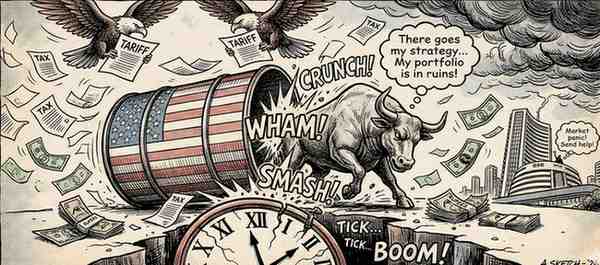
J.P. Morgan’s 2026 market outlook warns of intensifying multidimensional polarization across asset classes, geographies, and sectors, creating a fragmented investment landscape that defies traditional correlation models. Indian investors face both elevated risks and selective opportunities as global capital flows increasingly bifurcate between competing economic blocs and policy regimes.
New Delhi, April 2026 — The American investment bank’s latest strategic assessment identifies polarization not as a temporary dislocation but as a structural feature of post-pandemic markets, with divergences emerging simultaneously across monetary policy trajectories, sectoral valuations, and geopolitical alignments. J.P. Morgan’s global strategists note that the dispersion between top-performing and lagging asset classes has reached levels not observed since the 2008 financial crisis, fundamentally altering portfolio construction assumptions.
What Is Driving This Multidimensional Polarization?
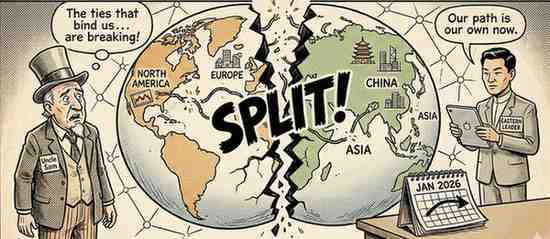
Three concurrent forces are fragmenting global markets in 2026. Monetary policy divergence has accelerated as the Federal Reserve maintains restrictive rates while the European Central Bank and People’s Bank of China pursue accommodative stances to combat sluggish growth. Geopolitical realignment continues reshaping supply chains and capital flows, with friend-shoring policies creating parallel investment universes. Technology sector concentration has reached unprecedented levels, with artificial intelligence beneficiaries commanding valuations that dwarf traditional industrial conglomerates by multiples last seen during the dot-com era.
What Does This Mean for India?
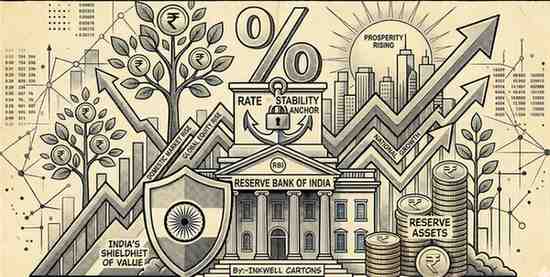
India occupies a distinctive position within this polarized landscape, benefiting from its strategic non-alignment while navigating currency pressures from dollar strength. Foreign institutional investors withdrew approximately ₹47,000 crore from Indian equities in the December 2025 quarter as rate differentials widened, yet domestic institutional flows have provided substantial counterbalancing support. The Reserve Bank of India’s calibrated intervention strategy has maintained rupee stability within a 83.5-85.2 band against the dollar, preserving India’s relative attractiveness among emerging markets. Indian manufacturing and technology services continue capturing redirected supply chain investments from firms diversifying beyond China.
How Does This Compare Globally?
Emerging markets broadly face a bifurcated reality under current conditions. Nations with strong domestic demand bases and manageable external debt — including India, Indonesia, and Vietnam — have demonstrated resilience, while commodity-dependent economies and those with dollar-denominated liabilities face acute stress.
- Global equity market dispersion index at 2.4 standard deviations above 20-year average
- US-Eurozone 10-year yield spread at 185 basis points, widest since 2019
- Technology sector now represents 34% of MSCI World Index market capitalization
- India’s weight in MSCI Emerging Markets Index risen to 19.8%, up from 14.6% in 2022
- Cross-border M&A activity down 28% year-on-year as regulatory barriers multiply
What Should Investors Watch?
Currency hedging costs and correlation breakdowns demand heightened attention in portfolio management. J.P. Morgan recommends increased allocation to market-neutral strategies and reduced reliance on traditional 60-40 equity-bond frameworks that assume negative correlations. Indian large-cap exporters with dollar revenues offer natural hedging benefits, while domestically-focused consumption plays provide insulation from global volatility. Credit spreads in developed markets bear monitoring as refinancing walls approach for pandemic-era corporate debt.
Analyst’s View
The polarization thesis fundamentally challenges assumptions underpinning passive investment strategies that dominated the previous decade. Active management premiums appear justified when asset class correlations become unstable and regional divergences persist. Indian allocators should anticipate continued foreign institutional volatility while positioning for structural inflows as index reweighting mechanics favour Indian equities. The critical variable remains whether polarization intensifies toward fragmentation or stabilizes into a new equilibrium — Federal Reserve policy pivots and US-China trade developments in the second half of 2026 will prove decisive.