India’s Diplomatic Pivot: Balancing Washington’s Unpredictability Against Beijing’s Regional Expansion
- admin
- April 2, 2026
- Uncategorized
- 0 Comments
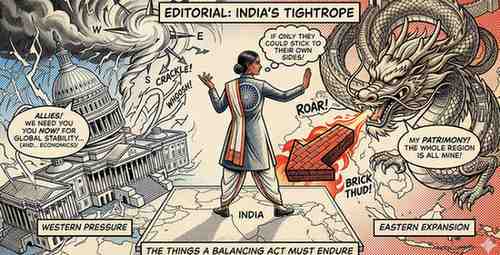
India is recalibrating its foreign policy stance to hedge against increasing unpredictability in US strategic commitments while countering China’s accelerated influence operations across South Asia and the Indo-Pacific. This dual-track approach marks a significant departure from New Delhi’s earlier alignment towards Washington, reflecting a return to strategic autonomy principles adapted for contemporary great-power competition.
New Delhi, April 2026 — India’s Ministry of External Affairs has initiated a comprehensive review of bilateral defence agreements and economic partnerships, responding to what officials describe as “structural volatility” in American foreign policy posture under successive administrations. The recalibration comes as China intensifies infrastructure investments and diplomatic overtures across India’s traditional sphere of influence, from Nepal and Sri Lanka to the Maldives.
What Is Driving India’s Strategic Recalibration?
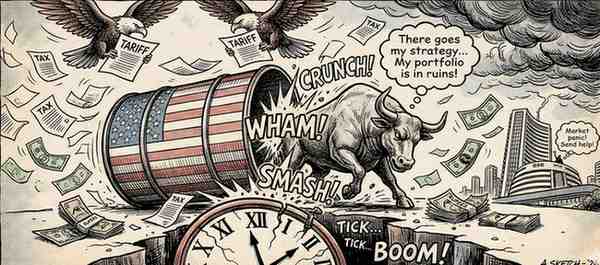
India’s policy shift stems from two concurrent pressures that have intensified since 2024. Washington’s oscillating positions on tariffs, technology transfers, and security guarantees have undermined New Delhi’s confidence in long-term American commitments. Simultaneously, Beijing has exploited this uncertainty by deepening economic ties with India’s neighbours through Belt and Road expansions and targeted debt diplomacy.
The volatility extends beyond rhetoric into material concerns. American restrictions on critical technology sharing, despite Quad commitments, have frustrated Indian defence modernisation plans. China, meanwhile, has resolved border disputes with Bhutan and expanded port access agreements with Bangladesh, systematically encircling India’s periphery.
What Does This Mean for India’s Defence and Economic Policy?
India’s defence establishment is accelerating indigenous production timelines under the Atmanirbhar Bharat framework, reducing dependency on any single external supplier. The government has expanded defence cooperation discussions with France, Israel, and Russia while maintaining existing American partnerships. This multi-alignment approach increases procurement flexibility but complicates interoperability standards across military platforms.
Economic policy reflects similar hedging behaviour. India has pursued bilateral trade agreements with the European Union and Gulf Cooperation Council while resisting pressure to join China-led regional frameworks. The rupee internationalisation initiative has gained momentum, with twelve countries now accepting rupee-denominated trade settlements.
How Does This Compare to India’s Historical Foreign Policy Approach?
India’s current posture echoes the Non-Aligned Movement principles of the Cold War era, updated for multipolar competition. Unlike the Nehruvian original, today’s strategic autonomy operates within active security partnerships rather than equidistance from all blocs. The shift resembles India’s 1998 post-Pokhran recalibration, when nuclear tests forced simultaneous management of American sanctions and Chinese concerns.
- India’s defence imports from the United States declined 22% between 2023-2025, while domestic production increased 34%
- Chinese FDI in South Asian nations excluding India rose to $47 billion in 2025, triple the 2020 figure
- India’s bilateral trade with Russia reached $78 billion in 2025 despite Western sanctions pressure
- Quad military exercises decreased from seven joint operations in 2023 to three in 2025
- India’s strategic petroleum reserves expanded to 74 days of import cover, reducing energy vulnerability
What Should Investors and Policymakers Watch?
Markets should monitor India’s upcoming defence procurement decisions, particularly the $12 billion fighter jet contract where American, French, and Swedish manufacturers compete. Any shift away from US platforms would signal deeper strategic recalibration. Currency markets remain sensitive to rupee internationalisation progress, which could reduce dollar dependency but introduce new volatility channels.
Policymakers across Asian capitals are observing whether India’s hedging strategy provides a viable template for middle powers navigating great-power rivalry. Success could encourage similar recalibrations from Indonesia, Vietnam, and Saudi Arabia.
Analyst’s View
India’s strategic recalibration represents pragmatic adaptation rather than fundamental realignment. New Delhi recognises that neither Washington’s reliability nor Beijing’s intentions can be assumed constant. The next eighteen months will prove decisive — India must demonstrate that multi-alignment delivers concrete security and economic benefits without isolating the country from either major power’s technology ecosystem. Watch for signals at the September G20 finance ministers meeting and the delayed 2+2 dialogue with Washington, both forums where India’s calibrated positioning will face its first serious tests.