India-Russia Strategic Partnership Faces Recalibration Amid Western Pressure and Shifting Asian Alignments
- admin
- April 2, 2026
- Uncategorized
- 0 Comments
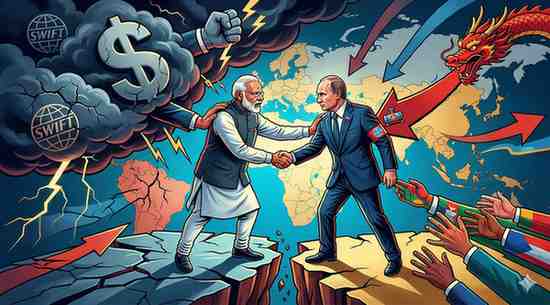
India’s decades-old strategic partnership with Russia confronts unprecedented stress as New Delhi balances its traditional defence dependency against deepening Western economic ties and Moscow’s growing reliance on Beijing. The bilateral relationship, once characterised by Cold War-era convergence, now requires deliberate diplomatic management to preserve core defence and energy interests while India pursues strategic autonomy in a fragmenting global order.
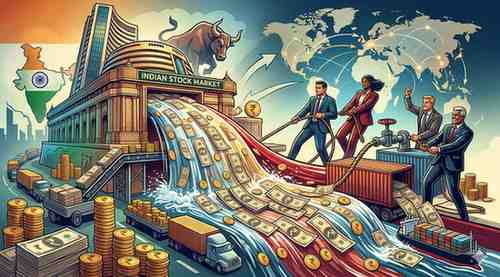
New Delhi, May 2025 — India-Russia bilateral trade reached approximately $65 billion in 2023-24, a fourfold increase from pre-Ukraine war levels, driven almost entirely by discounted Russian crude oil imports that now constitute nearly 40 percent of India’s oil basket. This commercial surge, however, masks deeper structural tensions in a partnership that has historically anchored India’s defence capabilities and provided crucial diplomatic cover at the United Nations Security Council.
What Is Driving the Current Recalibration?
Russia’s military campaign in Ukraine, now entering its fourth year, has fundamentally altered the strategic calculus for both nations. Moscow’s increased dependence on Chinese economic and diplomatic support has created an asymmetry that diminishes India’s traditional leverage as Russia’s most important Asian partner outside Beijing. Indian defence procurement from Russia has declined from 70 percent of total imports in the 2010s to under 45 percent currently, as New Delhi accelerates diversification toward French, Israeli, and American platforms. The rupee-rouble trade mechanism, designed to circumvent Western sanctions, has accumulated significant imbalances that neither central bank has satisfactorily resolved.
What Does This Mean for India’s Strategic Autonomy?
India’s foreign policy establishment views the Russia relationship through the lens of strategic autonomy rather than alliance obligation. New Delhi has consistently abstained on UN resolutions condemning Russian actions in Ukraine, maintaining diplomatic space while avoiding explicit endorsement. The annual bilateral summits, Inter-Governmental Commission meetings, and 2+2 dialogue mechanisms continue functioning, signalling institutional commitment despite political headwinds. Prime Minister Modi’s visits to Moscow and Kyiv in 2024 demonstrated India’s self-positioning as a potential mediator rather than a partisan actor.
How Does This Compare to Historical Patterns?
The India-Russia relationship has weathered previous disruptions, including the Soviet collapse in 1991 and the economic crisis that followed. The 2000 Declaration of Strategic Partnership and its 2010 elevation to Special and Privileged Strategic Partnership provided frameworks that survived American sanctions on S-400 missile system purchases. Unlike the Cold War era when ideological alignment reinforced material cooperation, contemporary ties rest primarily on transactional foundations in defence, energy, and occasional diplomatic coordination.
- Defence cooperation spans 400+ joint ventures and licensed production agreements, including BrahMos missiles and T-90 tanks
- Russia remains India’s largest weapons supplier despite declining market share, with pending contracts worth $10 billion
- Kudankulam nuclear power plant expansion continues under 2008 civil nuclear agreement framework
- Chennai-Vladivostok maritime corridor and International North-South Transport Corridor remain underdeveloped despite repeated summit commitments
- Russian investments in India total under $2 billion, reflecting minimal economic integration beyond hydrocarbons
What Should Policymakers and Investors Watch?
The trajectory of payment mechanism negotiations will signal whether commercial ties can be institutionalised beyond crisis-driven oil purchases. India’s upcoming fighter jet and submarine procurement decisions will reveal whether defence diversification accelerates or stabilises at current levels. Any substantive Ukraine peace process would immediately reshape Indo-Russian dynamics, potentially restoring Russia’s bandwidth for Asian partnerships beyond its China dependency.
Analyst’s View
India-Russia relations are entering a managed-decline phase where both nations maintain institutional architecture while substantive cooperation narrows to specific sectors. New Delhi’s strategic priority lies in preventing Russia from becoming exclusively a Chinese client state, which would eliminate India’s diplomatic flexibility on northern border issues and Central Asian connectivity. The relationship will likely stabilise around energy trade, legacy defence maintenance, and selective technology transfer rather than expanding into new domains. Indian policymakers should monitor Russian willingness to share advanced military technology with Pakistan or accelerate Chinese partnerships in contested sectors as indicators of whether the floor of bilateral ties remains intact.