Five Consecutive Weekly Declines in Indian Equities Signal Deeper Structural Concerns Beyond Routine Correction
- admin
- April 2, 2026
- Uncategorized
- 0 Comments
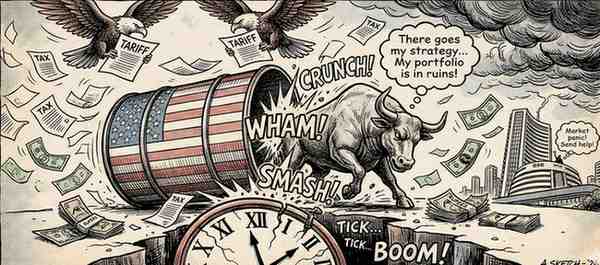
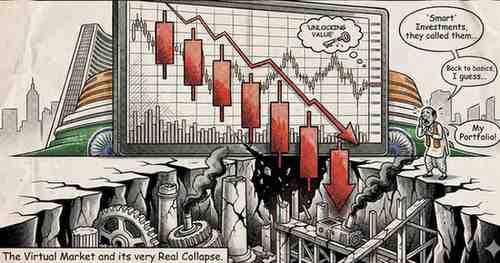
Indian benchmark indices Nifty50 and BSE Sensex have recorded their fifth consecutive week of losses, marking the longest sustained decline since the COVID-19 market crash of March 2020. This persistent selling pressure reflects a confluence of foreign capital outflows, weakening corporate earnings momentum, and mounting global risk aversion that has fundamentally altered market sentiment.
New Delhi, August 2025 — The five-week losing streak in Indian equities has erased approximately ₹18 lakh crore in investor wealth, with the Nifty50 retreating over 7 percent from its July peak. Foreign portfolio investors have withdrawn more than ₹45,000 crore during this period, representing one of the sharpest sustained outflow episodes since the 2022 global rate tightening cycle began.
What Is Driving This Prolonged Market Weakness?
Foreign institutional selling has emerged as the primary catalyst, driven by a strengthening US dollar and elevated Treasury yields that make emerging market assets less attractive on a risk-adjusted basis. Domestic corporate earnings for Q1 FY26 have disappointed across sectors, with Nifty50 companies reporting aggregate profit growth of just 4 percent against analyst expectations of 12 percent. Geopolitical tensions in the Middle East have pushed crude oil prices above $88 per barrel, threatening India’s current account balance and fiscal arithmetic. Elevated valuations — with Nifty50 trading at 21x forward earnings versus its five-year average of 18.5x — have provided limited margin of safety during this risk-off phase.
How Does This Compare to Previous Market Corrections?
The last instance of five consecutive weekly declines occurred in March 2020, when pandemic fears triggered a 30 percent market collapse within weeks. The current correction appears more orderly, with average daily volatility remaining below panic thresholds seen during previous sharp drawdowns. Historical data suggests that five-week losing streaks have occurred only seven times since 2008, with markets recovering their losses within 90 trading sessions in five of those instances. The absence of a clear external shock differentiates this episode from previous crashes, suggesting structural repricing rather than panic-driven capitulation.
What Does This Mean for Different Market Participants?
Retail investors, who contributed record systematic investment plan flows of ₹21,000 crore monthly, now face paper losses on recent deployments. Domestic mutual funds have absorbed significant foreign selling, but their buying capacity faces natural limits if outflows persist. Listed corporations planning capital raises may delay offerings, potentially affecting investment timelines in capital-intensive sectors. Banks with substantial mark-to-market treasury portfolios face earnings pressure if bond yields rise further in sympathy with equity weakness.
- Nifty50 has declined 7.2 percent from its all-time high of 25,078 recorded on July 15, 2025
- Foreign portfolio investors have sold equities worth ₹45,200 crore over the five-week period
- India VIX has risen from 11.2 to 16.8, indicating elevated near-term uncertainty expectations
- Banking and IT sectors have underperformed, falling 9 percent and 11 percent respectively
- Domestic institutional investors have provided ₹38,000 crore in offsetting purchases during this period
What Should Investors Watch in Coming Weeks?
The US Federal Reserve’s September policy meeting will provide critical direction on the dollar trajectory and relative emerging market attractiveness. RBI’s monetary policy stance, particularly any intervention to defend the rupee below 84 against the dollar, could influence foreign investor calculus. Q2 advance tax collection data, due mid-September, will offer the first indication of whether corporate earnings weakness is deepening or stabilising.
Analyst’s View
This correction represents a necessary recalibration of valuations that had decoupled from earnings fundamentals during the liquidity-driven rally of early 2025. Markets require either a meaningful improvement in corporate profit growth or a compression in risk-free rates to justify current multiples. Investors should monitor the rupee’s trajectory closely — a breach of 84.50 against the dollar would likely accelerate foreign outflows and extend this correction into a sixth week. The structural India growth story remains intact, but tactical positioning warrants caution until foreign selling exhausts itself, typically signalled by three consecutive sessions of net FPI buying.